
KRL Etiquette Every Passenger Should Know
Gusti Ayu Tita P
11 Agustus 2026
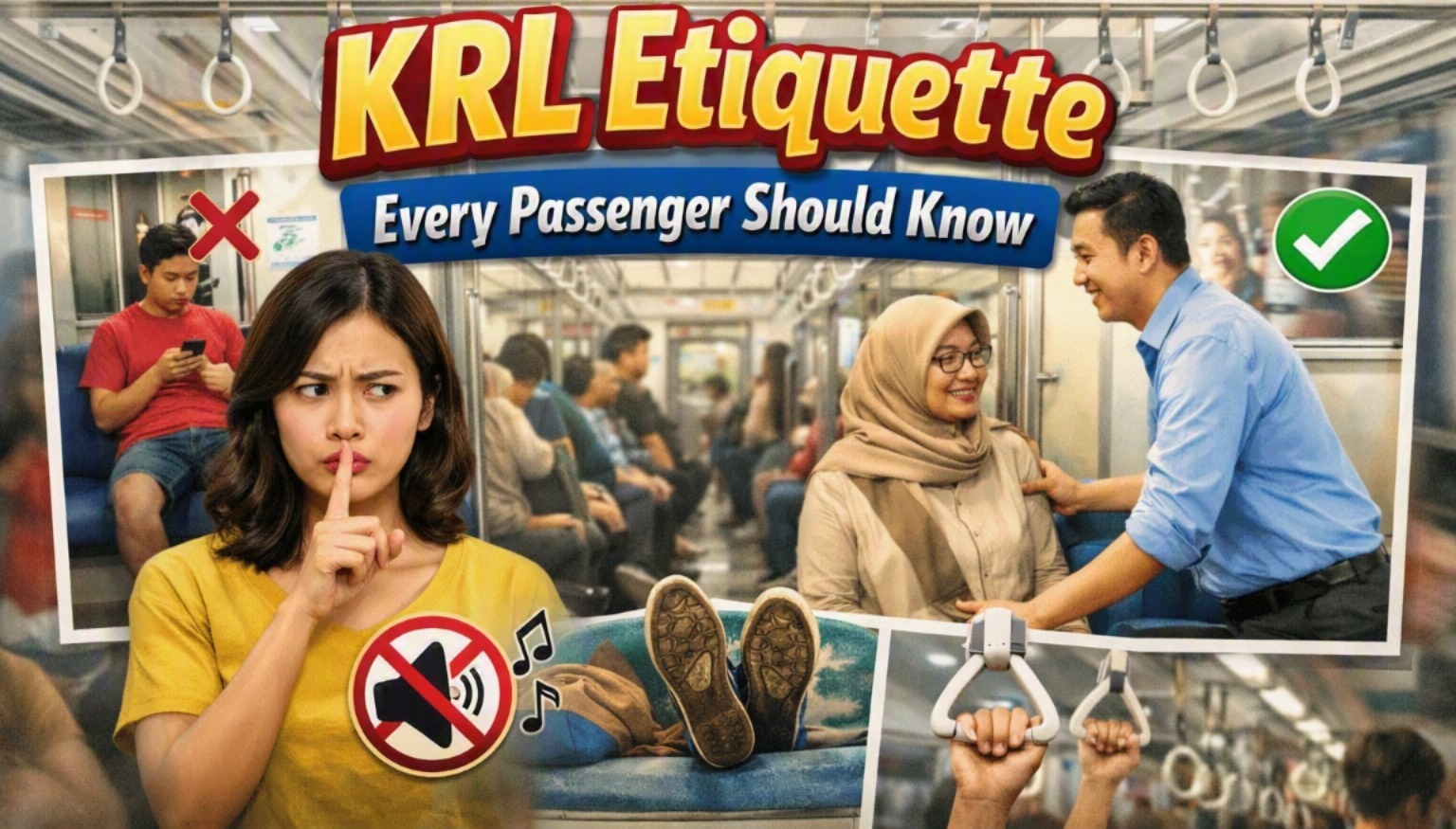
Using the KRL, or commuter rail service, is part of everyday life for many people who travel for work, education, and other activities. Because trains can become crowded, good passenger etiquette is important to create a safe, comfortable, and orderly journey. Simple actions such as queuing properly, giving priority seats to people who need them, and keeping noise under control can make a significant difference.
Understanding KRL etiquette is not only about following rules but also about respecting other passengers. When everyone behaves responsibly, boarding becomes more organized, stations remain cleaner, and the journey can be more pleasant for everyone. Here are several important etiquette guidelines every KRL passenger should understand.
QUEUE PROPERLY BEFORE BOARDING
Passengers should wait in an orderly queue before entering the KRL. Stand behind the designated safety line and allow passengers who are getting off to leave the train first. Avoid standing directly in front of the doors because this can make it difficult for passengers to exit. When the doors open, enter calmly without pushing other people. Patience and discipline can help prevent unnecessary congestion on the platform.
Passengers should also pay attention to signs and markings at the station. These indicators can show where passengers should wait and where train doors are expected to open. Following these directions helps distribute passengers more evenly and makes the boarding process safer. Do not rush into the train simply because you want to get a seat, especially when other passengers are still trying to leave.
GIVE PRIORITY TO PASSENGERS WHO NEED IT
Some seats should be prioritized for elderly passengers, pregnant women, people with disabilities, and passengers with special needs. If someone who needs a seat enters the train, passengers who are able to stand should consider offering their seat. This simple gesture reflects respect and social awareness among passengers.
Priority seating is not simply about who arrives first. It is intended to support people who may have greater difficulty standing during a moving train. Passengers should therefore remain observant and be willing to give up a seat when necessary. Showing consideration can make public transportation more inclusive and comfortable for everyone.
KEEP THE TRAIN QUIET AND COMFORTABLE
Passengers should avoid making excessive noise inside the KRL. Speaking loudly, playing music without headphones, or watching videos at a high volume can disturb people around you. If you need to make a phone call, keep your voice at a reasonable level. Using headphones responsibly is a simple way to enjoy entertainment without disturbing other passengers.
A quieter environment is especially helpful during busy commuting hours. Many passengers use their travel time to rest, read, study, or prepare for work. Loud conversations can make the journey uncomfortable even when the train itself is operating normally. Therefore, respecting other passengers' personal space and comfort should be part of basic KRL etiquette.
KEEP PERSONAL BELONGINGS UNDER CONTROL
Passengers should keep their bags and other belongings in a position that does not block aisles or take up unnecessary space. During crowded journeys, placing a large backpack on the floor or on another seat can interfere with other passengers. Hold backpacks securely or position them appropriately so that other people can move safely.
Passengers should also remain aware of their belongings when the train is crowded. Keep valuable items secure and avoid leaving phones, wallets, or other important possessions unattended. At the same time, do not use personal belongings to reserve seats when the train is busy. One passenger should not occupy more space than necessary when many people need room.
DO NOT BLOCK THE TRAIN DOORS
The area around the doors should remain as clear as possible. Passengers who are not getting off at the next station should avoid standing directly in front of the doorway when there is sufficient space elsewhere. Blocking the doors can slow passenger movement and make boarding and exiting more difficult.
If you need to exit, prepare before the train reaches your station. Move toward the door carefully when there is enough space, while still allowing other passengers to move. If the train is extremely crowded, avoid forcing your way through people. Cooperation and awareness can make the process much safer and faster.
KEEP THE KRL CLEAN
Passengers should never leave food packaging, bottles, tissues, or other rubbish inside the train. Put waste in the appropriate bins when available or keep it until you can dispose of it properly. Keeping the KRL clean is a shared responsibility between passengers and the service operator.
Passengers should also be careful when eating or drinking, particularly with items that can spill or produce strong odors. Spilled drinks can create slippery surfaces and potentially cause accidents. Strong smells may also disturb people in a crowded carriage. Clean and considerate behavior helps maintain a pleasant environment throughout the journey.
RESPECT PERSONAL SPACE
KRL trains can become very crowded, but passengers should still try to respect the personal space of others. Avoid unnecessary physical contact, staring at other passengers, or leaning against people when there is another option. When standing, hold the available handrail or grab handle to maintain your balance. Being aware of your surroundings can reduce discomfort and accidental contact.
Passengers should also avoid using seats, poles, or other areas in ways that prevent others from using them. For example, do not place your feet on seats or lean across several seats. If the train becomes crowded, adjust your position when possible to create more room. Small acts of consideration can improve the experience for everyone.
FOLLOW SAFETY RULES AND STAFF INSTRUCTIONS
Passengers should follow station signs, safety announcements, and staff instructions during their journey. These instructions are designed to support safe and orderly passenger movement. Do not cross safety barriers or enter restricted areas. If an unusual situation occurs, remain calm and follow official directions.
Passengers should also avoid behavior that could create a safety risk, such as pushing, running near platform edges, or attempting to enter a train after the doors are closing. Train doors and station platforms require particular attention because rushing can lead to injuries. Safety should always take priority over convenience.
CONCLUSION
Good KRL etiquette ultimately comes down to respect, patience, discipline, and awareness. Every passenger has different needs, schedules, and reasons for traveling, so considerate behavior can make public transportation more enjoyable. Avoid unnecessary arguments and give other passengers enough space to move. If a minor inconvenience occurs, responding calmly is usually better than creating a confrontation.
Passengers should remember that public transportation is a shared environment. Following basic etiquette does not require significant effort, but its collective impact can be substantial. When passengers cooperate, KRL travel becomes safer, cleaner, and more comfortable. Practicing these habits every day can also encourage a stronger culture of public transportation etiquette.
About the Author
Gusti Ayu Tita P
Author — STEKOM University
An active author focused on academic issues, educational technology, and human resource development in the campus environment.















