
KUR BNI for Micro Small and Medium Enterprises
Gusti Ayu Tita P
21 Agustus 2026
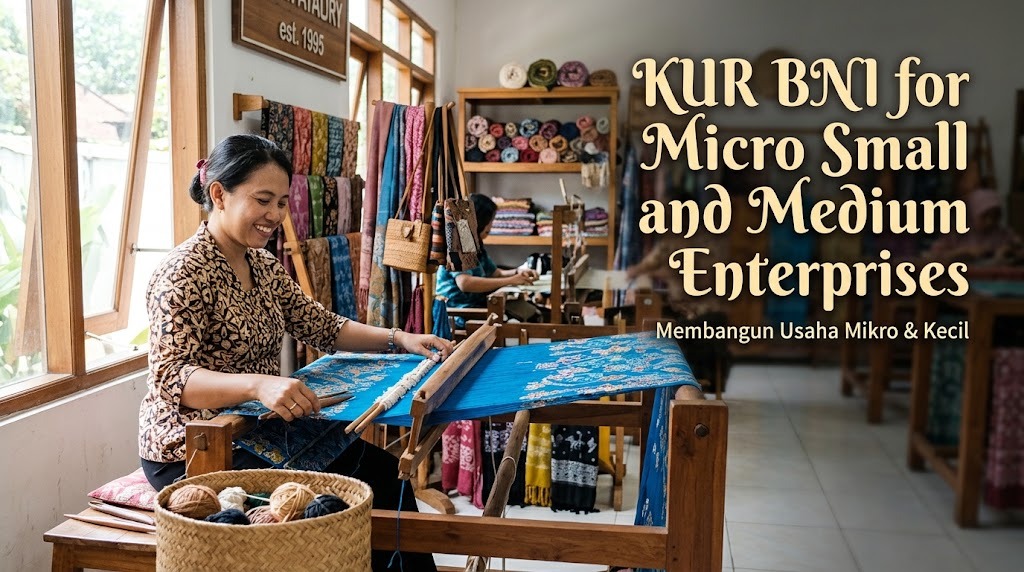
Kredit Usaha Rakyat atau KUR BNI is one of the financing options available for Micro Small and Medium Enterprises that need additional capital. The financing can support productive business needs, including working capital and investment. BNI provides several KUR categories with different financing limits, repayment periods, and requirements.
For MSME owners, access to additional capital can help increase inventory, purchase equipment, improve production capacity, or expand business operations. However, financing should be planned carefully because the funds still have to be repaid according to the agreed terms. Understanding the KUR BNI scheme before applying can help business owners choose financing that matches their needs.
WHAT IS KUR BNI?
KUR BNI is a Kredit Usaha Rakyat financing facility distributed by BNI to support productive businesses. The program is intended to improve access to financing for eligible Micro Small and Medium Enterprises that may have limited access to conventional business financing. The financing can be used for working capital or investment depending on the selected KUR category.
KUR BNI is different from ordinary commercial loans because it is part of the government KUR program. BNI currently offers KUR Super Micro, KUR Micro, and KUR Small for different financing needs. The available limit ranges from up to Rp10 million for KUR Super Micro to up to Rp500 million for KUR Small.
TYPES OF KUR BNI FOR MSMES
KUR Super Micro provides financing of up to Rp10 million. KUR Micro provides financing above Rp10 million up to Rp100 million, while KUR Small provides financing above Rp100 million up to Rp500 million. Each category has different requirements and repayment terms, so applicants should select the product based on their actual business needs.
KUR Super Micro and KUR Micro can generally be used for working capital and investment financing. KUR Small also supports both purposes and offers a larger financing limit for businesses requiring greater capital. BNI's program information states that repayment can reach up to five years for investment financing, while working capital terms depend on the KUR category.
BENEFITS OF KUR BNI FOR MSMES
One of the main benefits of KUR BNI is access to additional capital for productive business activities. Business owners can use the financing to increase inventory, purchase equipment, support production, or develop business operations. Additional capital can be useful when a business has growing demand but does not have enough internal funds to meet it.
KUR can also help business owners separate business expansion plans from personal finances. With a clear financing purpose, entrepreneurs can monitor how borrowed funds contribute to sales and business performance. However, the financing should not be used carelessly because monthly repayments can affect business cash flow if they are not properly planned.
KUR BNI INTEREST RATES AND TENOR
BNI's current information lists a 6 percent effective annual interest rate for KUR Micro and KUR Small, while the KUR Super Micro program information lists a 3 percent effective annual rate. Interest rates are part of the applicable KUR program and may change according to current government and bank policies. Applicants should therefore confirm the latest rate before signing a financing agreement.
The repayment period also depends on the financing category and purpose. KUR Super Micro and KUR Micro can have terms of up to three years for working capital and up to five years for investment. KUR Small can have a working capital term of up to four years and an investment term of up to five years.
REQUIREMENTS FOR KUR BNI
Applicants must meet the requirements applicable to the selected KUR product. BNI states that general requirements for KUR Micro and KUR Small include having at least six months of business experience, being at least 21 years old or already married, and meeting applicable credit quality requirements. Applicants must also not be listed as problematic or non performing debtors under the applicable credit information requirements.
Applicants generally need identity documents and business documentation. These may include an electronic identity card, Family Card, business license or business certificate, and NPWP for certain financing amounts. Requirements can differ according to the KUR category, so applicants should check the latest conditions before submitting an application.
DOES KUR BNI REQUIRE COLLATERAL
Collateral requirements depend on the KUR category and financing amount. BNI states that additional collateral is not required for KUR Super Micro and KUR Micro. For KUR Small, collateral follows the applicable BNI requirements.
BNI has also stated that financing with a limit of up to Rp100 million is provided without additional collateral under its KUR scheme. Even when additional collateral is not required, applicants still need to meet the other eligibility and credit assessment requirements. Approval is not automatic simply because the applicant meets the basic administrative conditions.
HOW TO APPLY FOR KUR BNI?
Before applying, business owners should determine the amount of financing they actually need. The requested amount should be based on business requirements, expected cash flow, and repayment capacity rather than simply choosing the highest available limit. A clear plan can also help explain why the financing is needed.
BNI provides an official eForm for KUR applications. Applicants are required to provide accurate information and understand that the requested financing amount is not automatically binding because BNI determines the approved amount based on its analysis.
TIPS FOR USING KUR BNI WISELY
KUR funds should be directed toward productive business activities that can support revenue or operational improvements. For example, a retailer may use additional capital to increase fast moving inventory, while a small manufacturer may invest in equipment that improves production capacity. The purpose should be clearly connected to the business plan.
Business owners should also maintain accurate financial records after receiving financing. Monitor revenue, expenses, profit, and loan repayments regularly to understand whether the additional capital is producing the expected results. Separating business and personal finances can make cash flow easier to control and reduce the risk of using business capital for unrelated expenses.
CONCLUSION
KUR BNI for Micro Small and Medium Enterprises can provide access to financing for productive business needs. BNI currently offers KUR Super Micro up to Rp10 million, KUR Micro above Rp10 million up to Rp100 million, and KUR Small above Rp100 million up to Rp500 million.
Before applying, MSME owners should understand the requirements, financing limit, interest rate, repayment period, collateral conditions, and intended use of the funds. Choosing financing according to actual business needs and repayment capacity is essential. With careful planning and responsible financial management, KUR BNI can become a useful source of capital for maintaining operations and supporting sustainable business growth.
About the Author
Gusti Ayu Tita P
Author — STEKOM University
An active author focused on academic issues, educational technology, and human resource development in the campus environment.















