
KUR BNI Requirements Every Applicant Should Know
Gusti Ayu Tita P
21 Agustus 2026
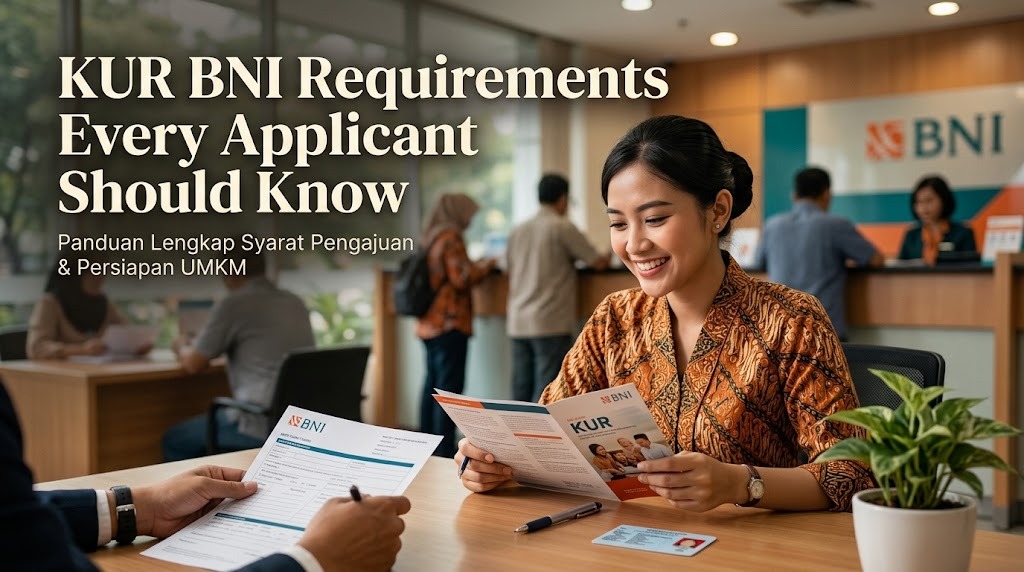
KUR BNI is a government-supported financing program designed to help eligible small and medium businesses access business funding. The financing can be used for working capital or investment, depending on the selected KUR scheme. BNI currently provides several KUR options, including KUR Super Micro, KUR Micro, and KUR Small, each with different limits and requirements.
Understanding the requirements before applying can help applicants prepare the necessary documents and avoid common administrative problems. Applicants should also remember that meeting the basic requirements does not automatically guarantee approval because BNI still conducts a credit analysis. Therefore, it is important to understand both the administrative and business requirements before submitting an application.
WHAT IS KUR BNI?
KUR BNI is a financing facility intended to improve access to funding for eligible micro, small, and medium enterprises. The facility can support productive business activities, including working capital and investment needs. BNI offers different KUR schemes based on the financing amount and applicant profile.
KUR Super Micro provides financing of up to Rp10 million, while KUR Micro covers financing above Rp10 million up to Rp100 million. KUR Small is available for financing above Rp100 million up to Rp500 million. The applicable requirements, repayment period, interest structure, and collateral provisions can differ between these schemes.
GENERAL KUR BNI REQUIREMENTS
Applicants for KUR BNI generally need to be Indonesian citizens and at least 21 years old or already married. For KUR Micro and KUR Small, the business must generally have been operating for at least six months. Applicants must also have a productive and viable business that meets the applicable KUR criteria.
Applicants should also have a satisfactory credit record and must not be listed as problematic or non-performing debtors in SLIK OJK. There are also rules concerning existing business or government credit facilities, although certain consumer loans and other permitted facilities may be allowed. Applicants should therefore provide complete and accurate information about their existing loans.
BUSINESS EXPERIENCE REQUIREMENTS
Business experience is an important consideration for KUR applicants. BNI states that KUR Micro and KUR Small applicants generally need to have operated their business for at least six months. This requirement allows the bank to assess whether the business has actual operating activity and sufficient business prospects.
Applicants should be prepared to explain their business activities, products or services, customers, revenue, and funding needs. Maintaining basic business records can make it easier to demonstrate how the business operates. Clear information about the business can also help applicants understand how much financing they actually need.
DOCUMENTS APPLICANTS SHOULD PREPARE
Applicants need to prepare identification and business documents before submitting a KUR application. Common documents include an electronic ID card or e-KTP and Family Card. Depending on the applicant's circumstances, a marriage certificate and other supporting documents may also be required.
Business legality documents are also important. BNI lists documents such as a Business Identification Number or NIB, business license, or business certificate issued by the relevant local government office, depending on the applicable requirements. Applicants should make sure that the information in their documents matches their actual business and personal information.
NPWP AND COLLATERAL REQUIREMENTS
NPWP requirements depend on the KUR scheme and financing amount. For KUR Micro, BNI's information states that an NPWP is required for applications above Rp50 million. KUR Small applicants are also required to provide an NPWP under the applicable product requirements.
Collateral requirements also vary by scheme. KUR Super Micro and KUR Micro are listed without additional collateral, while KUR Small may require additional collateral according to BNI's assessment and applicable terms. BNI has also stated that financing up to Rp100 million is provided without additional collateral.
CREDIT HISTORY REQUIREMENTS
A good credit history is an important part of the KUR application process. BNI requires applicants not to be recorded as problematic or non-performing debtors in SLIK OJK. Applicants should therefore make sure that existing credit obligations are paid according to schedule.
Having another credit facility does not necessarily mean an applicant will automatically be rejected. Certain consumer credit facilities and permitted KUR arrangements can still be allowed when their payment status meets the applicable requirements. Because the rules can differ by product, applicants should disclose their existing credit facilities honestly during the application process.
CAN A NEW BUSINESS APPLY FOR KUR BNI
New businesses should pay close attention to the selected KUR scheme. KUR Micro and KUR Small generally require at least six months of business experience. However, KUR Super Micro does not set a minimum six-month business period.
For a business operating for less than six months, the KUR Super Micro requirements allow certain alternatives, such as participating in a formal or informal mentoring program, joining a business group, or having a family member who already operates a business. This makes the Super Micro scheme potentially more suitable for certain early-stage businesses. Applicants should still verify the latest requirements before applying.
KUR BNI FINANCING LIMITS AND TERMS
Understanding the financing limits can help applicants choose a suitable KUR scheme. KUR Super Micro offers financing of up to Rp10 million, while KUR Micro covers amounts above Rp10 million up to Rp100 million. KUR Small covers amounts above Rp100 million up to Rp500 million.
The repayment period also depends on the type of financing. BNI's published information states that working capital financing can generally have a term of up to three years for KUR Super Micro and KUR Micro, while investment financing can extend up to five years. KUR Small can have a working capital term of up to four years and an investment term of up to five years.
TIPS BEFORE APPLYING FOR KUR BNI
Applicants should first calculate how much funding the business actually needs. The financing should ideally be directed toward productive purposes such as purchasing inventory, raw materials, equipment, or other investments that support business operations. Taking a larger loan than necessary can create unnecessary repayment pressure. A realistic business budget can help applicants choose a more appropriate financing amount.
Applicants should also organize their identity documents, business legality documents, and financial information before submitting the application. Make sure all information is accurate and consistent because BNI has the authority to assess and determine the financing amount based on its credit analysis. For the latest information, applicants can check BNI's official channels or contact BNI Call at 1500046.
CONCLUSION
KUR BNI requirements include several important aspects, such as Indonesian citizenship, minimum age, business experience, business legality, credit history, and appropriate supporting documents. KUR Micro and KUR Small generally require the business to have operated for at least six months, while KUR Super Micro provides more flexibility for certain new businesses.
Applicants should choose the KUR scheme based on their business condition and actual financing needs. Preparing complete documents, maintaining a good credit record, and managing business finances responsibly can make the application process more organized. Most importantly, applicants should always verify the latest requirements directly through BNI because product terms and requirements may change.
About the Author
Gusti Ayu Tita P
Author — STEKOM University
An active author focused on academic issues, educational technology, and human resource development in the campus environment.















