
Learning Happiness by Choosing JOMO Every Day
Gusti Ayu Tita P
7 September 2026
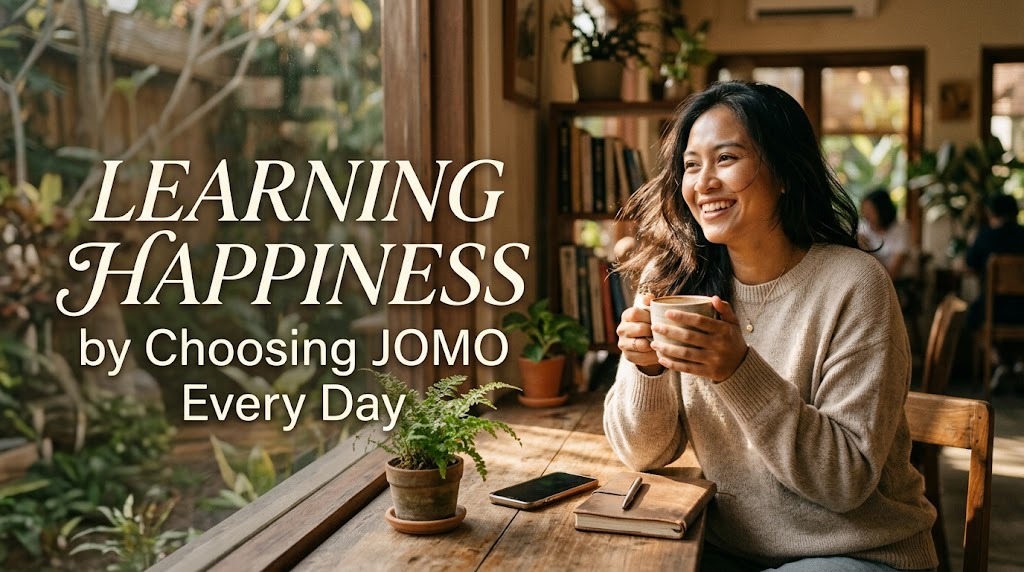
Modern life often encourages people to stay active, connected, and updated at all times. Social media makes it easy to see what other people are doing, buying, achieving, and experiencing. While staying connected can be useful, constantly following others can also create unnecessary pressure. JOMO or Joy of Missing Out teaches people that happiness can come from choosing what truly matters to them. By practicing JOMO every day, people can learn to enjoy life without constantly worrying about what they might be missing.
UNDERSTANDING JOMO AND HAPPINESS
JOMO stands for Joy of Missing Out and describes the positive feeling of choosing not to participate in everything. Instead of feeling anxious about missing an event or online trend, people can enjoy the freedom to make their own choices. JOMO shifts attention from what others are doing toward what makes personal life meaningful. This can include spending time alone, resting, enjoying hobbies, or staying away from social media. The goal is to make choices based on personal needs rather than social pressure.
JOMO does not mean avoiding people or refusing every opportunity. Social relationships remain important for emotional connection and personal well-being. The key is finding a healthy balance between social activities and personal space. People can choose meaningful interactions while still protecting time for themselves. This balance can make everyday life feel more comfortable.
WHY PEOPLE OFTEN FEEL PRESSURED?
People can feel pressured when they constantly compare their lives with others. Social media provides a continuous stream of achievements, vacations, celebrations, and lifestyle updates. Seeing these moments repeatedly can create the impression that everyone else is living a more exciting life. This can make people feel dissatisfied with their own experiences. In reality, online content usually represents selected moments rather than complete lives.
The pressure can also come from the expectation to always respond or participate. People may worry that ignoring a message or skipping an event will make them seem distant. The need to always be available can reduce personal time and increase mental pressure. JOMO offers a different approach by allowing people to step back when they need to. Missing something does not automatically mean losing something important.
CHOOSING WHAT REALLY MATTERS
Happiness becomes easier to experience when people understand their priorities. These priorities may include family, health, education, work, friendships, hobbies, or personal growth. Knowing what matters makes it easier to decide which activities deserve attention. Activities that do not support personal goals can be reduced or skipped. This creates more room for meaningful experiences.
Priorities are different for every person. Someone may enjoy attending social events, while another person may feel happier spending a quiet evening at home. JOMO encourages people to respect their own definition of happiness. There is no need to follow another person's lifestyle to feel fulfilled. Personal choices become more valuable when they reflect genuine needs.
LEARNING TO ENJOY SIMPLE MOMENTS
Happiness does not always require exciting experiences. Simple activities such as reading, drinking coffee, walking, listening to music, or spending time with family can provide genuine enjoyment. JOMO helps people recognize the value of ordinary moments. These experiences do not need to be shared online to become meaningful. Their value comes from the experience itself.
Simple moments can also provide a break from constant stimulation. When people stop checking their phones, they may notice their surroundings more clearly. Being present can make everyday activities feel more satisfying. This can help people appreciate what they already have instead of constantly searching for something new. Over time, simple experiences can become an important source of happiness.
TAKING BREAKS FROM SOCIAL MEDIA
Social media can be useful, but excessive use may take attention away from real-life experiences. People can spend long periods scrolling without realizing how much time has passed. Taking regular social media breaks can create more space for activities that support happiness. These breaks can begin with short periods and gradually become longer. The goal is to create a healthier relationship with digital platforms.
Turning off unnecessary notifications can also make breaks easier. Constant alerts may encourage people to check their phones even when there is no urgent reason. Reducing digital interruptions helps protect personal attention. The saved time can be used for hobbies, exercise, rest, or conversations. This can make daily life feel less crowded.
LEARNING TO SAY NO
Choosing JOMO often requires the ability to say no. People may accept invitations because they are afraid of being left out or disappointing someone. A respectful no can protect personal time without damaging meaningful relationships. People have different energy levels, responsibilities, and social needs. It is reasonable to decline activities that do not fit the current situation.
Saying no also creates space for better choices. An evening spent resting may be more valuable than attending an event when you are already exhausted. Not every opportunity needs to be accepted to live a happy life. Making selective choices can reduce stress and prevent an overloaded schedule. Over time, this can make personal boundaries stronger.
STOPPING CONSTANT COMPARISON
Comparison can make happiness feel dependent on other people's achievements. Someone may feel unsuccessful after seeing another person's career progress, travel experience, or lifestyle online. JOMO encourages people to focus on personal progress instead of competing with other people's lives. Everyone has different goals, opportunities, and circumstances. Comparing different journeys often creates unnecessary dissatisfaction.
Personal progress should be measured against individual goals. Small improvements can be meaningful even when they do not receive public attention. Happiness becomes more stable when it is based on personal values rather than external approval. This allows people to appreciate their own journey. Social media then becomes less powerful in determining how they feel about themselves.
ENJOYING TIME ALONE
Spending time alone can be a healthy part of everyday life. Solitude gives people an opportunity to rest, think, and enjoy personal interests without outside pressure. Being alone does not automatically mean being lonely. Someone can enjoy solitude through reading, walking, cooking, or simply relaxing. JOMO encourages people to see personal space as something valuable.
Time alone can also improve self-awareness. Quiet moments provide an opportunity to understand personal preferences and recognize what creates energy or stress. Greater self-awareness can lead to better decisions about how time should be spent. This can make daily activities more intentional. Personal time therefore becomes an important part of a balanced lifestyle.
FINDING JOY WITHOUT ONLINE VALIDATION
Many people share their experiences online and then wait for reactions from others. Likes, comments, and views can sometimes become measures of whether an experience feels valuable. JOMO reminds people that happiness does not require constant digital approval. A meaningful experience can remain private. People can enjoy something simply because it makes them feel good.
Keeping certain experiences offline can also make them feel more personal. A family meal, quiet walk, or personal achievement does not need to become content. Enjoying moments without documenting everything can increase presence and appreciation. This can reduce the pressure to perform for an online audience. Happiness becomes more connected to personal experience.
MAKING JOMO A DAILY HABIT
JOMO becomes more effective when practiced consistently. People can begin by creating short periods without social media or unnecessary digital activity. Small daily choices can gradually change how people respond to social pressure. They can also schedule time for hobbies, rest, and meaningful relationships. These habits help create a healthier balance between connection and personal freedom.
It is important to keep the practice realistic. Some days may require more social interaction, while others may require more personal space. JOMO is not about following strict rules but making conscious choices. People can adjust their routines according to their current needs. This flexibility makes JOMO easier to maintain over time.
CONCLUSION
Learning happiness through JOMO means understanding that you do not have to participate in everything to enjoy a meaningful life. Taking social media breaks, saying no when necessary, reducing comparison, enjoying solitude, and focusing on personal priorities can create greater peace and satisfaction. JOMO does not encourage isolation or complete disconnection from technology. Instead, it teaches people to choose when connection adds value and when stepping away is healthier. Ultimately, happiness can grow when people stop chasing every experience and start appreciating the moments that truly matter.
About the Author
Gusti Ayu Tita P
Author — STEKOM University
An active author focused on academic issues, educational technology, and human resource development in the campus environment.















