Legal and Illegal Online Loans What Is the Difference?
Gusti Ayu Tita P
6 Agustus 2026
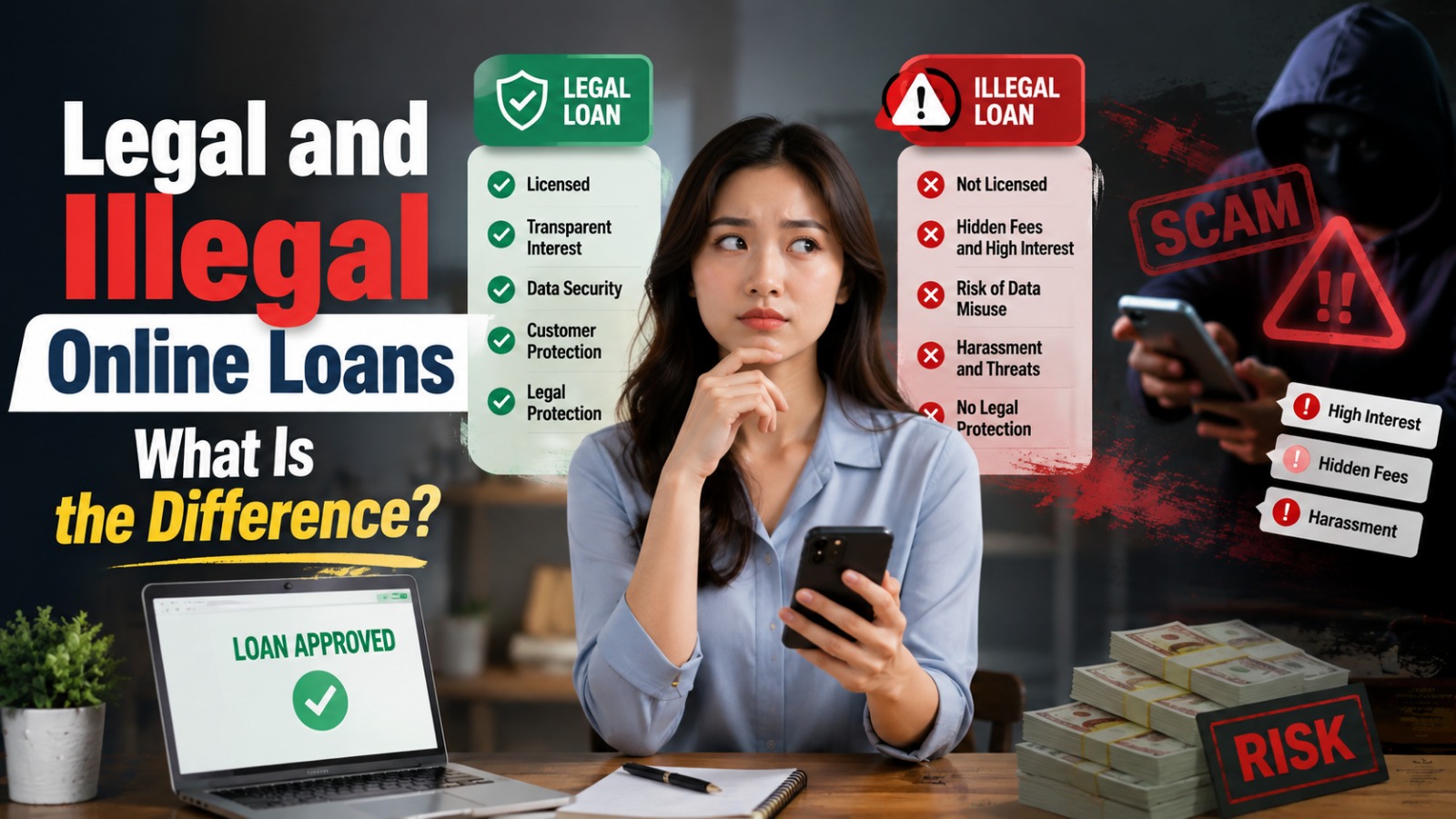
Online loans have become a convenient financial option for people who need access to funds. The digital application process can be faster and simpler than traditional borrowing methods. However, not every online lending service operates under the same rules or provides the same level of protection. Understanding the difference between legal and illegal online loans is important before sharing personal information or accepting any financial offer.
In Indonesia, consumers should pay close attention to the legal status of an online lending provider. A legal provider operates under the applicable regulatory framework, while an illegal provider operates without the required authorization. Knowing the key differences can help people make safer financial decisions and avoid unnecessary risks.
WHAT ARE LEGAL ONLINE LOANS?
Legal online loans are financial services provided by operators that have the required authorization from the relevant regulator. In Indonesia, consumers can check the status of fintech peer-to-peer lending or LPBBTI providers through the official information provided by the Financial Services Authority or OJK. Licensed providers are subject to regulatory requirements and consumer protection obligations. This provides borrowers with a clearer framework for understanding their rights and responsibilities.
A legal provider should also clearly explain important information about its products. Borrowers should be able to understand the loan amount, costs, repayment period, and other relevant terms before accepting an offer. Consumers should still read the agreement carefully even when using a licensed service. Legal status reduces certain risks, but it does not automatically mean that every loan is suitable for every borrower.
WHAT ARE ILLEGAL ONLINE LOANS?
Illegal online loans are offered by providers that do not have the required authorization from OJK or another competent authority. These services may operate through websites, applications, social media, messaging platforms, or other digital channels. Some may attract consumers with promises of extremely fast approval or minimal requirements. Their lack of regulatory authorization means consumers do not receive the same regulatory protections available with licensed providers.
Illegal lenders can also make their offers appear legitimate by using professional-looking branding or misleading claims. Therefore, appearance alone should never be used to determine whether an online loan is trustworthy. Consumers should verify the provider through official regulatory information before applying. If the provider cannot be verified, it is safer not to proceed.
DIFFERENCES IN LEGAL STATUS AND SUPERVISION
The most fundamental difference is legal authorization and supervision. Licensed LPBBTI providers in Indonesia are regulated by OJK and must comply with applicable requirements. Illegal providers operate outside OJK's licensing and supervision framework. This difference affects the level of regulatory oversight and consumer protection available to borrowers.
Checking legal status should therefore be the first step before applying for an online loan. Do not rely only on advertisements, reviews, or claims made by the provider itself. Consumers can use official OJK information to verify whether a fintech lending provider is licensed. This simple check can help reduce the risk of dealing with an unauthorized service.
DIFFERENCES IN FEES AND LOAN TERMS
Legal online loan providers are required to operate according to applicable rules regarding their products and services. Borrowers should receive information about costs, repayment obligations, and other relevant terms. The exact cost structure can vary between products, so consumers should compare the total financial obligation rather than focusing only on the advertised installment. A transparent agreement makes it easier for borrowers to understand what they are accepting.
Illegal lenders may present unclear or misleading terms, making it difficult for borrowers to understand the actual financial burden. Some may also use aggressive methods to collect payments. Because these services operate outside the regulatory framework, consumers face greater uncertainty about how the loan will be administered. This is why verifying legality before borrowing is essential.
DIFFERENCES IN PERSONAL DATA PROTECTION
Personal data is another important area to consider when comparing legal and illegal online loans. A loan application may require information for identity verification and credit assessment. Consumers should understand how their information is collected, processed, and protected before submitting it. Using a verified and legally authorized provider can reduce some of the risks associated with dealing with unauthorized platforms.
Illegal services can pose greater risks because they operate outside the relevant regulatory framework. Consumers should be especially cautious if an application requests excessive personal information or asks for passwords, PINs, or one-time passwords. Never share security credentials with anyone claiming to represent a lending company. Always use the provider's official communication channels when handling sensitive information.
DIFFERENCES IN COLLECTION PRACTICES
Repayment collection is another area where consumers need to be careful. Licensed providers must follow applicable rules and standards when communicating with borrowers about repayment obligations. Borrowers should understand the consequences of late payments from the agreement before accepting a loan. If problems arise, they should use the provider's official complaint and customer service channels.
Illegal lenders may use intimidating or inappropriate collection methods. Consumers should not assume that every collection demand is legitimate simply because it comes through a phone number or messaging application. Save relevant evidence and verify the information through official channels if a suspicious collection request occurs. Understanding the provider's legal status beforehand can significantly reduce this risk.
HOW TO CHECK WHETHER AN ONLINE LOAN IS LEGAL
Checking the provider's legal status should be done before registering or submitting personal information. Consumers in Indonesia can consult official OJK information about licensed LPBBTI providers. The provider's name should match the official listing and information available from the regulator. Do not rely solely on a logo, advertisement, or claim that says the service is supervised.
Consumers should also check whether the application or website they are using actually belongs to the verified provider. Be cautious about links sent through unsolicited messages or social media accounts. If there is uncertainty, contact the regulator or provider through an official channel rather than following instructions from an unknown person. Taking a few minutes to verify the service can prevent serious financial and privacy problems.
TIPS TO AVOID ILLEGAL ONLINE LOANS
The easiest way to reduce the risk of illegal online loans is to verify legality before applying. Avoid providers that hide their company identity, fail to explain costs, or pressure users to make immediate decisions. Be suspicious of offers that appear unrealistic or require unusual payments before a clear agreement is provided. A trustworthy financial service should provide understandable information about its products.
Consumers should also avoid sharing sensitive information with unverified platforms. Never provide passwords, PINs, or one-time passwords to people claiming to be customer service representatives. Keep copies of agreements, payment records, and important communications. If a suspicious offer is encountered, use official channels to report or verify it rather than continuing the transaction.
CONCLUSION
The main difference between legal and illegal online loans is their legal status, regulatory supervision, and level of consumer protection. Legal providers operate under the applicable regulatory framework and must meet requirements established by the regulator. Illegal providers operate without the required authorization and can expose consumers to greater financial, privacy, and collection risks.
Before choosing an online loan, always verify the provider through official OJK information, understand the total costs and repayment terms, and protect personal data. Do not make decisions simply because an offer promises fast approval or easy access to money. Careful verification is one of the most important steps toward safer and more responsible online borrowing.
About the Author
Gusti Ayu Tita P
Author — STEKOM University
An active author focused on academic issues, educational technology, and human resource development in the campus environment.