
List of Ministers in Indonesia and Their Main Duties
Gusti Ayu Tita P
12 Agustus 2026
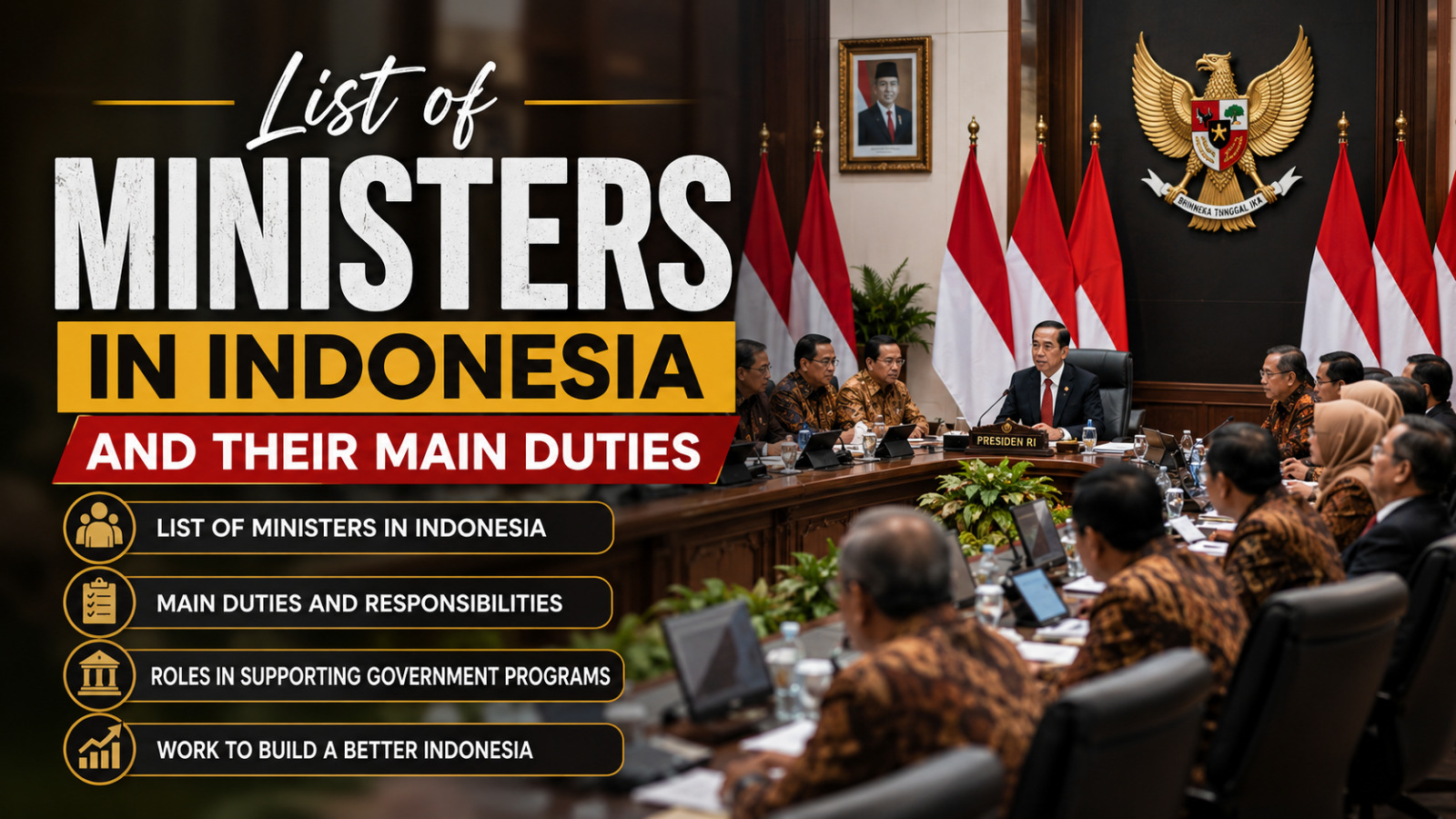
Indonesia has several ministries that manage different areas of government. Each ministry is led by a minister who assists the President in carrying out government affairs. The duties of ministers differ according to the responsibilities of their respective ministries. Some ministries focus on domestic affairs, while others handle finance, education, health, trade, infrastructure, or social development. Understanding the main duties of ministers helps people recognize how government responsibilities are divided.
MINISTERS IN DOMESTIC GOVERNMENT
The Minister of Home Affairs is responsible for government affairs related to domestic administration within the authority of the ministry. These responsibilities include areas connected with regional government and population administration. The ministry also plays an important role in coordinating aspects of central and regional government administration. Its work supports the organization of government across Indonesia.
Other ministries handle areas such as law, human rights, and related government affairs. Each minister focuses on a specific area according to the legal framework governing the ministry. This division allows government responsibilities to be managed by institutions with specialized functions. Coordination between ministries is important when different areas of government are interconnected.
MINISTERS IN ECONOMY AND FINANCE
Economic and financial affairs are managed through several ministries with different responsibilities. The Minister of Finance manages government affairs related to state finance, including areas connected with the state budget and fiscal management. The Minister of Trade focuses on trade policies and activities within the authority of the Ministry of Trade. Other economic ministries may handle industry, investment, small and medium enterprises, and other economic sectors.
Each minister contributes to economic development through their specific responsibilities. Finance, trade, industry, and investment are closely connected, so cooperation between ministries is necessary. Ministers coordinate policies to support stable economic activity and national development. Their work can also affect businesses, consumers, and government programs.
MINISTERS IN DEVELOPMENT AND INFRASTRUCTURE
Infrastructure and development require government attention in areas such as public works, housing, transportation, and related sectors. Ministers responsible for these areas develop and implement policies according to their respective authorities. Infrastructure development can support connectivity, public services, and economic activity. Effective planning is important because major development programs often involve significant resources and multiple institutions.
The Minister of Transportation, for example, handles government affairs related to transportation within the ministry's authority. Other ministers manage public works, housing, or related development areas. Because infrastructure projects can involve several sectors, coordination is essential. Monitoring and evaluation are also needed to ensure that programs follow established plans and regulations.
MINISTERS IN EDUCATION, HEALTH, AND SOCIAL AFFAIRS
Education and health are important areas of government because they directly affect the quality of people's lives. The Minister of Education manages government affairs in the education sector according to the responsibilities assigned to the relevant ministry. The Minister of Health is responsible for government affairs related to healthcare and public health. Other ministries also handle social affairs and related areas.
These ministers develop policies and programs designed to improve services within their respective sectors. Education policies may focus on learning and human resource development, while health policies may address healthcare services and public health. Social policies can support communities through programs within the government's authority. Cooperation between ministries and regional governments is often necessary to implement these programs effectively.
CONCLUSION
Ministers in Indonesia lead ministries with different responsibilities, including domestic government, finance, trade, infrastructure, education, health, and social affairs. Each minister assists the President by managing policies and programs within their respective fields. The division of responsibilities allows government affairs to be handled more systematically. Because many sectors are interconnected, coordination between ministries is essential. The structure and responsibilities of ministries may change according to government needs and applicable regulations.
About the Author
Gusti Ayu Tita P
Author — STEKOM University
An active author focused on academic issues, educational technology, and human resource development in the campus environment.















