
Local Wisdom as a Solution to Modern Problems
Gusti Ayu Tita P
18 Agustus 2026
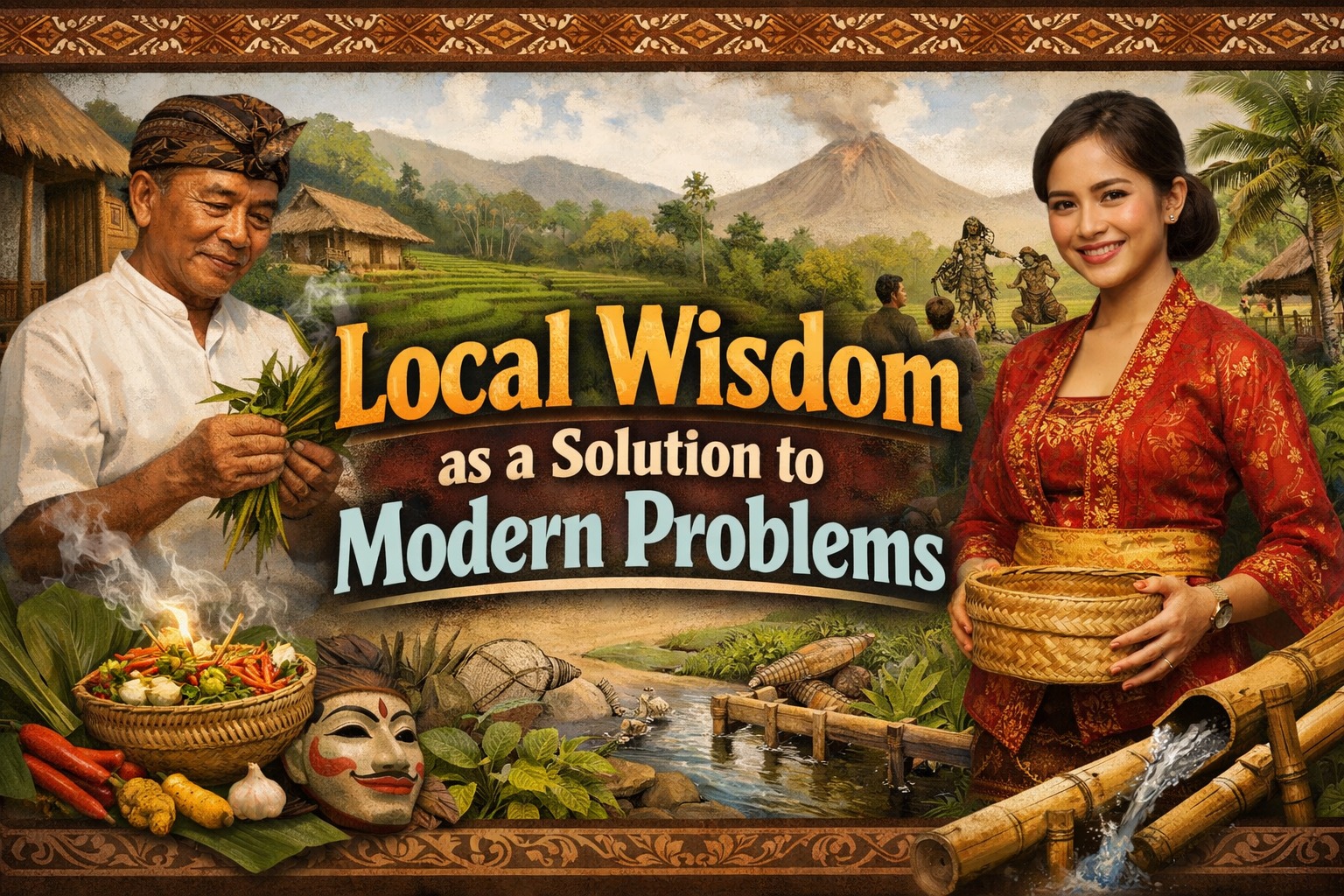
In today's rapidly changing world, societies face various challenges, including environmental degradation, social conflicts, cultural erosion, and unsustainable lifestyles. While technology and innovation offer many solutions, traditional knowledge and cultural values remain highly relevant. Local wisdom represents the collective knowledge, beliefs, and practices developed by communities over generations to adapt to their environment and maintain social harmony.
Many modern problems emerge because people become disconnected from nature, community values, and sustainable ways of living. As a result, local wisdom is increasingly recognized as a valuable resource that can complement modern approaches. By combining traditional knowledge with contemporary solutions, societies can create more balanced and sustainable development.
UNDERSTANDING THE MEANING OF LOCAL WISDOM
Local wisdom refers to the knowledge, values, customs, and practices inherited from previous generations within a particular community. These traditions are often based on long-term experiences in managing natural resources, maintaining social relationships, and solving community challenges.
Unlike temporary trends, local wisdom has been tested over time. Communities preserve these values because they have proven effective in supporting survival, cooperation, and sustainability. This makes local wisdom a valuable foundation for addressing many modern issues that continue to grow in complexity.
ADDRESSING ENVIRONMENTAL PROBLEMS THROUGH TRADITIONAL KNOWLEDGE
One of the most significant modern challenges is environmental damage caused by excessive resource exploitation and unsustainable consumption. Many traditional communities have long practiced environmental conservation through local rules and customs that protect forests, rivers, and agricultural land.
For example, traditional farming methods often emphasize balance between human needs and environmental preservation. These practices reduce waste, maintain soil fertility, and support biodiversity. By learning from local wisdom, modern societies can develop more sustainable approaches to environmental management.
STRENGTHENING SOCIAL HARMONY AND COMMUNITY VALUES
Modern lifestyles often encourage individualism, leading to weaker social connections and reduced community participation. In contrast, many forms of local wisdom promote mutual cooperation, respect, and collective responsibility.
Community traditions such as shared labor, communal decision-making, and conflict resolution through dialogue help strengthen social bonds. These practices create a sense of belonging and encourage people to work together for common goals. As societies become increasingly diverse, such values remain essential for maintaining social harmony.
PRESERVING CULTURAL IDENTITY IN A GLOBALIZED WORLD
Globalization has brought numerous benefits, including easier communication and access to information. However, it has also increased the risk of cultural homogenization, where local traditions and identities gradually disappear.
Local wisdom helps communities preserve their unique cultural heritage while adapting to change. Traditional arts, languages, customs, and values provide a strong sense of identity and pride. By protecting these cultural assets, communities can maintain diversity and enrich global culture rather than losing their distinct characteristics.
SUPPORTING SUSTAINABLE ECONOMIC DEVELOPMENT
Economic growth is often associated with industrial expansion and increased consumption. However, development that ignores environmental and social impacts may create long-term problems. Many local wisdom practices encourage responsible use of resources and support sustainable livelihoods.
Traditional crafts, eco-friendly agriculture, and community-based tourism are examples of economic activities rooted in local wisdom. These approaches generate income while preserving cultural and environmental resources. As a result, communities can achieve economic progress without sacrificing future sustainability.
COMBINING LOCAL WISDOM WITH MODERN INNOVATION
Local wisdom should not be viewed as an alternative to modern technology but rather as a complementary resource. The most effective solutions often emerge when traditional knowledge and modern innovation work together.
For instance, modern environmental monitoring systems can support traditional conservation practices, while digital platforms can help preserve and promote cultural heritage. By integrating both approaches, societies can benefit from technological advancement while maintaining valuable cultural knowledge and sustainable principles.
CONCLUSION
Modern problems require solutions that are not only innovative but also sustainable and socially responsible. Local wisdom offers valuable lessons in environmental protection, social cooperation, cultural preservation, and sustainable development. Its principles have been refined through generations of practical experience and remain relevant today.
By respecting and integrating local wisdom into modern policies and practices, societies can address current challenges more effectively. The combination of traditional values and modern innovation creates a balanced path toward a more sustainable and harmonious future.
About the Author
Gusti Ayu Tita P
Author — STEKOM University
An active author focused on academic issues, educational technology, and human resource development in the campus environment.















