
Love For The Homeland As A Force For National Unity
Gusti Ayu Tita P
5 Agustus 2026
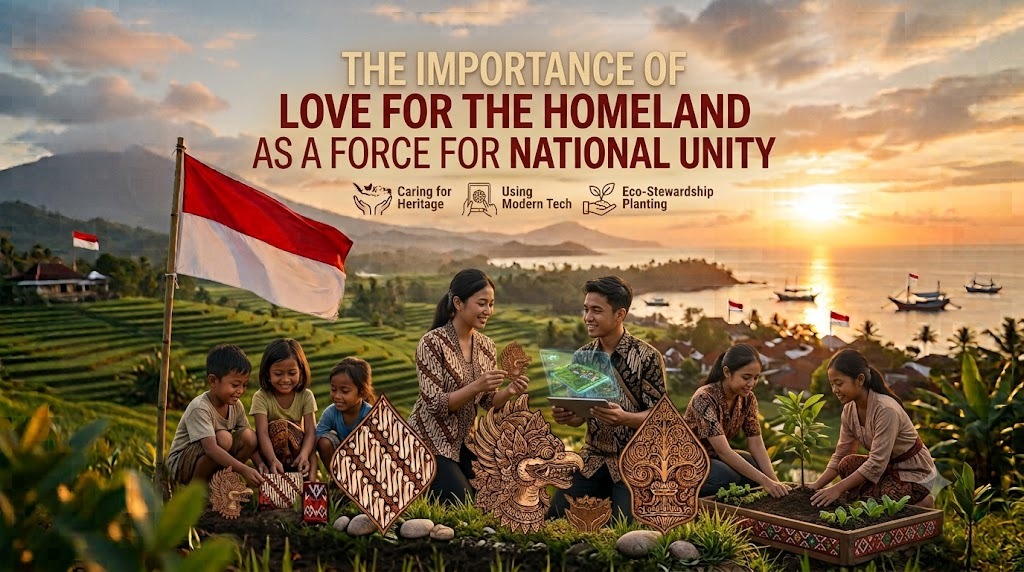
Love for the homeland is an important value that can strengthen national unity. It encourages citizens to care about their country, respect one another, and contribute to society. In a diverse country such as Indonesia, this attitude is especially important because people come from different cultural, religious, ethnic, and linguistic backgrounds. When citizens share a strong sense of belonging, differences can become a source of strength rather than division.
National unity cannot be maintained through government efforts alone. Every citizen has a role in protecting harmony and cooperation within society. Simple actions such as respecting differences, helping others, preserving culture, and following laws can support unity. When these positive behaviors are practiced consistently, love for the homeland can become a powerful force for a peaceful and united Indonesia.
UNDERSTANDING LOVE FOR THE HOMELAND
Love for the homeland means having pride, respect, concern, and responsibility toward one's country. It involves appreciating national identity while being willing to contribute to the well-being of society. For Indonesians, this can include respecting Pancasila, appreciating cultural diversity, and protecting the country's natural and cultural heritage. Love for the homeland should therefore be reflected through actions rather than words alone.
Citizens can express this attitude through responsibility, discipline, tolerance, cooperation, and concern for others. People do not need to perform extraordinary actions to demonstrate national pride. Helping neighbors, maintaining public facilities, keeping the environment clean, and respecting national laws are meaningful examples. These everyday actions can gradually build a stronger sense of national belonging.
THE CONNECTION BETWEEN NATIONAL LOVE AND UNITY
National love and national unity are closely connected because people who care about their country are more likely to protect its harmony. A strong sense of belonging can encourage citizens to put shared interests above unnecessary differences. It can also motivate people to cooperate when facing challenges. This cooperation is essential for maintaining a stable and peaceful society.
Unity does not mean that everyone must have the same opinions or traditions. Indonesia's strength comes partly from its diversity, which includes many cultures, languages, religions, and local traditions. Love for the homeland encourages citizens to respect these differences while maintaining a common national identity. In this way, diversity can become a foundation for cooperation instead of conflict.
RESPECTING INDONESIA'S CULTURAL DIVERSITY
Indonesia has an extraordinary range of cultures, traditions, languages, arts, and local customs. These differences are valuable parts of the country's identity. Respecting cultural diversity can help citizens develop stronger relationships with people from different backgrounds. It also prevents differences from becoming reasons for discrimination or hostility.
Young people and communities can support cultural diversity by learning traditional arts, participating in cultural events, and sharing accurate information about local traditions. Schools can introduce students to different cultures through educational activities and projects. Digital platforms can also be used to introduce Indonesian cultural heritage to wider audiences. Preserving culture while respecting differences can strengthen national pride and unity.
STRENGTHENING TOLERANCE IN DAILY LIFE
Tolerance is essential for maintaining unity in a diverse society. People may have different religions, ethnic identities, opinions, and cultural practices. These differences should be respected as part of Indonesia's social reality. Tolerance allows people to live together without forcing everyone to think or behave in exactly the same way.
Tolerance can be practiced through respectful communication, fair treatment, cooperation, and willingness to listen. People should avoid discrimination, insults, and actions that intentionally create conflict. Disagreements can be handled through discussion and mutual understanding. When tolerance becomes a daily habit, social relationships can become stronger.
BUILDING UNITY THROUGH GOTONG ROYONG
Gotong royong, or mutual cooperation, is an important social value in Indonesian communities. It encourages people to work together to achieve shared goals. Community clean-ups, helping neighbors, social activities, and collective projects are examples of gotong royong. These activities can create stronger connections between community members.
Gotong royong also teaches responsibility, empathy, cooperation, and solidarity. People learn that individual actions can contribute to the well-being of others. Young people can develop these values by participating in school organizations and community programs. A strong spirit of cooperation can make communities more resilient when facing difficulties.
USING TECHNOLOGY TO STRENGTHEN UNITY
Technology has created new opportunities to connect people across different regions of Indonesia. Social media and digital platforms can be used to share Indonesian culture, educational information, community activities, and positive stories. Young people can use their digital skills to create content that promotes respect and national pride. Technology can therefore become a tool for strengthening unity.
However, digital platforms can also spread misinformation, hate speech, discrimination, and provocative content. Users should verify information before sharing it and avoid content that can unnecessarily create conflict. Differences of opinion should be discussed respectfully. Responsible digital behavior can help make online spaces more supportive of national unity.
SUPPORTING LOCAL PRODUCTS FOR NATIONAL DEVELOPMENT
Supporting local products and businesses can strengthen economic cooperation among Indonesian communities. Local entrepreneurs create employment opportunities and contribute to regional economic development. Choosing quality Indonesian products can help small and medium-sized businesses grow. Economic participation can therefore become another way to demonstrate love for the homeland.
Young people can support local businesses by buying local products, promoting them online, and developing creative businesses. Digital marketing can help local products reach customers across Indonesia and beyond. Innovation can also improve the quality and competitiveness of Indonesian products. A stronger domestic economy can support national development and social stability.
PROTECTING THE ENVIRONMENT TOGETHER
Environmental protection is a shared responsibility and an important expression of care for Indonesia. The country has valuable forests, oceans, rivers, mountains, and other natural resources. Protecting these resources can benefit communities and future generations. Environmental awareness can also bring people together through common goals.
Citizens can participate in clean-up programs, recycling, tree planting, waste reduction, and conservation activities. These activities can be organized by schools, communities, organizations, and families. Working together to protect nature strengthens both environmental awareness and social relationships. A healthy environment can contribute to a healthier and more united society.
THE ROLE OF YOUNG PEOPLE IN NATIONAL UNITY
Young people have a strategic role in maintaining national unity because they will become future leaders and professionals. They are also highly connected to technology and modern communication. Their creativity can be used to promote Indonesian culture, social cooperation, education, and positive digital behavior. With proper guidance, young people can become strong agents of unity.
They can contribute by joining community activities, respecting diversity, creating educational content, developing useful innovations, and achieving positive accomplishments. Young people should also learn to distinguish reliable information from misleading content. Strong character and digital literacy can help them respond wisely to social challenges. Their daily choices can influence the attitudes of their peers and communities.
EDUCATION AS A FOUNDATION FOR NATIONAL UNITY
Education plays an important role in building national unity because it helps people understand history, culture, national values, and social responsibilities. Schools can teach students to appreciate diversity and cooperate with people from different backgrounds. Education can also develop critical thinking, allowing students to evaluate information before accepting or sharing it. These abilities are increasingly important in the digital era.
Learning should not focus only on academic achievement. Students also need opportunities to develop discipline, empathy, leadership, teamwork, and responsibility. Activities such as group projects, community service, cultural programs, and student organizations can strengthen these skills. Through balanced education, young people can become capable citizens who value both diversity and unity.
EVERYDAY ACTIONS THAT STRENGTHEN NATIONAL UNITY
National unity can begin with simple actions in everyday life. Respecting neighbors, helping people in need, following rules, avoiding discrimination, and taking care of public spaces are practical examples. People can also support peaceful communication when disagreements occur. These habits may seem small, but they can influence the atmosphere of an entire community.
Citizens should remember that unity is built through repeated positive behavior. A respectful conversation can prevent a conflict, while cooperation can solve a community problem. Choosing accurate information instead of misinformation can also protect social harmony. When many people practice these habits, national unity becomes stronger.
CONCLUSION
Love for the homeland can become a powerful force for national unity when it is expressed through responsible and positive actions. Respecting diversity, practicing tolerance, preserving culture, supporting local businesses, protecting the environment, and using technology responsibly are practical examples. These actions help citizens develop a stronger sense of belonging while maintaining healthy relationships with others. National unity becomes stronger when people understand that their differences can exist within one shared national identity.
Ultimately, Indonesia's unity depends on the participation of all citizens. Young people, families, schools, communities, and organizations all have important roles in maintaining harmony. By turning love for the homeland into everyday behavior, citizens can build a society based on cooperation, respect, and mutual care. A strong national spirit can help Indonesia remain united while continuing to grow and face future challenges.
About the Author
Gusti Ayu Tita P
Author — STEKOM University
An active author focused on academic issues, educational technology, and human resource development in the campus environment.















