
LRT as Modern Transportation in Indonesia
Gusti Ayu Tita P
11 Agustus 2026
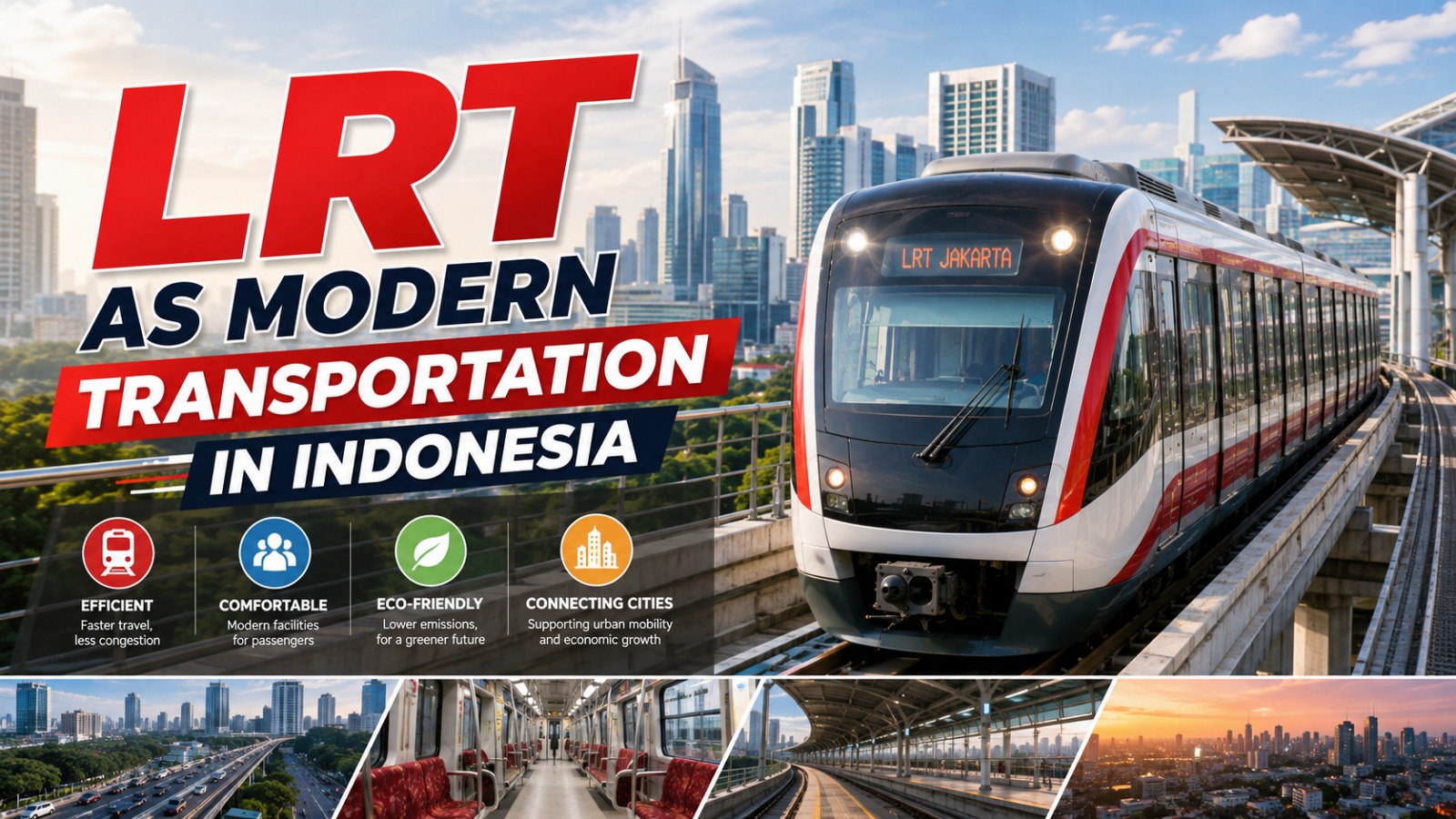
Light Rail Transit (LRT) is one of the modern public transportation systems developed to support mobility in Indonesian cities. Its presence provides an alternative for people who want to travel efficiently without depending entirely on private vehicles. LRT operates on dedicated tracks, allowing trains to avoid most road traffic congestion. With proper integration and service development, LRT can become an important part of Indonesia's modern urban transportation network.
THE ROLE OF LRT IN MODERN TRANSPORTATION
LRT plays an important role in providing fast, organized, and reliable public transportation. Unlike conventional road-based vehicles, LRT operates on a dedicated rail line, so its journey is less affected by traffic congestion. This makes it useful for daily commuters, students, and other urban residents with regular travel needs. LRT can also transport many passengers in a single trip, making the use of urban space more efficient.
The development of LRT also reflects efforts to improve public transportation in Indonesia. Modern stations, electronic ticketing, passenger information systems, and comfortable train facilities can make public transportation more attractive. When these services are managed properly, people may have more reasons to choose public transportation instead of private vehicles. This can support a more efficient and sustainable transportation system.
ADVANTAGES OF LRT FOR URBAN MOBILITY
One major advantage of LRT is its ability to provide more predictable travel times. Because trains use dedicated tracks, passengers do not have to deal directly with traffic jams on ordinary roads. LRT can also carry a large number of passengers while using a relatively limited corridor compared with individual cars. These advantages make rail-based transportation suitable for areas with high population and travel activity.
LRT also offers convenience for people who want to reduce their dependence on private vehicles. Passengers can use their travel time to rest, read, or prepare for work and school instead of driving. In addition, electric rail systems can support efforts to reduce emissions from urban transportation when they encourage a shift away from private vehicles. For these reasons, LRT can provide both mobility and environmental benefits.
LRT AND TRAFFIC CONGESTION
Traffic congestion is a common challenge in rapidly growing urban areas. The increasing number of private cars and motorcycles can place significant pressure on existing road infrastructure. LRT provides an alternative by moving many people through a single train rather than requiring each passenger to use an individual vehicle. If more people shift to public transportation, the number of private vehicles on busy roads can potentially decrease.
However, LRT cannot solve congestion by itself. Its effectiveness depends on whether stations are located near important activity centers and whether passengers can easily reach them. Feeder buses, walking facilities, cycling connections, and other public transportation services are therefore important. A well-connected transportation network can make LRT a stronger solution for urban congestion.
INTEGRATION WITH OTHER TRANSPORTATION MODES
LRT works best when it is connected with other forms of public transportation. Passengers should be able to transfer conveniently between LRT, commuter trains, buses, MRT, and feeder services. Integrated routes can make journeys more practical because people do not have to rely on private vehicles to reach or leave an LRT station. Good integration also helps create a continuous public transportation network across different areas.
Integration should not only focus on physical connections. Clear schedules, passenger information, convenient ticketing systems, and comfortable transfer areas are also important. Easy transfers can reduce waiting times and make public transportation more attractive. With strong integration, LRT can function as an essential part of a broader urban transportation system.
THE FUTURE OF LRT IN INDONESIA
The future of LRT in Indonesia depends on continuous improvements in infrastructure, service quality, and network connectivity. Urban development should be planned together with public transportation so that new residential and commercial areas can be served effectively. LRT stations can also become important transportation hubs when connected with buses, pedestrian facilities, and other modes. This approach can encourage people to choose public transportation for more of their daily journeys.
Public awareness is another important factor in the future development of LRT. People are more likely to use LRT when services are safe, comfortable, affordable, and easy to access. Operators and authorities therefore need to maintain service reliability while responding to passenger needs. With consistent improvements, LRT can contribute to a more modern and sustainable transportation system in Indonesia.
CONCLUSION
LRT is an important part of modern transportation development in Indonesia. Its dedicated tracks, passenger capacity, and predictable travel patterns make it a useful alternative to private vehicles in busy urban areas. However, its benefits will be greater when LRT is integrated with other public transportation modes and supported by accessible stations and reliable services. With proper planning and continuous development, LRT can help create more efficient, comfortable, and sustainable urban mobility in Indonesia.
About the Author
Gusti Ayu Tita P
Author — STEKOM University
An active author focused on academic issues, educational technology, and human resource development in the campus environment.















