
LRT Routes Every Passenger Should Know
Gusti Ayu Tita P
11 Agustus 2026
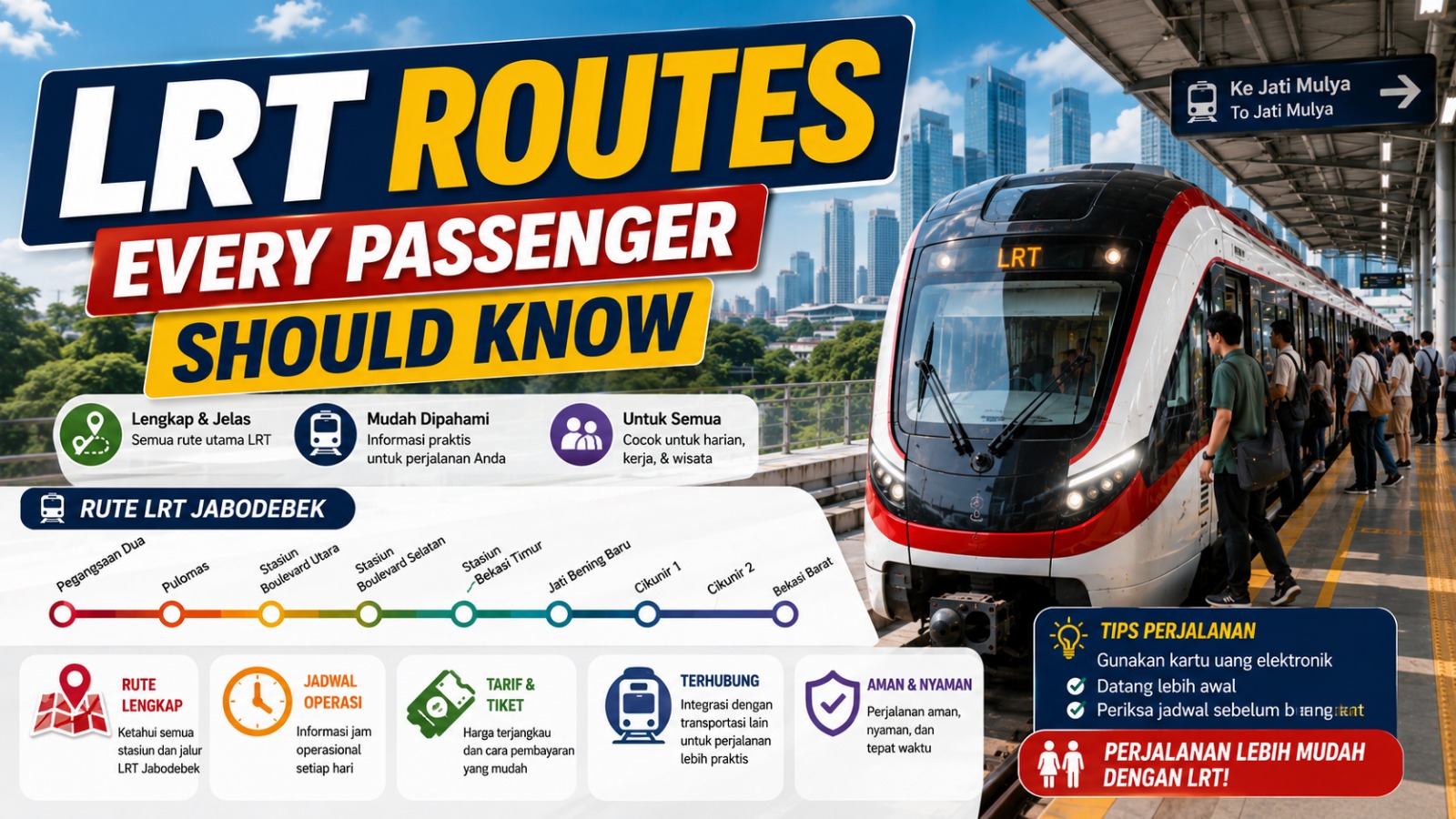
Light Rail Transit or LRT has become an important public transportation option in several urban areas. Understanding LRT routes is essential for passengers who want to travel efficiently without getting confused at stations or during transfers. Each LRT system has its own network, stations, operating rules, and route structure. Therefore, passengers should always check the latest information before starting their journey.
Knowing the route in advance can help passengers choose the right station, direction, and transfer point. It also makes daily travel more predictable and reduces the risk of taking the wrong train. For first-time users, understanding how LRT routes work is an important step toward a comfortable journey.
UNDERSTAND THE LRT ROUTE MAP
The LRT route map shows the stations served by the train and helps passengers identify their starting point and destination. Before traveling, locate the station where you will board and find the station closest to your destination. Pay attention to the direction of the train because trains traveling on the same line may have different final destinations. Understanding these details can prevent passengers from boarding the wrong service.
Passengers should also identify important stations along the route. Some stations may serve as transfer points to other LRT lines or public transportation services. Checking the route map before entering the station makes navigation easier, especially during busy hours. If the map is difficult to understand, passengers can ask station staff for assistance.
KNOW YOUR DEPARTURE STATION
Choosing the correct departure station is an important part of planning an LRT journey. Some destinations may be served by more than one nearby station, so passengers should compare the available options. Consider the walking distance, connecting transportation, and station access before deciding where to start. A convenient departure station can make the entire journey more efficient.
Passengers should also check the station entrance and platform information. Large stations may have several entrances that lead to different areas or platforms. Arriving at the wrong entrance can require additional walking time. Checking station information before leaving home can help passengers avoid unnecessary delays.
CHECK THE TRAIN DIRECTION
Knowing the correct train direction is one of the most important things passengers should understand. The direction is usually indicated by the final station or destination displayed on signs and electronic screens. Passengers should compare this information with their planned route before boarding. Do not assume that every train passing through a station will travel toward the desired destination.
If you are unsure about the direction, check the route map or ask station staff. Taking a train in the wrong direction can result in unnecessary travel and additional transfers. Paying attention to the final destination displayed on the platform is a simple way to avoid this mistake.
IDENTIFY IMPORTANT TRANSFER STATIONS
Transfer stations allow passengers to change from one train line or transportation mode to another. These stations are particularly important for passengers whose destinations are not directly served by a single LRT route. Before traveling, identify whether your journey requires a transfer and where it should take place. Knowing the transfer station in advance can make the journey much easier.
Passengers should also check how long the transfer may take. Some stations require passengers to walk between platforms or follow specific signs to reach another service. During peak hours, crowded platforms may increase transfer time. Planning extra time can help passengers avoid missing their connecting train.
CHECK THE LATEST LRT SCHEDULE
LRT routes are closely connected with operating schedules, so passengers should check departure times before traveling. Train frequency may vary depending on the time of day, day of the week, or operational conditions. Peak hours may have different service patterns compared with quieter periods. Checking the latest schedule can help passengers plan their departure more effectively.
Passengers should use official information from the relevant LRT operator whenever possible. Service changes, maintenance, temporary closures, or operational disruptions can affect normal travel. Checking updates before leaving is especially important when traveling to an unfamiliar destination. This simple habit can prevent unexpected delays.
USE LRT WITH OTHER PUBLIC TRANSPORTATION
LRT routes are often connected with other public transportation services. Depending on the city, passengers may be able to continue their journey using buses, commuter trains, MRT services, or other local transportation. This connection can make it easier to reach destinations that are not located directly along an LRT line. Passengers should therefore consider the entire journey rather than focusing only on the LRT section.
When planning a route, check where the LRT connects with other transportation services. Find out whether a separate ticket or payment method is required for the connecting service. It is also useful to check walking distances between different platforms or stations. Good integration planning can make public transportation faster and more convenient.
PREPARE BEFORE STARTING YOUR JOURNEY
A little preparation can make an LRT journey much easier. Passengers should know their starting station, destination station, train direction, and possible transfer points before entering the system. It is also helpful to prepare the required payment method and check the latest service information. These steps are particularly useful for first-time passengers.
During the journey, continue checking station announcements and electronic displays. If the train approaches your destination, prepare to leave without blocking other passengers. Once you arrive, follow the signs toward the correct exit or connecting transportation. Good preparation allows passengers to use LRT routes confidently and efficiently.
CONCLUSION
Understanding LRT routes is essential for passengers who want a smooth and efficient urban journey. The most important things to know include the route map, departure station, train direction, transfer stations, and current operating schedule. Passengers should also understand how LRT connects with other public transportation services. With proper planning, traveling by LRT can be simple and convenient.
Because routes, schedules, fares, and operating conditions can change, passengers should always check the latest information from the official LRT operator before traveling. Being familiar with the route and following station instructions can help prevent mistakes and make every journey more comfortable.
About the Author
Gusti Ayu Tita P
Author — STEKOM University
An active author focused on academic issues, educational technology, and human resource development in the campus environment.















