Making Peace With The Destiny Of Life And Appreciating Every Process
Gusti Ayu Tita P
9 September 2026
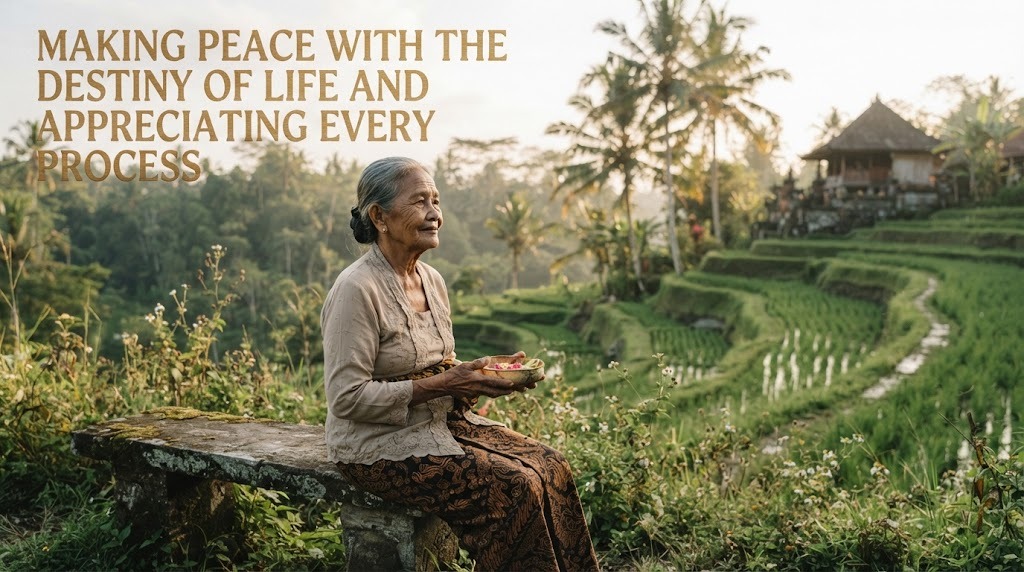
Life is a journey filled with different experiences, emotions, and changes. Sometimes, everything goes according to our plans, but there are also moments when life takes an unexpected direction. Not every situation can be controlled, and this reality can make people feel disappointed or confused. Learning to make peace with the destiny of life can help us face these situations with a calmer and more positive mindset.
Making peace with life does not mean giving up on our dreams or stopping our efforts. It means accepting reality while continuing to do our best. Every process, whether easy or difficult, can provide valuable lessons that help us become stronger, wiser, and more grateful for what we have.
UNDERSTANDING THE DESTINY OF LIFE
The destiny of life refers to the different circumstances and experiences that shape our journey. Some events happen according to our plans, while others come unexpectedly. We cannot always control everything that happens around us, but we can control how we respond to those situations.
Understanding destiny can help us develop realistic expectations about life. Instead of believing that everything must happen exactly as planned, we can learn to accept changes. This mindset allows us to remain open to new possibilities while still making responsible choices.
ACCEPTING THINGS THAT CANNOT BE CHANGED
One of the most important parts of making peace with life is learning to accept things that are already beyond our control. Constantly fighting against reality can consume emotional energy without changing the situation. Acceptance allows us to acknowledge what happened without allowing it to completely control our thoughts.
Acceptance is not the same as giving up. A person can accept an unwanted situation while still looking for ways to improve their circumstances. By focusing on what can still be done, we can gradually move forward instead of remaining trapped in the past.
APPRECIATING EVERY PROCESS
Many people focus heavily on the final result and forget the importance of the journey. However, the process often contains experiences that contribute to personal development. Every step can teach something valuable, even when the result is different from what we originally expected.
A long process can develop patience, discipline, and determination. Difficult moments can also reveal our strengths and show us areas that need improvement. When we appreciate the process, we become more aware of how much we have learned along the way.
LEARNING FROM DIFFICULT EXPERIENCES
Difficult experiences are often uncomfortable, but they can provide important lessons. Problems can teach us how to manage emotions, make decisions, and deal with uncertainty. Challenges can become opportunities for personal growth when we are willing to learn from them.
Instead of asking only why something bad happened, we can also ask what the experience can teach us. This simple change in perspective can help us find useful meaning in difficult situations. Over time, these lessons can improve the way we handle future challenges.
STOPPING THE HABIT OF COMPARING OUR JOURNEY
People often compare their progress with the lives of others. Seeing someone achieve success earlier can make us feel that our own journey is too slow. However, everyone has a different timeline, background, opportunity, and challenge.
Comparing ourselves too much can reduce gratitude and create unnecessary pressure. It is healthier to focus on personal progress instead of measuring our lives against someone else's achievements. What matters is whether we continue learning and moving forward according to our own circumstances.
BEING PATIENT WITH PERSONAL GROWTH
Personal growth rarely happens instantly. Developing confidence, skills, emotional maturity, or better habits often requires repeated effort over a long period. Patience allows us to recognize that meaningful change takes time.
There may be days when progress feels very small. That does not mean that nothing is happening. Small improvements can become significant when they are maintained consistently over time.
LETTING GO OF EXCESSIVE REGRET
Regret can be useful when it encourages us to learn from past decisions. However, constantly blaming ourselves for things we cannot change can prevent us from enjoying the present. The past should become a lesson, not a permanent punishment.
Letting go of excessive regret does not mean forgetting what happened. It means accepting the experience, understanding its lesson, and using that knowledge to make better decisions. This approach can create emotional space for new opportunities and healthier thinking.
TRUSTING THE PROCESS WITHOUT STOPPING EFFORT
Trusting the process does not mean sitting still and waiting for everything to happen automatically. We still need to make plans, take action, and improve ourselves. Acceptance should work together with effort and responsibility.
There may be situations where the outcome remains uncertain despite our best efforts. In those moments, focusing on the process can help reduce unnecessary anxiety. We can concentrate on doing what is within our ability while accepting that the final result may not always be predictable.
FINDING GRATITUDE IN EVERYDAY LIFE
Gratitude can change the way we view our circumstances. Instead of focusing only on what is missing, we can recognize the people, opportunities, abilities, and experiences that already exist in our lives. Gratitude helps us appreciate the present while continuing to work toward the future.
Being grateful does not mean ignoring problems. A person can experience difficulties and still appreciate positive aspects of life. This balanced perspective can make everyday experiences feel more meaningful and reduce the tendency to take important things for granted.
BUILDING EMOTIONAL RESILIENCE
Making peace with life requires emotional strength. Unexpected changes can create sadness, disappointment, anger, or fear. Emotional resilience helps us experience these feelings without allowing them to permanently stop our progress.
Resilience does not mean pretending to be strong all the time. It means recognizing emotions, seeking healthy support when necessary, and gradually finding ways to continue. With experience, people can become better at handling uncertainty and recovering from setbacks.
FOCUSING ON WHAT WE CAN CONTROL
There are many things in life that are outside our control. We cannot control every person's behavior, every unexpected event, or every future outcome. However, we can control our choices, effort, attitude, and response.
Focusing on controllable factors can make problems feel more manageable. Instead of spending too much energy worrying about uncertain outcomes, we can concentrate on practical actions. This habit encourages a healthier and more productive approach to life's challenges.
FINDING MEANING IN THE JOURNEY
Every person's journey has different experiences and challenges. Some moments may seem confusing when they happen, but their meaning can become clearer with time. Life experiences can shape our values, priorities, and understanding of ourselves.
Finding meaning does not require believing that every difficult event is good. Some experiences are genuinely painful and unfair. However, we can still choose to learn from them and use those lessons to build a more meaningful future.
CREATING A PEACEFUL MINDSET FOR THE FUTURE
Making peace with the destiny of life can create a healthier relationship with uncertainty. Instead of expecting complete control, we can prepare ourselves to adapt when circumstances change. A peaceful mindset allows us to remain flexible without losing direction.
We can continue setting goals while accepting that the path toward those goals may change. When plans need to be adjusted, we can evaluate new options instead of immediately assuming that everything has gone wrong. This balance between ambition and acceptance can help us face the future with greater confidence.
CONCLUSION
Making peace with the destiny of life means accepting what we cannot control while continuing to make meaningful efforts. Every process has its own challenges, lessons, and moments of growth. Even when life does not follow our expectations, the experience can still contribute to our development.
Learning to appreciate every process can help us become more patient, grateful, resilient, and responsible. We do not need to understand everything immediately. By focusing on what we can control, learning from the past, and appreciating the present, we can move toward the future with greater peace, wisdom, and hope.
About the Author
Gusti Ayu Tita P
Author — STEKOM University
An active author focused on academic issues, educational technology, and human resource development in the campus environment.