
MBG And The Effort To Build A Healthy And Productive Young Generation
Gusti Ayu Tita P
20 Agustus 2026
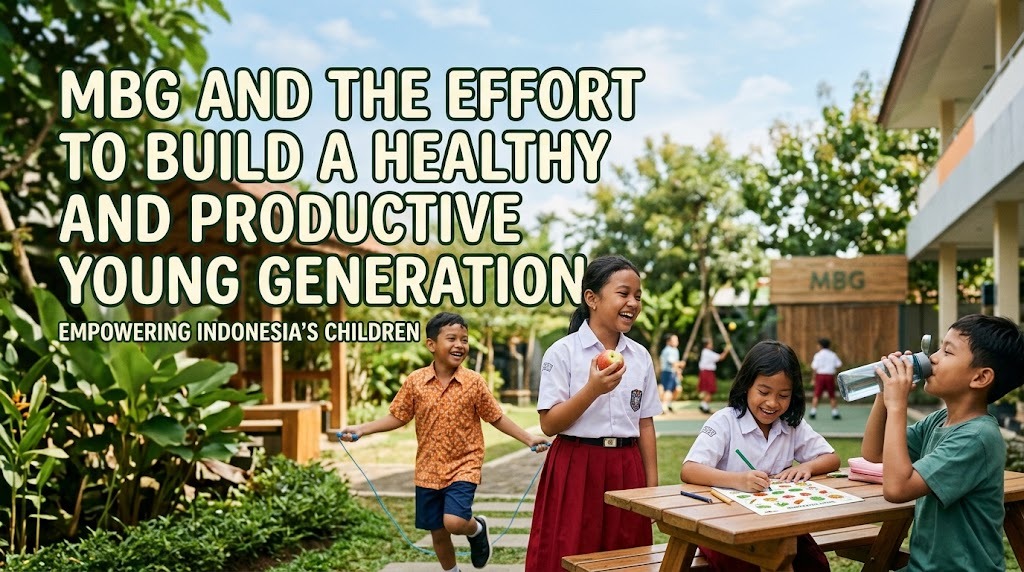
Makan Bergizi Gratis (MBG) is a government nutrition initiative intended to improve access to nutritious meals for targeted beneficiaries, including children and students. Good nutrition is an important foundation for healthy growth, learning, physical activity, and future productivity. Children who receive adequate and balanced nutrition have better nutritional foundations for their development. MBG can provide additional access to nutritious food during school hours while encouraging healthier eating habits. When implemented carefully, the program can support Indonesia's broader effort to develop a healthy and productive young generation.
UNDERSTANDING MBG AND ITS PURPOSE
Makan Bergizi Gratis is designed to provide nutritious meals to eligible beneficiaries as part of a broader public nutrition effort. For school children, the program can provide an additional source of essential nutrients during the school day. A well-planned meal may contain staple foods, protein sources, vegetables, fruits, and other nutrient-rich ingredients. The menu should be adapted to nutritional requirements and local food availability.
MBG has a broader purpose than simply reducing hunger. It can support nutrition improvement, healthy eating habits, food access, and human resource development. Schools can also use the program as an opportunity to teach children about balanced diets and healthy lifestyles. These combined efforts can help create stronger foundations for children's development.
WHY NUTRITION IS IMPORTANT FOR YOUNG PEOPLE
Childhood and adolescence are periods of rapid physical and cognitive development. The body needs adequate energy, protein, vitamins, and minerals to support growth and normal body functions. Nutrition also contributes to brain development and the ability to remain active throughout the day. Poor dietary intake can increase the risk of nutritional problems and may interfere with healthy development.
Good nutrition is also relevant to education and daily productivity. Children need sufficient energy to study, play, exercise, and participate in school activities. A balanced diet can help provide the nutrients needed for these activities. Therefore, improving access to nutritious food is an important part of supporting the development of Indonesia's younger generation.
SUPPORTING HEALTHY PHYSICAL GROWTH
One of the main ways MBG can contribute to a healthier generation is by supporting adequate nutritional intake for physical growth. Protein helps build and maintain body tissues, while carbohydrates provide energy for daily activities. Vitamins and minerals support many normal processes, including bone development and metabolism. A balanced meal can provide several of these nutrients in one serving.
However, children's growth depends on more than school meals. Genetics, total dietary intake, physical activity, sleep, healthcare, sanitation, and living conditions can all influence development. MBG should therefore be considered part of a wider health and nutrition strategy. Regular monitoring can help identify children who may need additional nutritional or health support.
SUPPORTING BRAIN DEVELOPMENT AND LEARNING
Adequate nutrition supports normal brain development and cognitive function during childhood and adolescence. The brain requires energy and nutrients to perform its normal functions. A varied diet can provide nutrients that contribute to healthy development and daily mental activities. This can help create a stronger foundation for children's learning experiences.
School meals can also help reduce short-term hunger. Students who are hungry may find it more difficult to concentrate on lessons or participate actively in classroom activities. Providing a nutritious meal may create better conditions for learning readiness and classroom participation. Nevertheless, academic success also depends on teaching quality, motivation, study habits, family support, and the learning environment.
PROMOTING HEALTHIER EATING HABITS
MBG can introduce children to balanced and diverse foods from an early age. Meals containing vegetables, fruits, protein sources, and staple foods can help students become more familiar with different food groups. Regular exposure to nutritious foods may encourage children to develop healthier preferences. These habits can potentially continue as they grow into adolescence and adulthood.
Nutrition education can make this effect stronger. Schools can explain why children need different nutrients and how food affects growth and health. Parents can reinforce these lessons by providing nutritious meals at home. Consistent guidance from schools and families can help children develop sustainable healthy eating habits.
SUPPORTING IMMUNITY AND GENERAL WELLBEING
Adequate nutrition contributes to normal immune system function and general health. Protein, vitamins, minerals, and other nutrients support various biological processes in the body. A balanced diet can provide the nutritional foundation children need to maintain their health. MBG can contribute by increasing access to nutritious food among eligible students.
However, healthy nutrition should be combined with other healthy behaviors. Clean water, sanitation, personal hygiene, physical activity, sufficient sleep, and healthcare are also important for children's wellbeing. Schools can integrate these practices into broader health education. This approach can make the overall impact of nutrition programs more comprehensive.
REDUCING NUTRITIONAL INEQUALITY
Children have different levels of access to nutritious food because of economic conditions, location, food availability, and household circumstances. MBG can provide an additional source of nutritious food for eligible children during school hours. This may help reduce some differences in access to balanced meals. It can also provide children with greater opportunities to experience nutritious foods.
Reducing nutritional inequality requires broader cooperation. Government institutions, schools, families, health professionals, communities, and food suppliers all have roles to play. Other measures related to food security, healthcare, sanitation, and social protection may also be important. MBG can have a stronger impact when it is integrated with these wider efforts.
BUILDING PRODUCTIVE FUTURE GENERATIONS
A healthy childhood provides an important foundation for future education, skills, productivity, and quality of life. Children who have better nutritional support can have stronger foundations for learning and development. Over time, investments in child nutrition can contribute to the quality of human resources. This makes nutrition policy relevant not only to health but also to Indonesia's long-term development.
Productivity in adulthood is influenced by many factors, including education, economic opportunities, health, skills, and social conditions. MBG cannot determine a child's future on its own. However, providing better nutritional support during important developmental periods can contribute to a healthier foundation for future participation in society and the workforce.
USING LOCAL FOOD RESOURCES
Indonesia has a wide range of local food resources that can contribute to nutritious meals. Foods such as fish, eggs, legumes, vegetables, fruits, and local staple foods can provide different nutrients. Using appropriate local ingredients can make meals more familiar to children and support dietary diversity. Menus should still meet appropriate nutritional and food safety standards.
Local sourcing can also potentially support farmers, fishers, small food producers, and other parts of the local food economy. This creates an opportunity to connect child nutrition with local economic development. However, supply chains need proper quality control to ensure consistent food safety and availability. Responsible use of local food resources can make the program more sustainable.
ENSURING SAFE AND EFFECTIVE IMPLEMENTATION
The benefits of MBG depend on food safety, nutritional quality, reliable distribution, and continuous monitoring. Ingredients need to be handled safely from preparation through serving. Food handlers should follow appropriate hygiene practices and receive relevant training. Meals must also be distributed in ways that maintain their safety and quality.
Evaluation should measure more than the number of meals served. Program managers can examine dietary quality, food acceptance, food waste, nutritional indicators, school participation, and implementation performance. Feedback from students, parents, teachers, and health professionals can help identify areas for improvement. Continuous evaluation can make MBG more effective and responsive to children's needs.
CONCLUSION
MBG can contribute to building a healthy and productive young generation in Indonesia by improving access to nutritious food during important stages of growth and development. The program can support physical growth, brain development, learning readiness, healthy eating habits, and general wellbeing. Its long-term benefits depend on balanced menus, food safety, effective distribution, nutrition education, family participation, and continuous evaluation. MBG should also work alongside healthcare, quality education, sanitation, and other programs that influence children's wellbeing. With responsible implementation, MBG can become an important investment in Indonesia's healthier and more productive future generation.
About the Author
Gusti Ayu Tita P
Author — STEKOM University
An active author focused on academic issues, educational technology, and human resource development in the campus environment.















