
MBG As An Effort To Improve The Nutritional Quality Of The Young Generation
Gusti Ayu Tita P
20 Agustus 2026
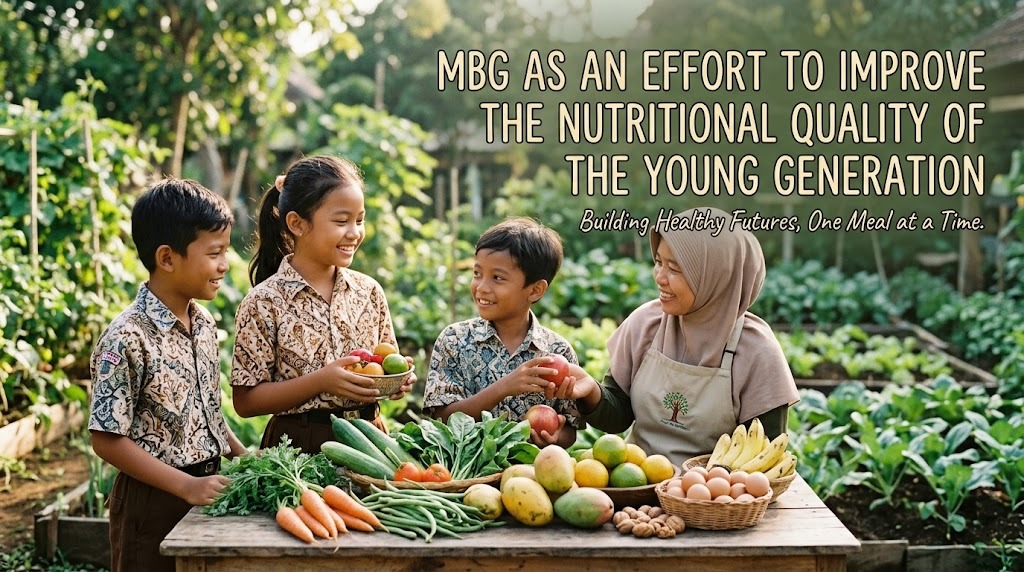
Makan Bergizi Gratis (MBG) is an important government initiative aimed at improving access to nutritious food among targeted groups, particularly children and students. Nutritional quality plays a major role in determining the physical growth, learning capacity, and overall health of the younger generation. Children who receive adequate and balanced nutrition have a stronger foundation for healthy development. Through the provision of nutritious meals, MBG seeks to address nutritional challenges while encouraging healthier eating habits. When implemented effectively, the program can become part of Indonesia's broader investment in human resource development.
UNDERSTANDING MBG AND ITS MAIN PURPOSE
Makan Bergizi Gratis is a government food program designed to provide nutritious meals to eligible beneficiaries. One of its important objectives is to improve access to food that contains essential nutrients needed for growth and development. Meals can include sources of protein, carbohydrates, vegetables, fruits, vitamins, and minerals, depending on nutritional requirements and local food availability. The program also provides an opportunity to introduce children to balanced dietary patterns.
The importance of MBG is connected to the nutritional challenges that can affect children and adolescents. Inadequate nutrition can influence growth, immunity, concentration, and general wellbeing. Providing nutritious food at school can help children obtain an additional source of essential nutrients during the day. However, MBG should complement healthy meals at home rather than replace the role of families in meeting children's overall nutritional needs.
WHY NUTRITION MATTERS FOR THE YOUNG GENERATION
Nutrition is essential for physical and cognitive development during childhood and adolescence. The body requires adequate energy and nutrients to build tissues, maintain normal body functions, and support brain development. Protein, healthy fats, carbohydrates, vitamins, and minerals all have important roles in a balanced diet. Without sufficient nutrition, children may face difficulties in achieving their optimal growth and development.
Nutrition also influences children's ability to participate in daily activities and education. A child who does not receive enough food or essential nutrients may have lower energy and difficulty maintaining concentration. A nutritious meal can provide energy needed for learning, playing, and physical activity. For this reason, improving children's nutritional quality can also contribute to better educational and developmental opportunities.
MBG AND IMPROVED FOOD ACCESS
One of the main contributions of MBG is improving access to nutritious meals for eligible children. Economic conditions can influence the ability of families to provide diverse and nutritious foods every day. A school-based meal program can provide additional nutritional support during school hours. This approach can help reduce some differences in access to nutritious food among children.
MBG can also make nutritious foods more familiar to children. Menus that include vegetables, fruits, protein sources, and other nutrient-rich ingredients can expose students to greater dietary variety. Local ingredients can be incorporated when they are safe, nutritious, and suitable for the menu. This can potentially support both child nutrition and local food systems.
SUPPORTING PHYSICAL GROWTH AND DEVELOPMENT
A nutritious diet provides the nutrients required for healthy physical growth. Children need sufficient protein and energy to support the development of muscles, bones, organs, and other body tissues. Vitamins and minerals also support various normal biological functions. Providing balanced meals can therefore contribute to a stronger nutritional foundation during important stages of development.
MBG can be particularly valuable when nutritious meals are consistently provided and meet appropriate nutritional standards. However, physical growth is influenced by many factors, including genetics, overall diet, physical activity, sleep, healthcare, and living conditions. Therefore, MBG should be viewed as one component of a broader strategy for improving children's health. Regular monitoring can help determine whether the program is achieving its nutritional objectives.
SUPPORTING BRAIN DEVELOPMENT AND LEARNING
Brain development depends on adequate nutrition, especially during childhood and adolescence. Nutrients obtained from a balanced diet help support normal brain function and overall cognitive development. Children also need sufficient energy to stay active and engaged during school activities. Providing nutritious food can help create better conditions for children to participate in learning.
MBG can also be combined with nutrition education to increase children's understanding of healthy food choices. Teachers can explain the importance of different food groups and how nutrition affects the body. Students can gradually learn to recognize balanced meals and understand why dietary variety matters. These lessons can encourage healthier habits that may continue into adulthood.
STRENGTHENING IMMUNITY AND GENERAL HEALTH
Good nutrition contributes to normal immune system function and supports the body's ability to maintain health. Protein, vitamins, minerals, and other nutrients are involved in many processes that keep the body functioning properly. A balanced diet can therefore provide children with a better nutritional foundation for maintaining their health. MBG can contribute to this foundation by increasing access to nutritious food.
However, healthy nutrition should be supported by other healthy practices. Clean water, sanitation, personal hygiene, physical activity, adequate sleep, and access to healthcare are also important for children's wellbeing. Schools can use MBG as an opportunity to promote these complementary health behaviors. A comprehensive approach can produce greater benefits than focusing on food alone.
DEVELOPING HEALTHY EATING HABITS
MBG has the potential to encourage healthy eating habits from an early age. Children who regularly see balanced meals can become more familiar with different nutritious food groups. Exposure to vegetables, fruits, protein sources, and other healthy ingredients may encourage greater dietary variety. Developing healthy habits during childhood can influence food choices later in life.
Families play an important role in reinforcing these habits. Parents can provide nutritious meals at home and encourage children to make balanced food choices. Schools can communicate with families about nutrition and provide practical guidance on healthy eating. Consistent support from schools and families can make nutrition education more effective.
SUPPORTING NUTRITIONAL EQUALITY
Nutritional inequality can occur when children have different levels of access to healthy and nutritious foods. Factors such as household income, location, food availability, and living conditions can influence dietary quality. MBG can help provide a common source of nutritious food for eligible children during school hours. This can contribute to efforts to improve nutrition equity among young people.
Nevertheless, improving nutritional equality requires more than a single program. It should be supported by health services, nutrition education, sanitation improvements, food security initiatives, and social protection where appropriate. Coordination between national and local stakeholders is important for achieving sustainable outcomes. Continuous evaluation can also identify areas where additional support is needed.
CHALLENGES IN IMPLEMENTING MBG
Large-scale nutrition programs require careful attention to food safety and quality control. Meals need to be prepared, stored, transported, and distributed according to appropriate food safety practices. Poor handling can create health risks, making monitoring essential at every stage of the food supply chain. Reliable standards and trained personnel are therefore important for successful implementation.
Another challenge is ensuring that meals remain nutritionally balanced, diverse, culturally acceptable, and suitable for local conditions. Indonesia has many different food traditions and levels of food availability across regions. Using nutritious local ingredients can help create menus that are more appropriate for communities. Regular feedback and evaluation can help improve menus and program management over time.
MBG AS AN INVESTMENT IN FUTURE HUMAN RESOURCES
Improving nutrition among young people is an investment in Indonesia's future human resources. Healthy children have a stronger foundation for education, skill development, productivity, and participation in society. Better nutritional conditions can support children as they progress through different stages of life. Therefore, MBG has significance beyond the immediate provision of meals.
The long-term impact of MBG should be measured through meaningful outcomes rather than only the number of meals distributed. Indicators such as dietary quality, nutritional status, food safety, school participation, and program effectiveness can provide valuable information. Data-based evaluation can help policymakers identify what works and what needs improvement. With consistent monitoring and responsible implementation, MBG can become a valuable component of Indonesia's long-term development strategy.
CONCLUSION
MBG is an important effort to improve the nutritional quality of Indonesia's young generation by increasing access to nutritious meals for targeted beneficiaries. The program can support physical growth, brain development, learning readiness, immunity, and healthier eating habits. Its potential benefits can become stronger when MBG is integrated with nutrition education, healthcare, sanitation, family involvement, and food safety measures. Successful implementation requires appropriate nutritional standards, effective distribution, continuous monitoring, and adaptation to local conditions. Ultimately, a well-managed MBG program can contribute to building a healthier, stronger, and better-prepared young generation for Indonesia's future.
About the Author
Gusti Ayu Tita P
Author — STEKOM University
An active author focused on academic issues, educational technology, and human resource development in the campus environment.















