
Mining Contributions to Regional Economic Growth
Gusti Ayu Tita P
20 Agustus 2026
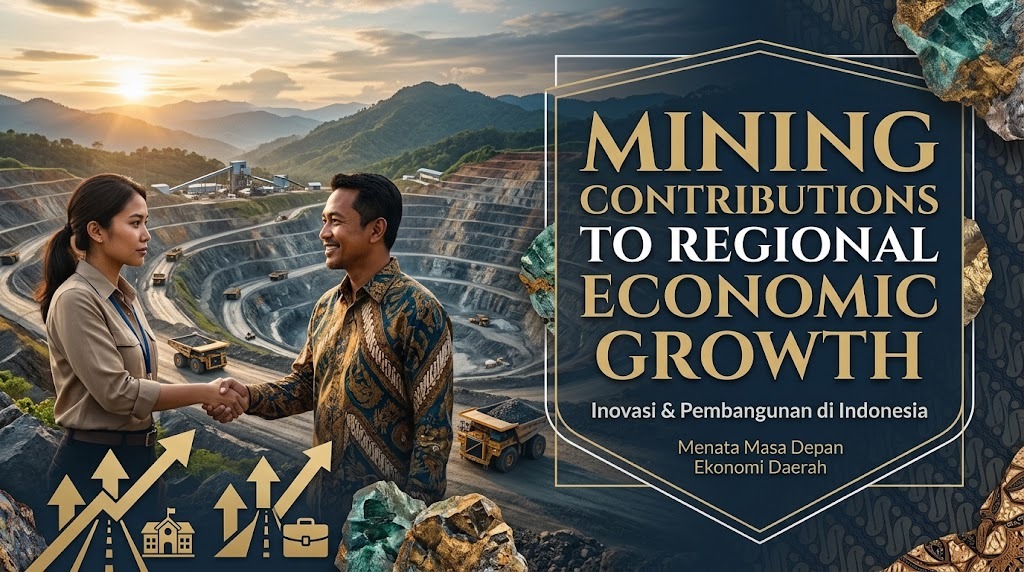
The mining industry plays an important role in supporting economic activity in many resource-rich regions. Mining operations can create employment, generate demand for local goods and services, and contribute to public revenue through taxes and other payments. When managed responsibly, these activities can help strengthen regional economies and support long-term development.
However, the economic contribution of mining should not be measured only by production value. A successful mining region also needs infrastructure, skilled workers, local businesses, and effective environmental management. Balancing economic opportunities with social and environmental responsibilities is essential for achieving sustainable regional growth.
CREATING LOCAL EMPLOYMENT OPPORTUNITIES
One of the most visible economic benefits of mining is the creation of local employment. Mining companies require workers for exploration, extraction, transportation, processing, maintenance, administration, engineering, and environmental management. These positions can provide income for workers and contribute to household economic stability.
Mining activities can also create indirect employment outside the mining company itself. Local businesses may provide food, transportation, accommodation, equipment, maintenance, and other services. As demand for these services grows, more people can find opportunities to participate in the regional economy.
SUPPORTING LOCAL BUSINESSES
Mining operations often require a wide range of goods and services, creating opportunities for local businesses. Small and medium-sized enterprises can supply catering, logistics, construction materials, repair services, and other operational needs. This can increase economic activity beyond the mining site.
Local entrepreneurs can also develop businesses that serve workers and surrounding communities. Restaurants, retail stores, transportation services, and accommodation providers may experience increased demand. If local businesses receive appropriate training and access to markets, mining activity can contribute to the development of a broader regional business ecosystem.
IMPROVING INFRASTRUCTURE AND CONNECTIVITY
Mining projects may require roads, electricity, communication networks, water facilities, and other infrastructure to support their operations. In some areas, the development of such infrastructure can also improve regional connectivity for surrounding communities. Better infrastructure can make it easier for people to access markets, education, healthcare, and public services.
The long-term value of infrastructure depends on how it is planned and managed. Facilities should provide benefits beyond mining operations whenever possible. Governments and companies need to coordinate so that infrastructure development supports wider regional needs rather than serving only short-term industrial purposes.
CONTRIBUTING TO PUBLIC REVENUE
Mining can contribute to government revenue through taxes, royalties, fees, and other payments established under applicable regulations. These revenues can support regional development when managed effectively. Public funds may be allocated to infrastructure, education, healthcare, public services, and other development priorities.
The economic benefits of mining depend partly on transparent and responsible revenue management. Governments need appropriate systems to ensure that public revenue is used effectively and reaches development programs. Strong governance can help communities receive lasting benefits from natural resource activities.
DEVELOPING LOCAL SKILLS AND HUMAN CAPITAL
The growth of the mining sector can increase demand for workers with technical and professional skills. Companies may provide workforce training in areas such as equipment operation, engineering, safety, environmental management, and digital technology. These programs can improve the employability of local residents.
Skill development can also create benefits beyond the mining sector. Workers who gain technical and professional experience may use their skills in other industries or develop independent businesses. This can help reduce excessive economic dependence on mining and create a more diverse regional economy.
BALANCING ECONOMIC GROWTH AND ENVIRONMENTAL RESPONSIBILITY
Mining can generate substantial economic benefits, but poorly managed operations may create environmental and social costs. Water quality, land use, biodiversity, and community livelihoods need to be considered throughout the mining process. Environmental management should therefore be treated as an essential part of economic planning rather than a separate activity.
Companies can use modern monitoring systems, efficient equipment, and responsible land rehabilitation practices to reduce environmental impacts. Governments also have an important role in establishing and enforcing appropriate standards. When economic development is combined with environmental protection and community participation, mining can make a more lasting contribution to regional prosperity.
BUILDING A DIVERSIFIED REGIONAL ECONOMY
Mining can provide a strong economic stimulus, but resource-rich regions also need to prepare for changes in commodity prices and the eventual decline of individual mining projects. Economic diversification can reduce dependence on a single industry. Agriculture, manufacturing, tourism, services, and small businesses may provide additional sources of income.
Long-term regional planning should therefore use mining-related opportunities to build capabilities that remain valuable beyond the life of a mine. Investment in education, infrastructure, entrepreneurship, and local industries can help communities become more resilient. With responsible planning, mining can serve as a foundation for broader and more sustainable economic development.
About the Author
Gusti Ayu Tita P
Author — STEKOM University
An active author focused on academic issues, educational technology, and human resource development in the campus environment.















