
Ministry of Finance Transformation Toward Modern Governance
Gusti Ayu Tita P
1 Agustus 2026
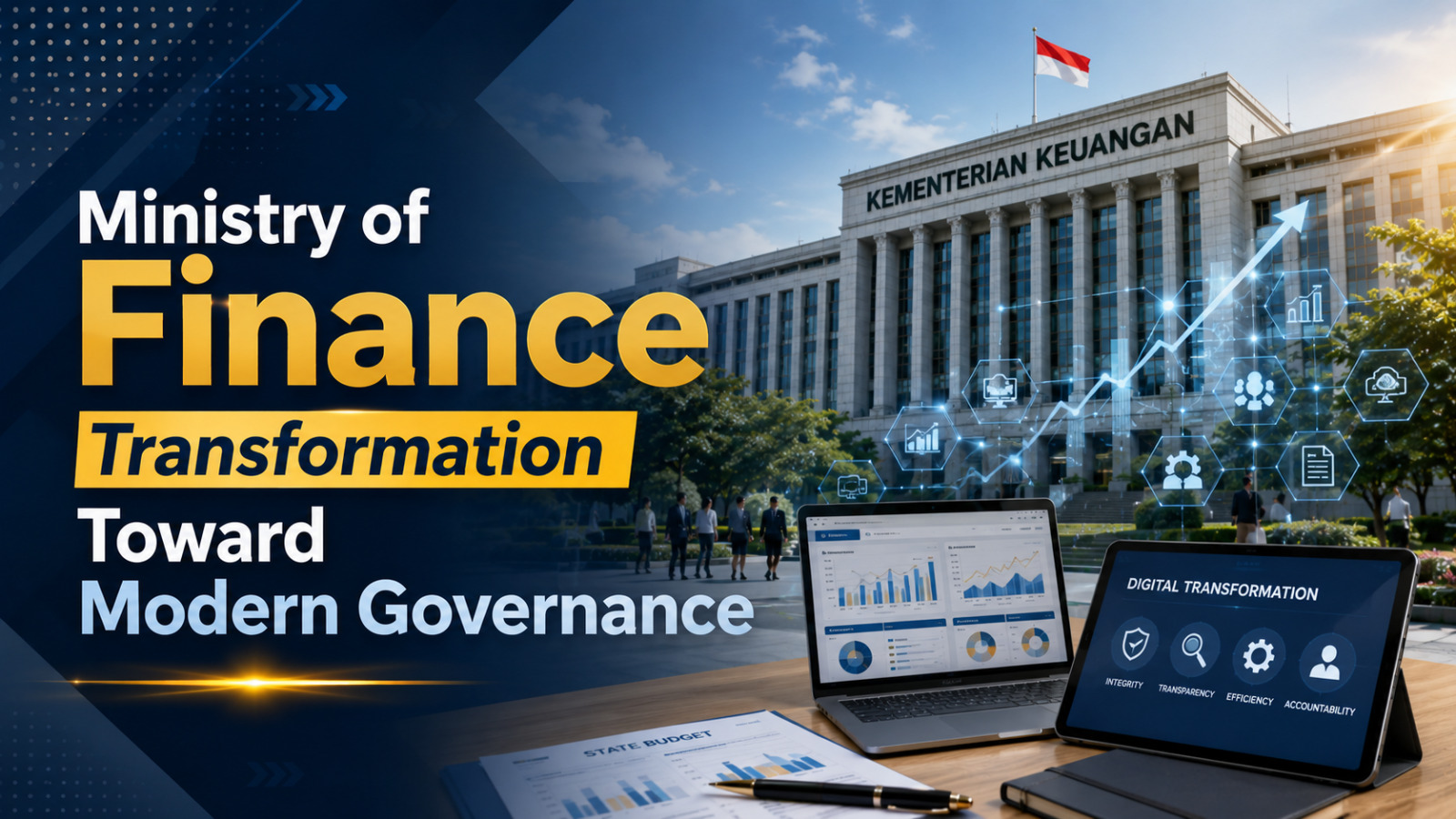
The Ministry of Finance continues its transformation toward modern governance by improving financial management, strengthening transparency, and adopting digital technology. As public expectations for efficient government services continue to grow, the ministry has implemented various reforms to create a more accountable, responsive, and professional financial system. These improvements support better public services while enhancing national economic performance.
Through continuous innovation and institutional reform, the Ministry of Finance is building a governance system that meets international standards. Modern financial management strengthens public trust and supports Indonesia's long-term development goals.
STRENGTHENING DIGITAL FINANCIAL SYSTEMS
A major part of the ministry's transformation is the adoption of digital financial systems. Digital platforms simplify budget management, tax administration, financial reporting, and public services. These technologies improve efficiency by reducing manual processes and increasing data accuracy. Digital systems also enable faster decision-making and better coordination among government institutions. As a result, financial management becomes more transparent and reliable.
Continuous investment in digital infrastructure ensures that financial services remain secure and accessible. Technology plays a key role in supporting modern government operations.
IMPROVING TRANSPARENCY AND ACCOUNTABILITY
The Ministry of Finance promotes transparency and accountability through stronger financial supervision and standardized reporting systems. Transparent financial management allows government spending to be monitored more effectively and helps prevent financial irregularities. Public access to accurate financial information increases confidence in government institutions. Strong accountability also encourages responsible use of public resources. These practices create a trustworthy and efficient governance system.
Regular financial evaluations help improve policy implementation and strengthen institutional performance. Better governance supports sustainable national development.
ENHANCING PUBLIC SERVICE QUALITY
Modern governance requires efficient and accessible public services. The Ministry of Finance continuously improves service delivery by introducing digital platforms and simplifying administrative procedures. Faster and more convenient financial services benefit taxpayers, businesses, and government agencies alike. Improved service quality also increases operational efficiency and public satisfaction. These innovations contribute to a more responsive government.
The ministry regularly updates its systems to meet changing public needs and technological developments. Continuous improvement ensures high-quality financial services across the country.
BUILDING A PROFESSIONAL FINANCIAL INSTITUTION
Institutional transformation also focuses on developing a professional workforce within the Ministry of Finance. Training programs, leadership development, and performance evaluation help improve employee competence and integrity. Skilled professionals are better equipped to manage public finances and respond to economic challenges. A strong organizational culture encourages innovation, collaboration, and ethical decision-making. These efforts strengthen the ministry's ability to deliver effective financial governance.
By investing in human resources, the ministry ensures that modernization is supported by capable and accountable professionals. This approach contributes to long-term institutional excellence.
CONCLUSION
The Ministry of Finance continues its transformation toward modern governance through digital innovation, transparent financial management, improved public services, and professional institutional development. These reforms strengthen accountability, increase operational efficiency, and support sustainable national development. By embracing modernization, the ministry continues to build a stronger and more effective public financial system.
About the Author
Gusti Ayu Tita P
Author — STEKOM University
An active author focused on academic issues, educational technology, and human resource development in the campus environment.















