
Ministry of Public Works Programs That Improve National Connectivity
Gusti Ayu Tita P
30 Juli 2026
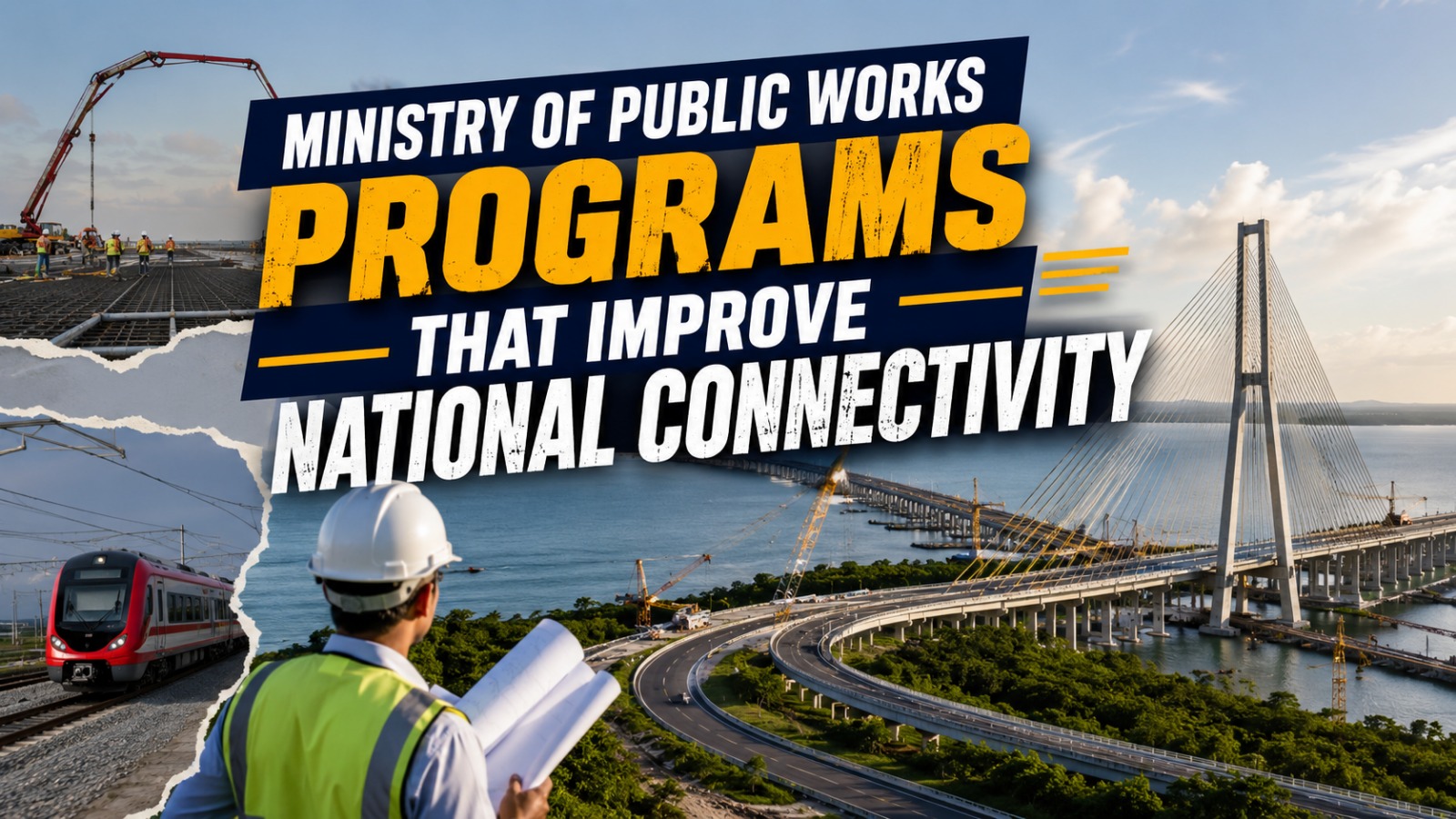
National connectivity is one of the most important foundations of economic growth, social development, and equal access to public services. In many countries, the Ministry of Public Works plays a central role in planning and developing infrastructure that connects cities, rural communities, industrial areas, and strategic economic zones. Through the construction of roads, bridges, dams, transportation facilities, and water infrastructure, these programs create better opportunities for businesses and improve the quality of life for millions of people.
This article explores how Ministry of Public Works programs contribute to stronger national connectivity, why they are important, and how they support sustainable development for future generations.
IMPORTANCE OF NATIONAL CONNECTIVITY
National connectivity refers to the ability of people, goods, and services to move efficiently across different regions. Good infrastructure reduces travel time, lowers transportation costs, and supports economic activities throughout the country. When regions are well connected, businesses can distribute products more efficiently, while citizens gain easier access to education, healthcare, and employment opportunities.
Strong connectivity also helps reduce development gaps between urban and rural areas. Communities that were once isolated can benefit from improved transportation networks and public facilities. As a result, investments become more attractive, local economies grow, and national development becomes more balanced. This is why infrastructure remains one of the government's highest priorities.
ROAD AND HIGHWAY DEVELOPMENT PROGRAMS
Road and highway construction is among the largest programs managed by the Ministry of Public Works. Modern highways connect major cities, industrial centers, airports, and ports, allowing faster movement of people and goods. These projects significantly improve logistics efficiency and reduce operational costs for businesses.
In addition to building new roads, the ministry also focuses on maintaining and upgrading existing transportation networks. Regular maintenance extends road life and improves traffic safety. Better road quality also supports tourism, encourages regional trade, and increases access to essential public services for remote communities.
BRIDGE CONSTRUCTION TO CONNECT REGIONS
Bridges play a vital role in connecting areas separated by rivers, valleys, and coastal waters. Large bridge projects eliminate transportation barriers that previously limited economic and social interaction. They also shorten travel distances and improve emergency response capabilities.
Beyond transportation benefits, bridges stimulate regional development by attracting new investments and encouraging commercial activities. Improved accessibility supports local industries, agriculture, and tourism. Well-designed bridges also strengthen national integration by making distant regions easier to reach.
WATER RESOURCE MANAGEMENT PROJECTS
The Ministry of Public Works also develops water infrastructure, including dams, reservoirs, irrigation systems, and flood control facilities. These projects ensure reliable water supplies for agriculture, industry, and households. Effective water management supports food security and enhances environmental sustainability.
Dams also contribute to disaster risk reduction by controlling floods during heavy rainfall. Irrigation networks improve agricultural productivity and help farmers maintain stable crop production throughout the year. Together, these projects strengthen both rural development and national economic resilience.
SUPPORTING LOGISTICS AND ECONOMIC GROWTH
Efficient infrastructure directly supports national logistics systems by reducing delivery times and transportation expenses. Businesses benefit from smoother supply chains, allowing products to reach consumers more quickly and at lower costs. This increased efficiency strengthens competitiveness in domestic and international markets.
Infrastructure investments also create employment opportunities during both construction and operational phases. Better connectivity encourages industrial expansion, attracts foreign investment, and stimulates entrepreneurship. As economic activities increase, government revenue and regional prosperity also improve.
PROMOTING SUSTAINABLE INFRASTRUCTURE DEVELOPMENT
Modern public works programs increasingly emphasize sustainability in planning and implementation. Infrastructure projects now consider environmental protection, climate resilience, and efficient resource utilization. Sustainable construction methods reduce environmental impacts while ensuring long-term functionality.
Green infrastructure also supports cleaner transportation systems and better water conservation practices. Incorporating modern technologies into infrastructure management improves maintenance efficiency and extends asset lifespan. These approaches help ensure that development meets today's needs without compromising future generations.
CHALLENGES IN IMPLEMENTING PUBLIC WORKS PROGRAMS
Despite significant progress, infrastructure development still faces several challenges. Land acquisition, budget limitations, environmental concerns, and complex project management often require careful coordination among multiple stakeholders. Addressing these issues requires transparent planning and strong institutional cooperation.
Technological innovation continues to improve project delivery through digital monitoring, data-driven planning, and smarter construction techniques. Public participation and effective policy implementation also contribute to successful infrastructure development. Continuous improvement ensures that future projects deliver greater benefits for society.
CONCLUSION
Ministry of Public Works programs play a fundamental role in improving national connectivity through the development of roads, bridges, water infrastructure, and sustainable public facilities. These initiatives strengthen economic growth, improve public services, reduce regional disparities, and create better opportunities for communities across the country. Although challenges remain, continuous investment, technological advancement, and sustainable planning will help build a more connected, resilient, and prosperous nation for future generations.
About the Author
Gusti Ayu Tita P
Author — STEKOM University
An active author focused on academic issues, educational technology, and human resource development in the campus environment.















