
Mistakes to Avoid During the Madrasah Examination
Gusti Ayu Tita P
29 Agustus 2026
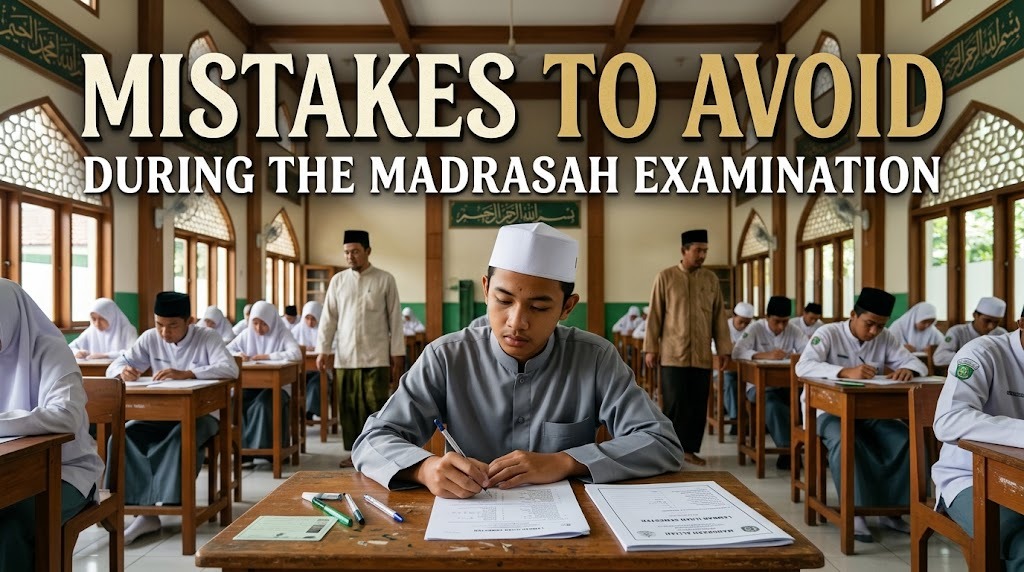
The Madrasah Examination is an important assessment that requires proper academic and mental preparation. Students may understand the learning materials well but still lose points because of simple mistakes during the examination. Problems such as rushing through questions, poor time management, or failing to follow instructions can affect the final result. Therefore, knowing the common mistakes to avoid during the Madrasah Examination can help students stay focused and perform better.
Good preparation is not only about studying hard before the examination. Students also need to develop careful reading habits, manage their time, prepare the necessary equipment, and remain calm. By avoiding common mistakes, students can use their knowledge more effectively when answering examination questions.
STUDYING ONLY AT THE LAST MINUTE
One of the biggest mistakes students can make is relying on last minute studying. Trying to learn a large amount of material in one night can cause stress, tiredness, and difficulty remembering important information. It may also reduce the quality of sleep before the examination. As a result, students may find it harder to concentrate the next day.
A better approach is to study gradually in the days or weeks before the examination. Create a realistic study schedule and divide the subjects into manageable sections. Spend additional time reviewing topics that are difficult to understand. Consistent preparation is generally more useful than trying to memorize everything shortly before the examination.
IGNORING EXAMINATION INSTRUCTIONS
Students sometimes lose valuable points because they do not read the examination instructions carefully. Words such as "except," "most appropriate," "correct," or "incorrect" can significantly change the meaning of a question. Misunderstanding an instruction may result in an incorrect answer even when the student understands the subject. Therefore, students should read every question carefully before choosing an answer.
Pay attention to instructions about how answers should be completed. Check whether all questions must be answered and follow the required format. If the examination uses a specific system or device, understand the procedures before starting. Careful reading can prevent simple errors that could otherwise be avoided.
SPENDING TOO MUCH TIME ON ONE QUESTION
A difficult question can make students spend too much time trying to find the answer. This can reduce the time available for other questions that may be easier. As the examination continues, students may become increasingly worried because they have not completed enough questions. Good time management can help prevent this problem.
Start with questions that you understand and can answer confidently. If a question is particularly difficult, move to the next one when the examination rules allow it. Mark the difficult question and return to it after completing the easier questions. This strategy allows students to use their available time more efficiently.
FAILING TO CHECK ANSWERS
Some students immediately submit their work after answering the final question. However, simple mistakes such as unanswered questions, incorrect calculations, or selecting the wrong option can remain unnoticed. A final review provides an opportunity to identify and correct these errors. Therefore, students should reserve some time for checking their answers.
Review the questions systematically instead of checking them randomly. Pay special attention to questions that were difficult or answered with uncertainty. Make sure every required question has been completed. If the examination uses an answer sheet or digital system, also check that the selected answers match the intended question numbers.
ARRIVING LATE
Arriving late can create unnecessary stress before an examination begins. Students may have to rush into the examination room and start answering questions without enough time to prepare mentally. Depending on the examination rules, late arrival may also create administrative problems. Planning the journey in advance can help avoid this situation.
Prepare your examination equipment and documents the night before. Check the examination location and estimate the travel time. Leave home early enough to allow for unexpected delays. Arriving with enough time to spare can help students feel calmer and more prepared.
FORGETTING NECESSARY EQUIPMENT
Forgetting important examination equipment can cause unnecessary problems. Students should know which stationery, identification documents, or other items are required by their school or examination organizers. They should also understand which items are prohibited. Preparing everything in advance can prevent last minute confusion.
Create a simple checklist before examination day. Check the condition of pens, pencils, erasers, identification documents, and other permitted equipment. Put everything in one place the night before. This small habit can make the examination morning more organized and less stressful.
PANICKING DURING THE EXAMINATION
Feeling nervous before or during an examination is normal. However, excessive panic can make it difficult to concentrate and recall information that has already been studied. Students may suddenly feel that they have forgotten everything even when they are actually prepared. Learning how to manage anxiety is therefore an important part of examination preparation.
If you begin to feel overwhelmed, pause briefly and take slow, controlled breaths when the examination rules allow it. Focus on one question at a time instead of thinking about the final score. Start with questions that you understand to rebuild confidence. Staying calm can help the mind work more effectively.
COMPARING YOUR PROGRESS WITH OTHER STUDENTS
Students may become nervous when they see classmates answering questions quickly or finishing before them. However, the speed of another student does not necessarily indicate that their answers are correct. Everyone has a different reading speed, thinking process, and level of confidence. Comparing yourself with others can distract you from your own examination.
Focus on your own questions and use the time provided as effectively as possible. If other students finish early, continue reviewing your work if time remains. Trust the preparation you have completed before the examination. Concentration on your own work is more useful than worrying about what other students are doing.
IGNORING PHYSICAL HEALTH
Studying for long hours without enough rest can negatively affect examination performance. Lack of sleep may reduce concentration, alertness, and the ability to process information. Staying awake all night to study may therefore be less helpful than getting enough rest. Students should prepare their bodies as well as their minds.
Maintain a regular sleep schedule before examination day and eat properly according to your needs. Drink enough water and take reasonable breaks during study sessions. Avoid excessive caffeine as a substitute for proper sleep. A healthy routine can help students remain focused and energetic during the examination.
VIOLATING EXAMINATION RULES
Every Madrasah Examination has rules that students are expected to follow. Bringing prohibited devices, communicating without permission, or using unauthorized materials can lead to serious consequences. Students should not risk their academic results by attempting to gain an unfair advantage. Academic honesty is an important part of the examination process.
Read and understand the examination rules before entering the examination room. If you are unsure whether an item or action is permitted, ask the teacher or examination supervisor. Complete the examination using your own knowledge and preparation. Following the rules protects both the student's results and the integrity of the examination.
CONCLUSION
Mistakes to avoid during the Madrasah Examination include studying at the last minute, ignoring instructions, spending too much time on difficult questions, and failing to review answers. Students should also prepare their equipment, arrive on time, manage anxiety, and avoid comparing themselves with other students. Maintaining good sleep, nutrition, and physical condition can further support concentration during the examination. Most importantly, students should follow all examination rules and maintain academic honesty. With careful preparation and a calm approach, students can complete the Madrasah Examination more confidently and effectively.
About the Author
Gusti Ayu Tita P
Author — STEKOM University
An active author focused on academic issues, educational technology, and human resource development in the campus environment.















