
Mistakes to Avoid When Using Online Loans
Gusti Ayu Tita P
6 Agustus 2026
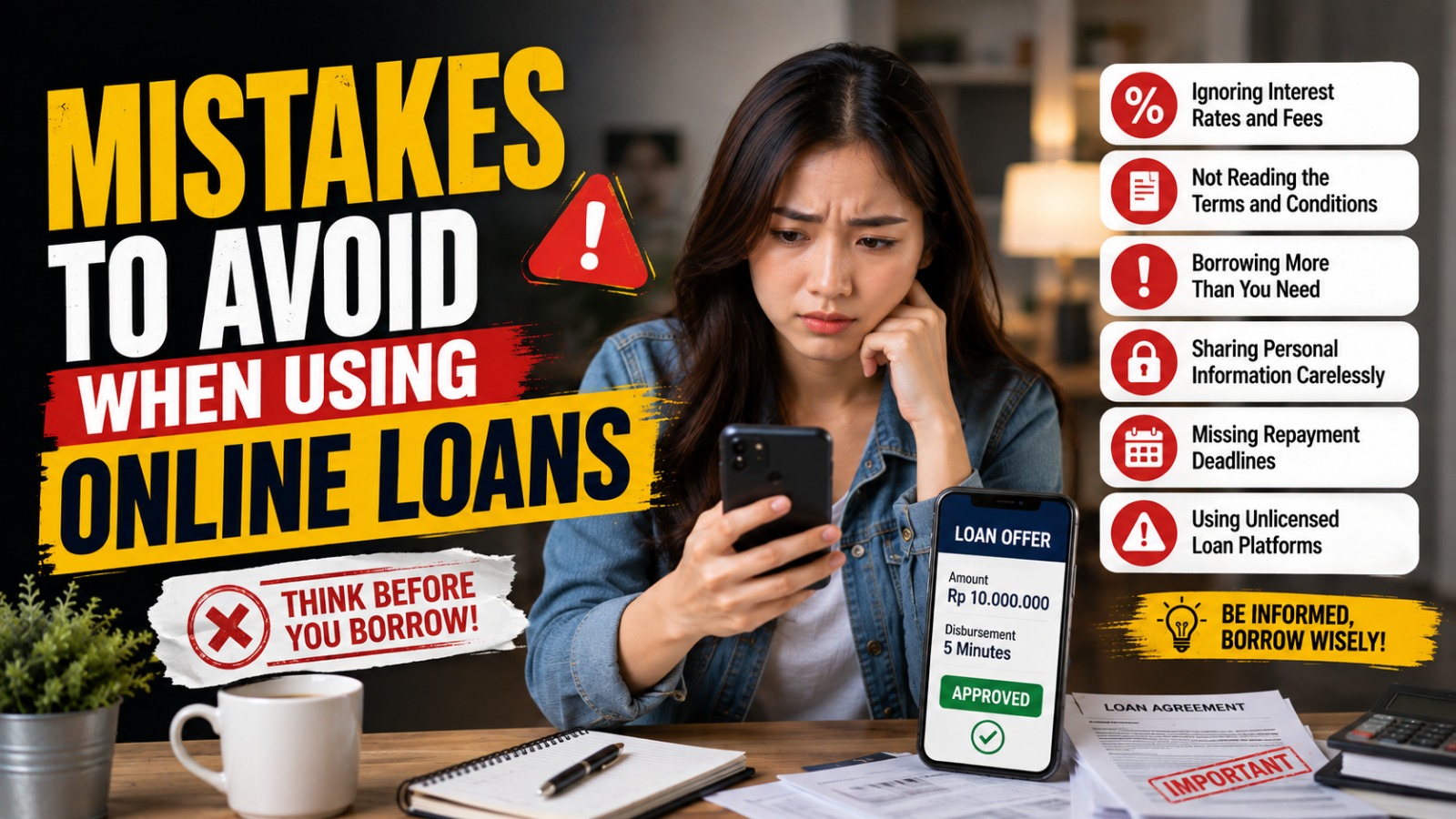
Online loans can be useful when people need quick access to additional funds. However, borrowing without careful planning can create financial problems and make repayment more difficult. Many borrowers make mistakes because they focus only on getting money quickly rather than understanding the full loan agreement. Knowing the common mistakes to avoid when using online loans can help borrowers make safer and more responsible financial decisions.
A loan should be treated as a financial commitment, not simply as extra money. Borrowers need to understand the provider, loan costs, repayment schedule, and consequences of late payments before accepting an offer. Careful planning can reduce unnecessary expenses and prevent debt from becoming difficult to manage. The following mistakes are among the most important ones to avoid.
BORROWING WITHOUT CHECKING THE PROVIDER
One of the biggest mistakes is applying for a loan without checking whether the provider is legitimate. Some fraudulent platforms use attractive advertisements, fast approval promises, and professional-looking websites to appear trustworthy. Borrowers should verify the provider through official sources before submitting personal information or making any payment. In Indonesia, checking the provider's status through official OJK information is an important step for consumers.
Do not assume that a platform is legal simply because it has many advertisements or positive-looking reviews. Scammers can copy company names, logos, and websites to make fraudulent services appear genuine. Always compare the provider's legal identity with information from reliable official sources. If the provider cannot be properly verified, it is safer to avoid the offer.
FOCUSING ONLY ON THE INTEREST RATE
Another common mistake is choosing a loan based only on its advertised interest rate. The interest rate may not represent the entire cost of borrowing because additional fees can also apply. Administration, service, platform, insurance, or other applicable charges can increase the total repayment amount. Borrowers should therefore calculate the overall cost instead of looking at one percentage.
Before accepting an offer, check the total amount that must be repaid. Compare the principal, interest, fees, installment amount, and repayment period. A loan with a slightly higher interest rate could potentially be cheaper overall if it has fewer additional charges. Looking at the complete cost provides a more accurate basis for comparison.
BORROWING MORE THAN YOU CAN AFFORD
Taking a larger loan than necessary can create unnecessary financial pressure. Some borrowers may be tempted to borrow the maximum amount offered even when they only need a smaller sum. This can increase monthly installments and the total cost of borrowing. The amount borrowed should be based on a genuine financial need and realistic repayment ability.
Before applying, review your monthly income and essential expenses. Make sure the expected installment can be paid without sacrificing basic needs or important financial obligations. It is also wise to consider possible unexpected expenses. A loan should fit comfortably within your budget rather than forcing you to depend on additional borrowing.
IGNORING THE REPAYMENT SCHEDULE
Failing to understand repayment dates is another mistake that can lead to avoidable costs. Missing a payment may result in applicable late payment charges or other consequences stated in the loan agreement. Repeated late payments can also make financial management more difficult. Borrowers should know exactly when each installment is due.
Create a repayment reminder using a calendar, banking application, or another reliable method. Set aside the required amount before the due date whenever possible. If you anticipate difficulty making a payment, review the provider's official procedures rather than ignoring the problem. Planning ahead is better than waiting until a payment becomes overdue.
NOT READING THE LOAN AGREEMENT
Some borrowers accept loan agreements without reading the terms carefully. This can result in unexpected costs or obligations that could have been identified beforehand. Important details may include interest calculations, fees, repayment schedules, late payment consequences, and conditions for early repayment. Understanding these terms is essential before accepting any financial commitment.
Do not rely entirely on promotional messages or sales representatives to explain the loan. Read the official agreement and check whether the information matches what was advertised. If something is unclear, seek an explanation through the provider's official customer service channel. Never accept terms that you do not understand.
IGNORING PERSONAL DATA SECURITY
Online loan applications often require personal information for identity verification and financial assessment. However, borrowers should be careful about where and how they submit sensitive information. Sharing passwords, PINs, one-time verification codes, or other confidential security credentials can create serious risks. Scammers may use stolen information for identity theft or unauthorized transactions.
Check the permissions requested by the application and understand why certain information is required. Avoid downloading loan applications from suspicious links or unknown sources. Use official websites and verified application stores whenever possible. Protecting personal data is just as important as protecting your money.
ACCEPTING OFFERS BECAUSE OF FINANCIAL PRESSURE
Financial emergencies can make people more likely to accept the first loan offer they see. This can lead to rushed decisions and insufficient verification. Scammers often take advantage of urgency by promising instant approval or demanding immediate action. Borrowers should avoid making financial decisions solely because they feel pressured.
Even when money is urgently needed, take time to verify the provider and understand the loan terms. Compare available options and calculate whether the repayment is manageable. If an offer requires immediate payment or threatens cancellation unless you act quickly, treat it with caution. A few minutes of careful checking can prevent much larger financial problems.
USING ONE LOAN TO PAY ANOTHER
Using a new online loan to cover an existing loan can create a cycle of debt. Although it may temporarily solve a payment problem, it can increase the total amount owed. Multiple loans can also create several repayment dates and additional fees. This makes monthly financial management more complicated.
Before taking another loan, review the reason you are struggling with the current repayment. Consider adjusting your budget and contacting the existing provider through official channels if you need assistance. Avoid repeatedly borrowing simply to cover previous debt. Responsible borrowing means addressing the underlying financial problem instead of continually adding new obligations.
CONCLUSION
Avoiding common online loan mistakes can help borrowers protect their finances and reduce unnecessary risks. Always verify the provider, calculate the total loan cost, read the agreement, and make sure the repayment fits your budget. Personal data should also be protected carefully, especially when dealing with unfamiliar applications or contacts. Most importantly, never let financial pressure force you into accepting an offer without proper verification.
Online loans can be useful when used responsibly and for appropriate financial needs. However, borrowing should always be based on careful planning rather than impulse. By understanding the terms and maintaining a realistic repayment plan, borrowers can make better financial decisions and reduce the possibility of falling into excessive debt.
About the Author
Gusti Ayu Tita P
Author — STEKOM University
An active author focused on academic issues, educational technology, and human resource development in the campus environment.