
Modern Ship Technologies That Improve Travel Safety
Gusti Ayu Tita P
11 Agustus 2026
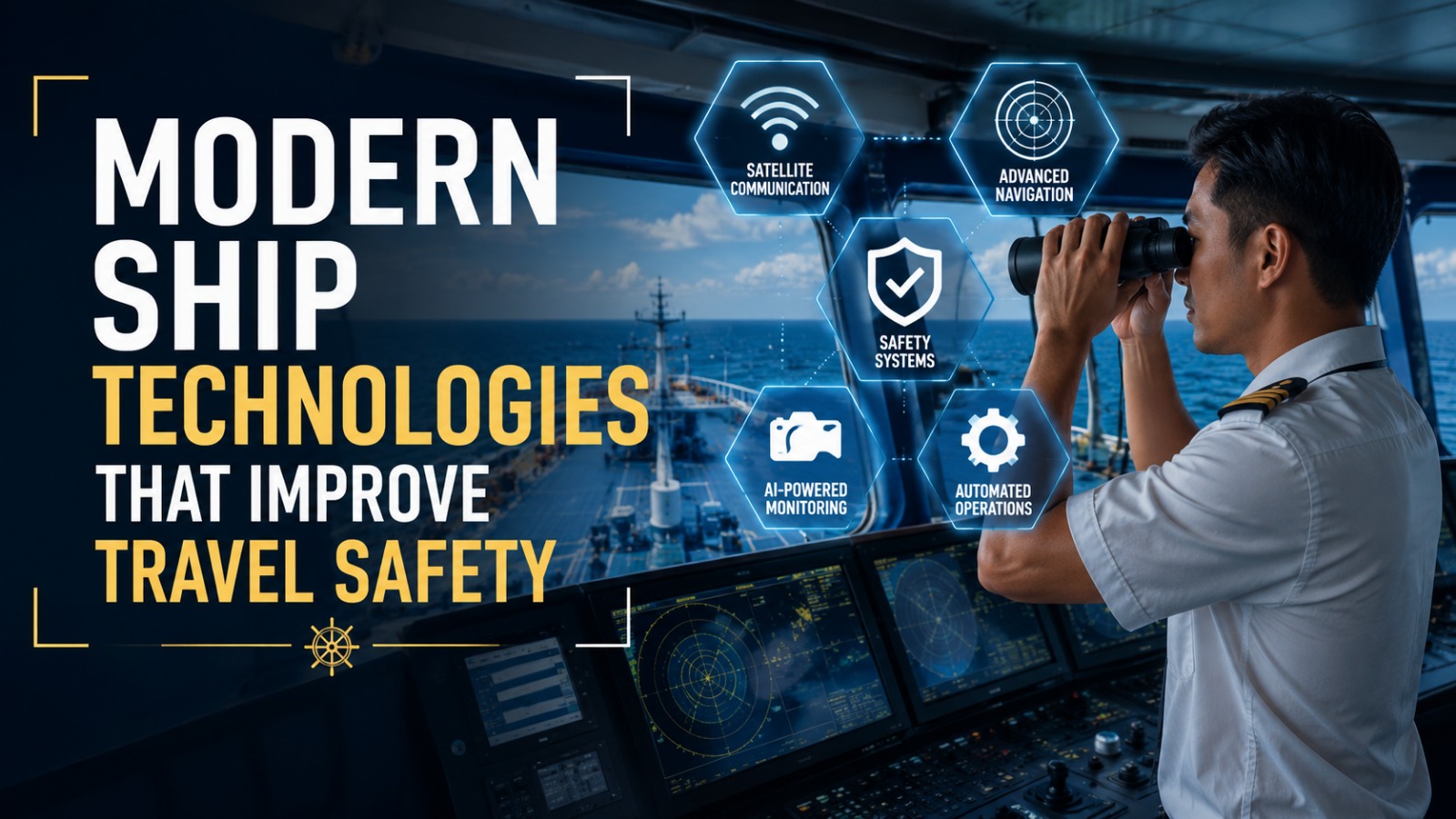
Modern ships have become much safer because of continuous developments in maritime technology. Advanced navigation systems, communication equipment, monitoring tools, and emergency technologies help crews manage different situations at sea. These technologies are especially important because ships may travel long distances and face changing weather and ocean conditions. Modern safety systems are designed to reduce risks and support faster decision-making. As technology continues to develop, sea travel can become more reliable and secure.
ADVANCED NAVIGATION SYSTEMS
One of the most important developments in modern ships is the use of advanced navigation systems. Electronic Chart Display and Information Systems, GPS, radar, and other tools help crews determine the ship's position and monitor surrounding areas. These systems can provide important information about routes, nearby vessels, obstacles, and geographical conditions. Accurate navigation reduces the possibility of collisions and route errors.
Modern navigation equipment can also work together to provide a clearer picture of the ship's environment. Crews can compare information from different systems before making important decisions. However, technology does not completely replace professional judgment. Trained crew members remain essential for interpreting information and responding to unexpected situations.
MARINE RADAR AND COLLISION AVOIDANCE
Marine radar is another important technology used to improve ship safety. Radar can detect vessels, land areas, and other objects even when visibility is limited. This can be especially useful during nighttime, heavy rain, fog, or other difficult conditions. Radar information allows crews to identify potential hazards earlier.
Many modern ships also use systems that support collision avoidance. These systems can provide information about nearby vessels and their movements. Alerts may warn crews when another vessel is approaching a potentially dangerous position. Early warnings give the crew more time to evaluate the situation and take appropriate action.
AUTOMATIC IDENTIFICATION SYSTEM
The Automatic Identification System or AIS helps ships share important information with other vessels and maritime authorities. Depending on the system and regulations, AIS can transmit information such as vessel identity, position, speed, and direction. This makes it easier for ships to understand nearby traffic.
AIS is particularly useful in busy waterways and ports where many vessels operate simultaneously. Crews can use the information alongside radar and visual observations to improve situational awareness. However, AIS information should not be treated as the only source of navigation information. Multiple safety systems are generally used together for better reliability.
WEATHER AND OCEAN MONITORING
Weather can change quickly at sea, so modern ships use technology to monitor environmental conditions. Weather monitoring systems can provide information about wind, waves, pressure, visibility, and other conditions. Satellite-based weather information can also help crews understand conditions along the planned route.
This information allows crews to make better decisions about speed and navigation. If severe weather is expected, a vessel may adjust its route or timing when appropriate. Monitoring ocean conditions can also improve passenger comfort by helping crews prepare for rough seas. These technologies support safer and more informed voyage planning.
EMERGENCY COMMUNICATION TECHNOLOGY
Reliable communication is essential when a ship experiences an emergency. Modern vessels can use satellite communication, marine radio, and emergency signaling systems to communicate with authorities, nearby vessels, and rescue services. These systems can help transmit important information when assistance is required.
Emergency communication equipment is designed to function in challenging maritime environments. Depending on the vessel and regulations, ships may also carry emergency beacons and other signaling devices. These tools can help rescuers identify the vessel's location. Effective communication can significantly improve coordination during an emergency.
FIRE DETECTION AND SAFETY SYSTEMS
Fire is one of the serious risks that ships must be prepared to manage. Modern vessels use fire detection systems to identify smoke, heat, or signs of fire in different areas. Alarms can alert crew members quickly so they can respond before the situation becomes more serious.
Ships also have firefighting equipment and systems designed for different areas of the vessel. Automatic suppression systems may be installed in certain spaces depending on the ship's design and requirements. Regular inspections and crew training are equally important. Technology works best when combined with proper fire safety procedures.
ENGINE AND SHIP MONITORING SYSTEMS
Modern ships use sensors and monitoring technology to observe important mechanical systems. Engine monitoring systems can track temperatures, pressure, fuel use, vibration, and other operating conditions. Abnormal readings may provide an early warning of a potential mechanical problem.
Early detection can allow the crew and technical team to investigate an issue before it becomes more serious. Some vessels also use computerized systems to monitor electrical equipment, pumps, fuel systems, and other machinery. Preventive maintenance based on monitoring data can improve reliability. This helps reduce unexpected equipment failures during a voyage.
CONCLUSION
Modern ship safety technology has significantly improved the way vessels navigate, communicate, monitor conditions, and respond to emergencies. GPS, radar, AIS, weather monitoring, emergency communication, fire detection, and engine monitoring systems all contribute to safer maritime operations. However, technology should work together with trained crews, regular maintenance, and effective safety procedures. No single system can eliminate every risk at sea. By combining advanced technology with professional operation, modern ships can provide safer and more reliable journeys for passengers and crew.
About the Author
Gusti Ayu Tita P
Author — STEKOM University
An active author focused on academic issues, educational technology, and human resource development in the campus environment.















