Modern Technologies That Help Ship Captains With Navigation
Gusti Ayu Tita P
23 Juli 2026
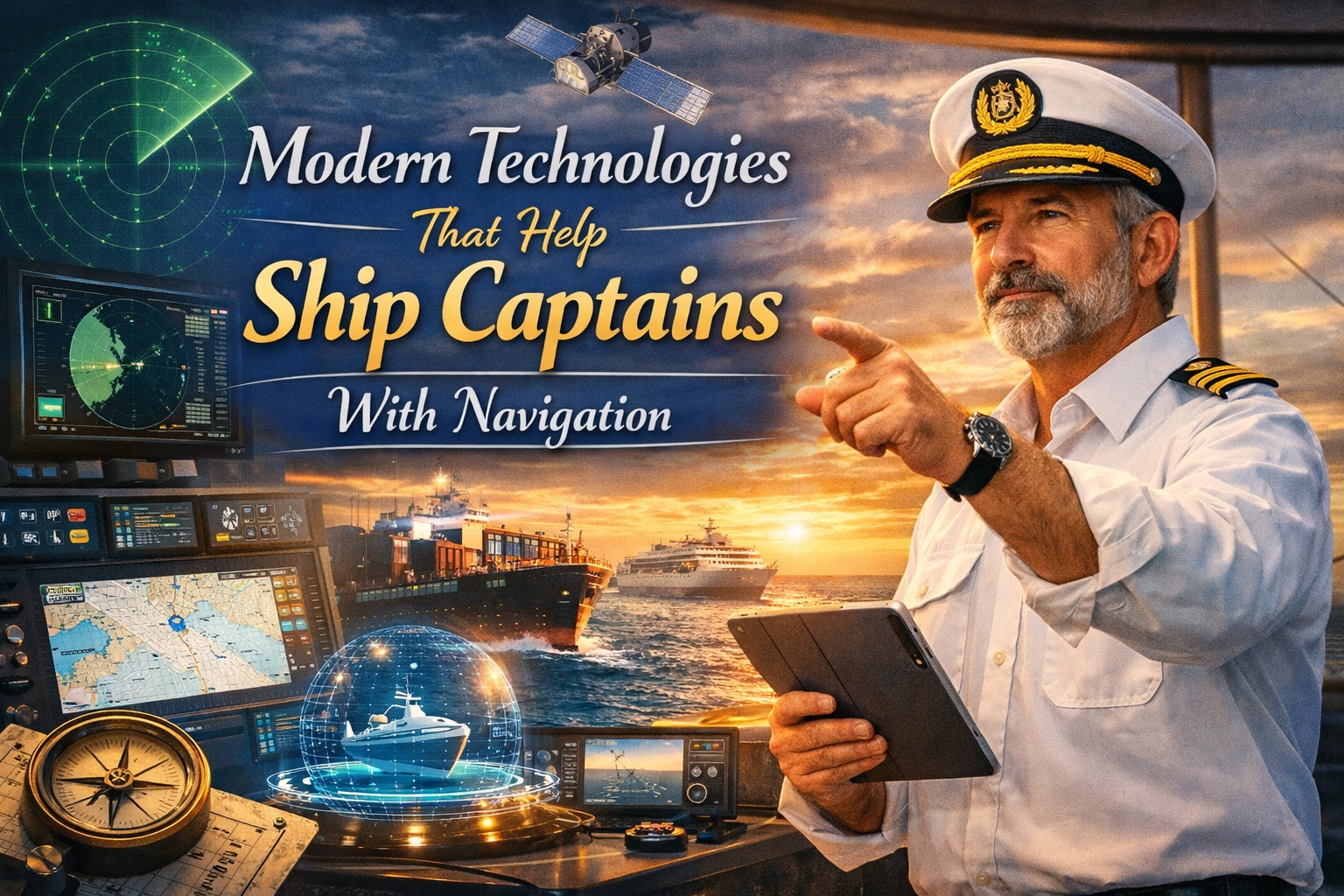
The development of modern technology has significantly changed the way Ship Captains manage navigation and operate vessels at sea. In the past, captains relied heavily on traditional methods such as paper charts, visual observations, and basic navigation tools. Today, advanced digital systems provide accurate information that helps captains make safer and more efficient decisions.
Modern navigation technology does not replace the role of the captain but supports better decision-making. A captain still needs professional knowledge, experience, and judgment to interpret information correctly. By combining human expertise with advanced systems, maritime operations can achieve higher levels of safety and efficiency.
THE ROLE OF MODERN NAVIGATION TECHNOLOGY
Modern technology plays an important role in improving ship navigation by providing accurate data about the vessel's position, movement, and surrounding conditions. These systems allow captains to monitor routes, identify potential hazards, and make faster decisions during voyages. The availability of real-time information has greatly improved maritime safety.
A Ship Captain uses various technological tools to manage complex navigation challenges. From ocean conditions to traffic monitoring, these systems provide valuable support during both routine operations and emergency situations. Technology has become an essential part of modern maritime management.
USING GPS FOR ACCURATE SHIP POSITIONING
One of the most important technologies used by modern ships is the Global Positioning System GPS. This system allows captains to determine the exact position of the vessel anywhere in the world. Accurate positioning helps ships follow planned routes and avoid dangerous areas.
GPS technology also improves route planning by providing continuous location updates. Captains can compare the ship's actual position with the intended route and make adjustments when necessary. This reduces navigation errors and supports safer journeys across oceans.
THE IMPORTANCE OF ELECTRONIC CHART DISPLAY SYSTEMS
The Electronic Chart Display and Information System ECDIS has replaced many traditional paper navigation charts on modern vessels. This technology provides digital maps containing important information about sea routes, depths, ports, and potential hazards. Captains can access updated navigation data more quickly and efficiently.
ECDIS helps improve decision-making by displaying the ship's position directly on electronic charts. The system can also provide warnings about dangerous areas or route deviations. With this technology, captains can navigate more accurately while reducing the possibility of human errors.
RADAR AND AUTOMATIC IDENTIFICATION SYSTEMS
Radar technology remains one of the most important tools for detecting objects around a vessel. It allows captains to identify nearby ships, land areas, and obstacles, especially during poor visibility conditions such as heavy rain or fog. Radar information helps prevent collisions and improves situational awareness.
Another important system is the Automatic Identification System AIS, which allows ships to exchange information with other vessels. AIS provides details such as ship identity, speed, direction, and location. By using radar and AIS together, captains can make safer decisions in busy shipping areas.
THE USE OF ARTIFICIAL INTELLIGENCE AND AUTOMATION
The maritime industry is increasingly adopting Artificial Intelligence AI and automation technologies to support navigation. AI systems can analyze large amounts of data, predict possible risks, and provide recommendations for safer routes. These capabilities help captains manage complex navigation situations more effectively.
Automation systems also assist with tasks such as engine monitoring, route optimization, and operational control. However, human supervision remains necessary because captains are responsible for final decisions. The combination of technology and human expertise creates a more reliable navigation process.
SATELLITE COMMUNICATION FOR BETTER CONNECTIVITY
Long-distance voyages require reliable communication systems, and satellite communication provides essential support for modern ships. Captains can receive updated weather information, communicate with shore-based teams, and report vessel conditions from anywhere at sea. This connection improves coordination and operational safety.
Satellite systems also support emergency communication when a vessel faces critical situations. Quick access to external assistance can significantly reduce risks during unexpected events. Reliable communication is an important factor in successful maritime operations.
THE FUTURE OF SMART SHIP NAVIGATION
The future of maritime navigation will continue to develop through innovations such as autonomous ships, advanced sensors, and smarter data analysis systems. These technologies are expected to improve efficiency while reducing risks during voyages. However, the role of skilled Ship Captains will remain important in controlling and supervising operations.
Future navigation will focus on creating safer, faster, and more environmentally friendly shipping systems. Captains who understand modern technology will have greater advantages in managing advanced vessels. Continuous learning and adaptation will become essential skills in the evolving maritime industry.
CONCLUSION
Modern technologies have transformed the way Ship Captains navigate vessels and manage maritime operations. Tools such as GPS, ECDIS, radar, AIS, artificial intelligence, and satellite communication provide valuable support for safer decision-making. These innovations help captains handle complex situations with greater accuracy and confidence.
Although technology continues to advance, human leadership and experience remain essential in navigation. The combination of professional expertise and modern systems creates safer voyages, improves efficiency, and strengthens the future of global maritime transportation.
About the Author
Gusti Ayu Tita P
Author — STEKOM University
An active author focused on academic issues, educational technology, and human resource development in the campus environment.