
MRT Jakarta as a Solution to Reduce Traffic Congestion
Gusti Ayu Tita P
11 Agustus 2026
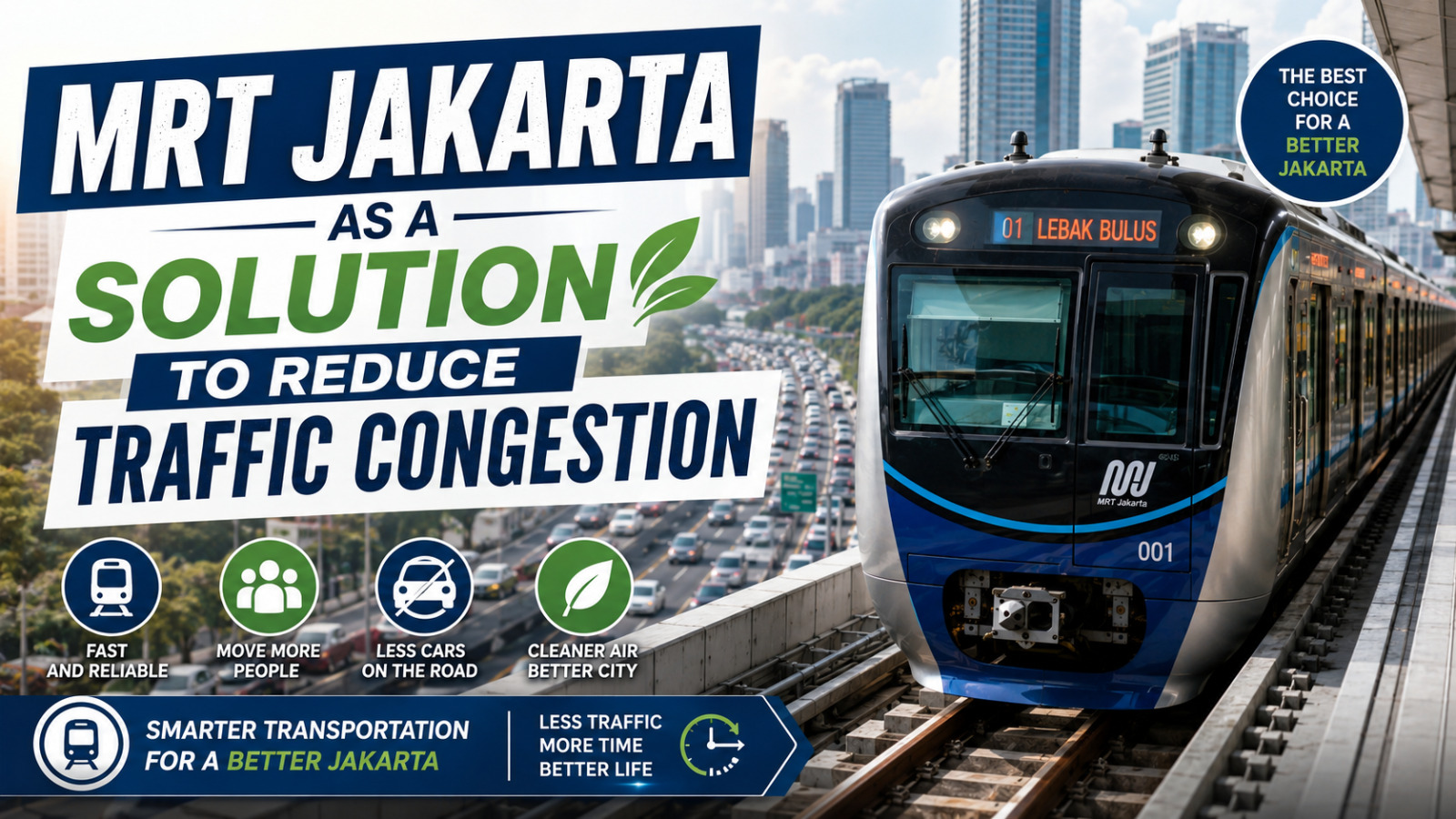
Traffic congestion is one of the major transportation challenges faced by large cities such as Jakarta. The high number of cars and motorcycles can make roads crowded, increase travel times, and make daily mobility less predictable. MRT Jakarta provides an alternative through mass public transportation that operates on dedicated railway tracks. This allows passengers to travel without directly following the congestion experienced by road vehicles.
MRT cannot eliminate traffic congestion on its own because congestion has many causes. However, it can play an important role in reducing dependence on private vehicles when people choose public transportation for suitable journeys. The effectiveness of MRT becomes stronger when it is connected with buses, feeder services, walking facilities, and other transportation modes. Through an integrated system, MRT can contribute to a more efficient urban transportation network.
MRT AS MASS PUBLIC TRANSPORTATION
MRT Jakarta is designed to transport large numbers of passengers through a railway-based system. The trains operate on dedicated tracks, including elevated and underground sections along the route. Because MRT does not normally share its railway tracks with road vehicles, its operation is less directly affected by traffic congestion. This characteristic makes it suitable for areas with high transportation demand.
One train can carry many passengers during a single journey. If people who would otherwise use private cars or motorcycles choose MRT, the number of individual vehicles on the road may decrease. Shifting travel from private vehicles to mass transit is therefore one way MRT can contribute to congestion management. The size of this impact depends on how many passengers make that shift and how frequently they use public transportation.
REDUCING PRIVATE VEHICLE TRIPS
Traffic congestion is influenced by the number of vehicles using roads at the same time. MRT gives commuters another option for traveling without bringing their own vehicles into busy areas. When public transportation becomes convenient, some people may choose to leave their cars or motorcycles at home. Fewer private vehicle trips can help reduce pressure on heavily used roads.
However, simply building an MRT line does not automatically eliminate congestion. People need convenient ways to reach stations and continue their journeys after leaving the train. If access to stations is difficult, some passengers may still depend on private vehicles. Therefore, good connections between MRT and other transportation modes are essential for encouraging people to change their travel habits.
THE IMPORTANCE OF TRANSPORTATION INTEGRATION
MRT works most effectively when it forms part of an integrated public transportation network. Passengers may use buses, feeder services, walking routes, or other modes to reach an MRT station. After getting off the train, they may need another mode to reach their final destination. Smooth connections make it easier to complete an entire journey without using a private vehicle.
Integration also requires convenient station access and clear passenger information. Pedestrian facilities, bus connections, and organized transfer points can improve the overall travel experience. Easy transfers between transportation modes can encourage more people to choose public transportation. This makes MRT more useful as a component of Jakarta’s wider congestion management strategy.
LONG-TERM IMPACT ON URBAN MOBILITY
MRT can contribute to long-term changes in travel behavior if its services remain reliable, comfortable, and accessible. People who become accustomed to using public transportation for regular trips may reduce their dependence on private vehicles. Over time, this can support more efficient urban mobility. However, traffic management still requires other measures, including road management, public transportation development, and effective urban planning.
The expansion of the MRT network can also provide more opportunities for people to use rail-based transportation. More stations and better connections can increase the areas that can be reached through public transportation. Integrated urban planning can strengthen the relationship between transportation and the development of surrounding areas. Together, these efforts can help Jakarta manage growing travel demand more effectively.
SUPPORTING SUSTAINABLE TRANSPORTATION
MRT Jakarta also contributes to efforts toward sustainable urban transportation. Electric trains can support lower direct emissions at the point of operation compared with conventional fuel-powered vehicles. If passengers switch from private vehicles to MRT, the environmental benefits can become more significant. Nevertheless, the overall impact depends on electricity sources, passenger demand, and actual changes in travel behavior.
Reducing congestion and supporting environmental goals are closely connected when people choose efficient mass transit. A well-used MRT system can move many passengers while requiring fewer individual vehicles for the same number of trips. Public transportation development therefore has benefits that extend beyond travel time. Continued investment in integrated services can strengthen MRT’s role in Jakarta’s transportation future.
CONCLUSION
MRT Jakarta can be an important solution for reducing traffic congestion because it provides high-capacity mass transportation on dedicated railway tracks. By encouraging people to switch from private vehicles to public transportation, MRT can help reduce the number of vehicle trips on busy roads. However, MRT alone cannot solve Jakarta’s congestion problems.
Its effectiveness depends heavily on transportation integration, station accessibility, reliable services, and changes in travel behavior. Connecting MRT with buses, feeder services, pedestrian facilities, and other modes can make public transportation more practical from the beginning to the end of a journey. With continued development, MRT Jakarta can contribute significantly to a more efficient and sustainable urban transportation system.
About the Author
Gusti Ayu Tita P
Author — STEKOM University
An active author focused on academic issues, educational technology, and human resource development in the campus environment.















