
MRT Jakarta as Modern Transportation for Urban Mobility
Gusti Ayu Tita P
11 Agustus 2026
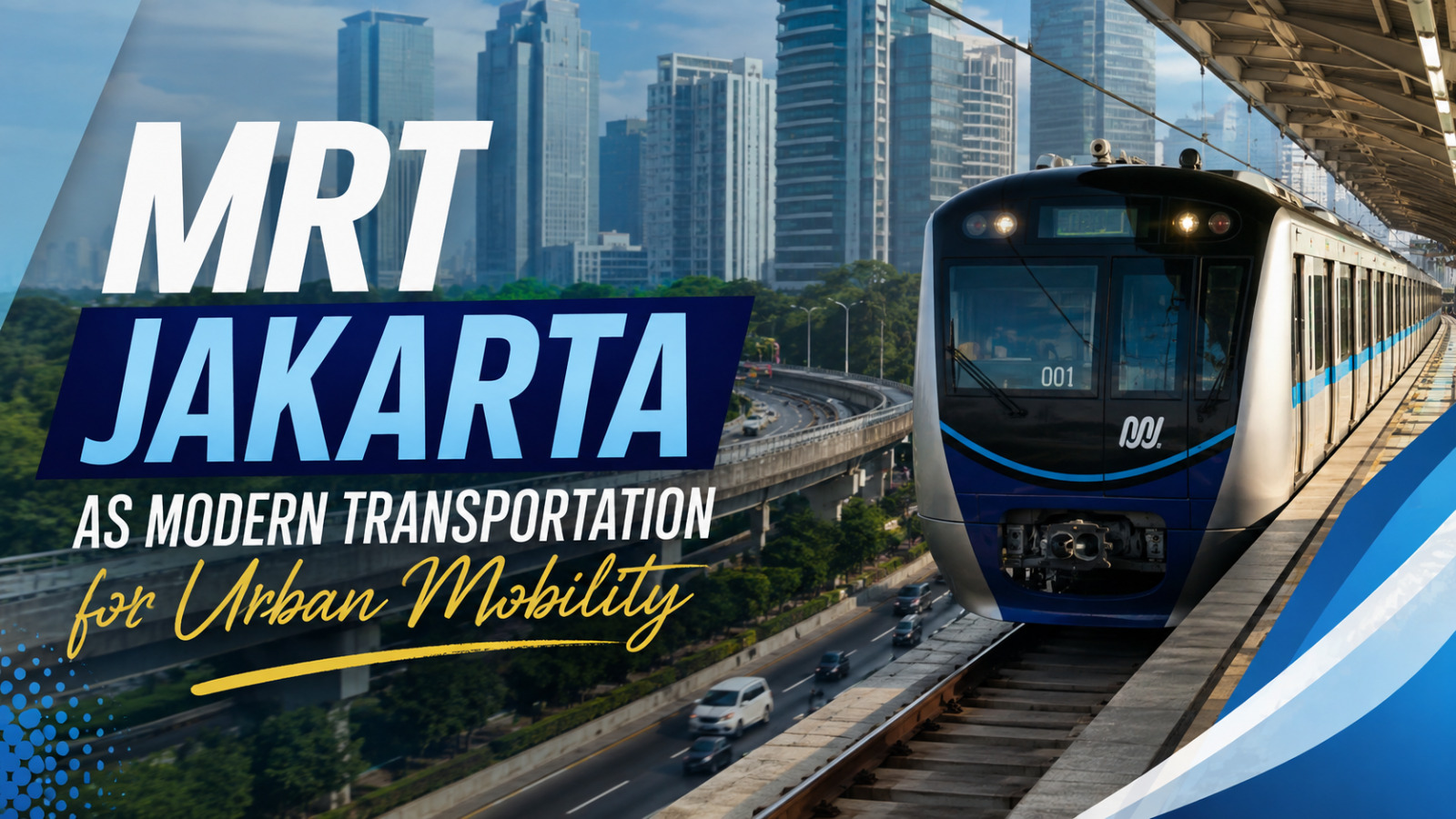
MRT Jakarta is one of the important developments in Indonesia’s modern public transportation system. It provides an alternative for people who need to travel through busy urban areas efficiently. Unlike road-based transportation, MRT operates on a dedicated railway system, which helps reduce its dependence on road traffic conditions. This makes MRT Jakarta an important part of the transportation network in the capital city.
The presence of MRT Jakarta also supports the development of a more integrated urban transportation system. People can combine MRT services with buses and other transportation modes to reach their final destinations. With its modern facilities and organized services, MRT Jakarta offers a practical option for daily mobility. Its role is becoming increasingly important as Jakarta continues to face high mobility demands.
MRT JAKARTA AS MODERN PUBLIC TRANSPORTATION
MRT Jakarta is designed as a mass rapid transit system to serve large numbers of passengers in urban areas. The trains operate on dedicated tracks, including elevated and underground sections, depending on the route. This system allows MRT services to operate without directly sharing road space with cars and motorcycles. As a result, passengers can plan their journeys based on the scheduled MRT service.
The system also uses modern railway technology and organized station facilities. Passengers can find information displays, access gates, platforms, escalators, elevators, and other supporting facilities. Modern infrastructure makes the travel process easier for both regular users and new passengers. These features help MRT Jakarta provide a transportation experience that is different from many conventional road-based services.
SUPPORTING URBAN MOBILITY
Jakarta has a high demand for daily transportation because many people travel for work, education, business, and other activities. MRT Jakarta helps meet this demand by carrying many passengers in one train journey. This allows people to travel without having to rely entirely on private vehicles. For certain routes, MRT can therefore become a practical option for daily commuting.
Another important advantage is the ability to connect with other transportation services. Passengers can use buses or other modes to reach MRT stations and continue their journey after leaving the train. Transportation integration expands the usefulness of MRT beyond the areas immediately surrounding its stations. This makes the system more valuable as part of Jakarta’s wider urban mobility network.
REDUCING DEPENDENCE ON PRIVATE VEHICLES
Private cars and motorcycles remain widely used in Jakarta, but high numbers of vehicles can contribute to traffic congestion. MRT Jakarta provides an alternative that allows people to travel without bringing private vehicles onto the road. If more people choose public transportation for suitable trips, the number of private vehicle journeys may decrease. This can help reduce pressure on busy transportation corridors.
MRT alone cannot eliminate traffic congestion because congestion is influenced by many factors. However, a reliable mass transit system can become an important part of a broader transportation strategy. Better connections between MRT and other public transportation can make leaving private vehicles at home more convenient. In this way, MRT Jakarta can support a gradual shift toward more efficient urban mobility.
BENEFITS FOR THE FUTURE OF JAKARTA
MRT Jakarta provides benefits beyond daily transportation. As an electric rail system, it can support efforts to develop more sustainable urban transportation. Greater use of mass transit can potentially reduce dependence on fossil-fuel-powered private vehicles. The environmental benefits depend on factors such as passenger numbers, electricity sources, and overall travel patterns.
MRT also contributes to the modernization of Jakarta’s transportation infrastructure. Continued development of railway networks and connections with other modes can give residents more choices when planning their journeys. Integrated public transportation can make urban mobility more efficient while supporting the city’s long-term development. Therefore, MRT Jakarta is not only a transportation service but also an important part of Jakarta’s future mobility system.
CONCLUSION
MRT Jakarta plays an important role as modern transportation for urban mobility. Its dedicated railway system, modern facilities, large passenger capacity, and integration with other transportation modes make it a valuable alternative for people traveling around Jakarta. MRT can also help reduce dependence on private vehicles when residents choose public transportation for suitable journeys.
Its role is particularly important as Jakarta continues to develop and face increasing transportation demands. By improving transportation integration, accessibility, and service quality, MRT Jakarta can support more efficient urban mobility. With continued development and responsible use by passengers, MRT can remain an important part of Jakarta’s modern and sustainable transportation system.
About the Author
Gusti Ayu Tita P
Author — STEKOM University
An active author focused on academic issues, educational technology, and human resource development in the campus environment.















