Mysterious Supernatural Stories That Have Become Part of Indonesian Culture
Gusti Ayu Tita P
9 September 2026
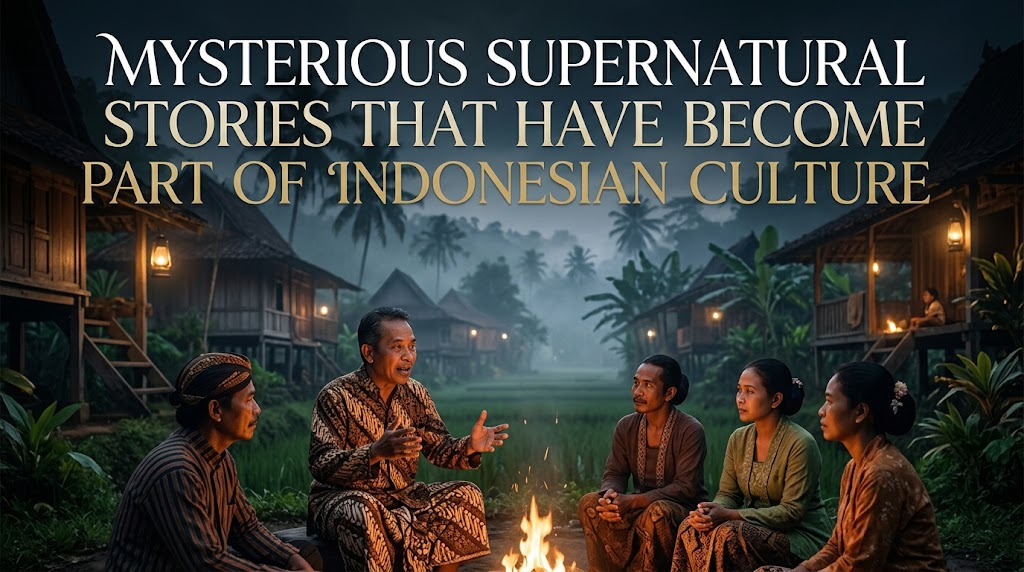
Indonesia has a rich cultural heritage filled with stories about the supernatural world. For generations, mysterious tales about spirits, supernatural creatures, sacred places, and unexplained events have been shared within families and local communities. Some stories are treated as traditional beliefs, while others are understood as folklore or entertainment. These narratives often reflect the values, fears, and imagination of the communities that preserve them. Exploring Indonesian supernatural stories provides an interesting way to understand how folklore continues to influence culture in the modern era.
THE ORIGIN OF SUPERNATURAL STORIES IN INDONESIAN CULTURE
Many supernatural stories in Indonesia originated from oral traditions. Before modern communication and widespread literacy, communities relied on storytelling to preserve important narratives and cultural knowledge. Elders could pass stories about mysterious events, spirits, ancestors, and unusual places to younger generations. As these stories were retold, different versions developed in different regions. This process helped supernatural folklore become part of Indonesia's diverse cultural heritage.
The natural environment also influenced the development of local legends. Mountains, forests, rivers, caves, beaches, and old villages frequently appear in traditional stories. Communities sometimes connected unusual landscapes with sacred traditions or supernatural beliefs. Such stories could also encourage people to respect certain places and follow community rules. As a result, supernatural folklore often had cultural and social functions beyond simple entertainment.
POPULAR STORIES ABOUT SUPERNATURAL CREATURES
Indonesia is known for numerous stories about supernatural creatures. Some of the most recognizable figures in popular culture include kuntilanak, pocong, genderuwo, and wewe gombel. Their appearances, characteristics, and stories can vary depending on the region and the version being told. Some narratives focus on fear, while others contain warnings, moral lessons, or social messages. These differences demonstrate the diversity of Indonesian folklore.
Over time, many traditional characters have been adapted for modern entertainment. Films, television programs, novels, and online content have introduced these figures to wider audiences. Modern adaptations may change their appearance or personality to create stronger dramatic effects. Therefore, the version seen in a movie may not represent the original local tradition. Understanding this difference is important when studying supernatural folklore from a cultural perspective.
MYSTERIOUS PLACES BEHIND LOCAL LEGENDS
Certain mysterious places have become strongly associated with supernatural stories. Abandoned buildings, old trees, mountains, forests, cemeteries, and caves can become settings for legends about spirits or unexplained events. When stories are repeatedly shared, the reputation of a location can become an important part of its identity. Visitors may then become curious about the history and legends surrounding the place. This creates a close relationship between geography and folklore.
However, a location's supernatural reputation does not automatically prove that supernatural events occur there. Darkness, unusual sounds, weather conditions, wildlife, isolation, and human perception can contribute to mysterious experiences. Historical events may also become mixed with fictional details as stories are passed between generations. Examining these possibilities allows people to appreciate local legends without automatically presenting them as scientifically established facts.
STORIES PASSED FROM GENERATION TO GENERATION
The survival of Indonesian folklore depends heavily on storytelling between generations. Parents, grandparents, community leaders, writers, and local storytellers can all contribute to preserving traditional narratives. Each storyteller may add details or change certain elements according to the audience and circumstances. As a result, one legend can have several versions while maintaining the same central theme. This flexibility is one reason folklore can survive for a long time.
Modern technology has created new methods of preserving these stories. Digital archives, social media, podcasts, websites, and video platforms allow younger audiences to discover traditional narratives more easily. However, digital retellings can sometimes mix authentic folklore with fictional additions. Readers should therefore consider the origin and context of a story before assuming that every modern version represents an old tradition. Responsible documentation can help protect cultural heritage while maintaining historical accuracy.
SUPERNATURAL STORIES IN MODERN ENTERTAINMENT
Modern entertainment has played a major role in keeping supernatural stories popular. Indonesian horror films frequently draw inspiration from traditional ghosts, local legends, mysterious places, and community beliefs. Television programs and online creators have also developed content around paranormal themes. These productions can introduce traditional characters to audiences who may never have encountered the original folklore. In this way, entertainment can contribute to the continued visibility of supernatural culture.
At the same time, entertainment often changes traditional narratives for dramatic purposes. Fictional elements, exaggerated abilities, and invented events may be added to make a story more exciting. Audiences should understand that a horror movie or dramatic online video is not necessarily a historical record of a traditional belief. Distinguishing entertainment from cultural documentation is therefore important. This distinction allows people to enjoy supernatural fiction while still appreciating the original folklore behind it.
BELIEF, EXPERIENCE, AND DIFFERENT INTERPRETATIONS
People can have very different opinions about the supernatural world. Some individuals may believe that spirits or supernatural beings exist, while others see these stories as cultural traditions or fictional narratives. Personal experiences can strongly influence someone's interpretation of mysterious events. However, an experience that feels real to a person does not automatically establish a supernatural explanation. Environmental, psychological, or other natural factors may also need to be considered.
A balanced approach allows people to respect cultural beliefs while using critical thinking. Traditional stories can have significant cultural value even when their supernatural elements cannot be scientifically verified. Researchers and readers can examine how legends developed, what they represent, and how they have changed over time. This approach avoids unnecessarily mocking traditional beliefs while also preventing unsupported claims from being presented as established facts. Understanding different interpretations makes discussions about Indonesian supernatural culture more thoughtful and informative.
CONCLUSION
Mysterious supernatural stories in Indonesian culture represent a fascinating combination of folklore, tradition, imagination, history, and social values. Stories about supernatural creatures and mysterious places have survived because they are continuously retold and adapted by different generations. Modern entertainment and digital media have given these narratives new forms and wider audiences. At the same time, regional differences demonstrate that Indonesian supernatural folklore is far more diverse than a single collection of horror stories.
Preserving these narratives requires cultural appreciation and critical awareness. People can enjoy supernatural legends as part of Indonesia's cultural heritage while recognizing the difference between folklore, personal belief, fictional entertainment, and scientifically verified information. By appreciating their cultural significance while maintaining critical thinking, people can preserve Indonesian supernatural folklore and continue exploring its meaning in the modern era.
About the Author
Gusti Ayu Tita P
Author — STEKOM University
An active author focused on academic issues, educational technology, and human resource development in the campus environment.