
Nationalism As A Foundation For Building National Unity
Gusti Ayu Tita P
4 Agustus 2026
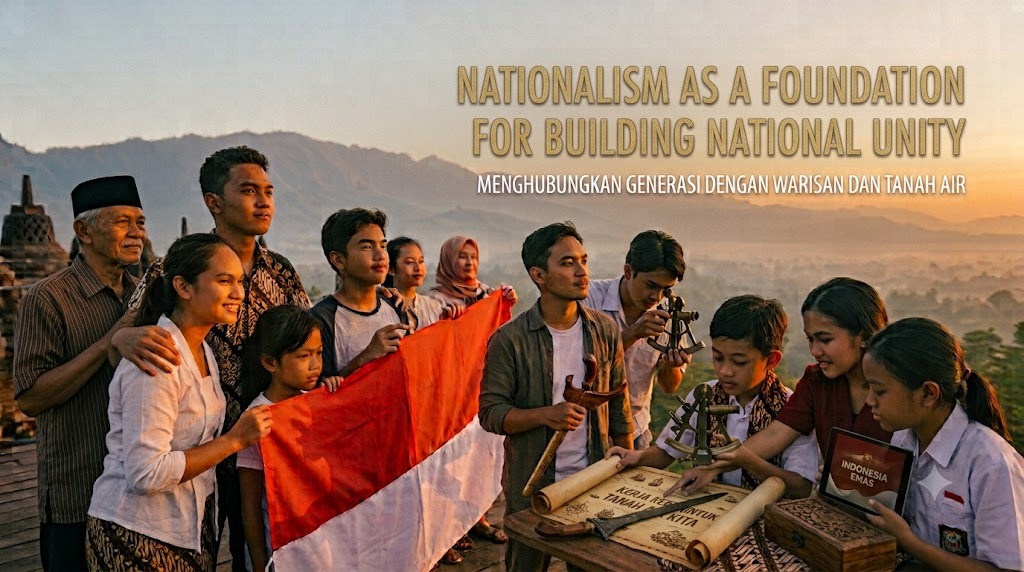
Nationalism is an important foundation for building and maintaining national unity. It creates a sense of belonging, responsibility, and concern for the country and its people. In a diverse nation such as Indonesia, nationalism can encourage citizens to respect differences and focus on shared goals. Strong nationalism can help society remain united even when people have different backgrounds, beliefs, and opinions.
National unity cannot be built only through government policies. It also requires the active participation of citizens in their daily lives. Respecting diversity, practicing tolerance, helping others, and protecting national interests are examples of how people can contribute to unity. When these values are practiced consistently, nationalism becomes a powerful force for creating a peaceful and united society.
UNDERSTANDING NATIONALISM AND NATIONAL UNITY
Nationalism refers to a sense of love, loyalty, and responsibility toward one's country. It encourages citizens to care about the nation's future and contribute to its development. Nationalism does not mean considering one's country superior to other countries. Instead, healthy nationalism encourages people to appreciate their own identity while respecting other nations and cultures.
National unity means the ability of people with different backgrounds to live and work together as one nation. Indonesia has a diverse population with many ethnic groups, religions, languages, and cultural traditions. Because of this diversity, unity is essential for maintaining social stability and national integrity. Nationalism can provide a shared sense of identity that helps connect people despite their differences.
THE IMPORTANCE OF NATIONALISM FOR NATIONAL UNITY
Nationalism strengthens the feeling that citizens belong to the same national community. When people share a sense of responsibility toward their country, they are more willing to cooperate for common interests. A strong national identity can reduce social divisions and encourage mutual respect. It can also motivate citizens to protect the values that support peace and unity.
Nationalism is especially important in a diverse country. Differences can create misunderstandings if they are not managed through tolerance and communication. By promoting respect, solidarity, and cooperation, nationalism can help communities overcome differences. These values allow people to work together without requiring them to give up their individual identities.
NATIONALISM AND INDONESIAN DIVERSITY
Indonesia is known for its extraordinary diversity. The country has numerous ethnic groups, regional languages, religions, traditional practices, and cultural expressions. This diversity is an important national asset, but it also requires strong commitment to unity. Bhinneka Tunggal Ika, meaning Unity in Diversity, reflects the principle that differences can exist within one united nation.
Nationalism helps people see diversity as a strength rather than a reason for division. Citizens can appreciate different traditions while maintaining a shared Indonesian identity. Tolerance and mutual respect are important in creating relationships between communities. When diversity is treated positively, it can encourage cultural exchange and strengthen national solidarity.
THE ROLE OF TOLERANCE IN BUILDING UNITY
Tolerance is an important part of nationalism because people cannot build unity if they refuse to accept differences. Tolerance means respecting the rights, beliefs, opinions, and traditions of others. It does not require people to agree with everything they encounter. Instead, it encourages peaceful coexistence despite differences.
Tolerance can be practiced in families, schools, workplaces, communities, and digital spaces. People can listen to different opinions, avoid discrimination, and communicate respectfully during disagreements. Respectful communication can prevent small differences from developing into serious conflicts. A tolerant society creates an environment where citizens feel safe and valued.
PRESERVING CULTURAL IDENTITY
Culture is an important part of national identity. Indonesia has many forms of cultural heritage, including traditional dances, music, languages, clothing, food, crafts, and local customs. Preserving these traditions helps maintain the connection between present and future generations. Cultural preservation is therefore an important expression of nationalism.
Young people have a particularly important role in protecting cultural heritage. They can learn local traditions, participate in cultural activities, and introduce Indonesian culture through digital platforms. Modern technology can make cultural preservation more creative and accessible. Combining traditional values with modern creativity can help Indonesian culture remain relevant in a changing world.
THE ROLE OF EDUCATION IN STRENGTHENING NATIONALISM
Education plays an important role in developing nationalism and national unity. Schools and educational institutions can teach students about history, citizenship, cultural diversity, and national values. Education can also develop important qualities such as discipline, responsibility, critical thinking, and cooperation. These qualities help students become citizens who understand their role in society.
Education should not only provide theoretical knowledge. Students can also learn nationalism through group projects, community service, cultural activities, and student organizations. These experiences teach them how to cooperate with people from different backgrounds. Practical experiences can turn national values into everyday habits.
THE ROLE OF YOUNG PEOPLE IN MAINTAINING UNITY
Young people are an important part of the nation's future. They have energy, creativity, and access to technology that can be used to promote positive social change. Young people can strengthen unity by respecting diversity, participating in community activities, preserving culture, and promoting positive information. Their behavior can influence other members of society, especially through social media.
Young people can also become bridges between different communities. They can participate in organizations, volunteer programs, educational projects, and cultural activities. These experiences help them understand different perspectives and develop empathy. A generation that values cooperation and tolerance can become a strong foundation for future national unity.
USING TECHNOLOGY TO STRENGTHEN NATIONAL UNITY
Technology has changed how people communicate and interact. Social media allows information to spread quickly across regions and communities. When used responsibly, technology can promote national culture, educational information, social campaigns, and positive stories about Indonesia. It can also connect people from different regions and encourage collaboration.
However, digital platforms can also be used to spread misinformation, hate speech, and provocative content. Citizens need to develop digital literacy and critical thinking to avoid becoming involved in harmful online conflicts. Checking information before sharing it is a simple but important responsibility. Responsible digital behavior can help maintain social harmony and strengthen national unity.
GOTONG ROYONG AS A NATIONAL VALUE
Gotong royong, or mutual cooperation, is a valuable principle in Indonesian society. It teaches people to work together and help one another for the common good. Gotong royong can be practiced through community cleanups, social activities, disaster response, and neighborhood programs. These activities strengthen relationships and create a sense of solidarity.
In modern society, gotong royong can also take place through digital communities and social initiatives. People can organize fundraising, share useful information, or support communities through online platforms. Cooperation creates stronger social connections and reminds citizens that national development is a shared responsibility.
CHALLENGES TO NATIONAL UNITY IN THE MODERN ERA
Modern society faces several challenges that can weaken national unity. Globalization, misinformation, social polarization, discrimination, and excessive individualism can create divisions between people. Social media can sometimes intensify disagreements because information spreads rapidly without proper verification. These challenges require citizens to develop stronger awareness and responsibility.
The solution is not to reject modernization or global interaction. Instead, people should learn to use modern opportunities while maintaining national values, cultural identity, tolerance, and social responsibility. Critical thinking can help citizens recognize harmful information and avoid unnecessary conflicts. Cooperation between individuals, communities, educational institutions, and government can also strengthen national resilience.
CONCLUSION
Nationalism is a strong foundation for building national unity because it creates a shared sense of identity, responsibility, and belonging. In a diverse country like Indonesia, nationalism encourages citizens to respect differences while working toward common goals. It can be strengthened through tolerance, education, cultural preservation, responsible technology use, and gotong royong.
Building national unity is a shared responsibility that requires participation from all members of society. Young people, families, schools, communities, and institutions can contribute through their daily actions. When nationalism is practiced in a positive and inclusive way, diversity becomes a strength rather than a source of division. A strong sense of nationalism can help create a peaceful, united, and resilient Indonesia for future generations.
About the Author
Gusti Ayu Tita P
Author — STEKOM University
An active author focused on academic issues, educational technology, and human resource development in the campus environment.















