
Nationalism Values In Community And National Life
Gusti Ayu Tita P
4 Agustus 2026
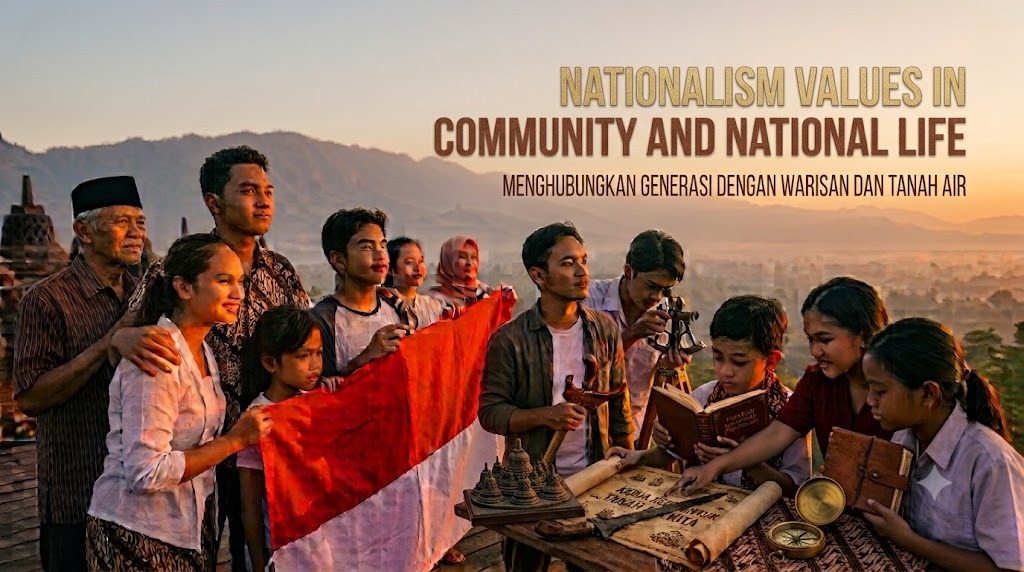
Nationalism values are important for creating a peaceful, united, and responsible society. Nationalism encourages people to care about their country, respect national identity, and contribute to the common good. In Indonesia, these values are especially important because society consists of many ethnic groups, religions, languages, cultures, and traditions. Strong nationalism can help citizens maintain unity while respecting the diversity around them.
Nationalism is not only expressed through national ceremonies or symbols. It can be practiced through tolerance, mutual cooperation, discipline, respect, responsibility, and concern for the community. These values influence how people interact with others and participate in national development. When nationalism becomes part of everyday behavior, it can strengthen relationships within communities and support a more united nation.
UNDERSTANDING NATIONALISM VALUES
Nationalism is a sense of love, belonging, loyalty, and responsibility toward one's country. It encourages citizens to appreciate their national identity and contribute to the development of society. Nationalism can be demonstrated through obeying laws, protecting public facilities, respecting others, preserving culture, and participating in community activities. These actions show that citizens understand their responsibilities as members of a nation.
Healthy nationalism does not mean believing that one nation is superior to all others. Instead, it encourages people to be proud of their country while respecting other nations and cultures. Positive nationalism is inclusive, responsible, and based on mutual respect. This understanding is important for creating peaceful relationships in a diverse society.
NATIONALISM VALUES IN COMMUNITY LIFE
Community life requires people to cooperate and respect one another. Tolerance, mutual assistance, responsibility, and solidarity are examples of nationalism values that can be practiced in everyday interactions. People can help neighbors, participate in community activities, and maintain cleanliness in shared spaces. These simple actions can strengthen social relationships.
Nationalism in community life is also reflected in the willingness to prioritize common interests. Citizens should avoid actions that create unnecessary conflict or harm others. Caring for the community means caring for the country at a smaller and more direct level. Strong communities can become an important foundation for national unity.
NATIONALISM VALUES IN NATIONAL LIFE
Nationalism also plays an important role in national life. Citizens can demonstrate nationalism by obeying laws, fulfilling their responsibilities, respecting national institutions, and participating in democratic processes. Responsible citizenship helps maintain social stability and supports national development. People can contribute according to their abilities and professions.
National life becomes stronger when citizens understand that individual actions can affect society as a whole. Respecting public rules, paying attention to social issues, and protecting national resources are examples of responsible behavior. National development requires participation from citizens as well as government institutions. Cooperation between different parts of society can create a stronger nation.
TOLERANCE AS A NATIONALISM VALUE
Tolerance is essential in Indonesia because of its cultural and social diversity. People may have different religions, ethnic backgrounds, languages, traditions, and opinions. Nationalism should encourage citizens to respect these differences rather than use them as reasons for conflict. Tolerance allows people with different backgrounds to live together peacefully.
Tolerance can be practiced through listening to different opinions, avoiding discrimination, respecting religious practices, and communicating politely. It does not mean that everyone must have the same beliefs or opinions. Tolerance means respecting differences while maintaining peaceful relationships. This value helps protect national unity.
GOTONG ROYONG AND SOCIAL SOLIDARITY
Gotong royong, or mutual cooperation, is a strong social value in Indonesian communities. It encourages people to work together to achieve common goals. Community cleanups, helping neighbors, supporting people affected by disasters, and organizing social activities are examples of gotong royong. These activities strengthen relationships and create a sense of shared responsibility.
Gotong royong also teaches people to care about others rather than focusing only on personal interests. Social solidarity can make communities more resilient when facing difficulties. When citizens are willing to help one another, social trust can grow. This spirit of cooperation reflects the practical side of nationalism.
RESPECTING INDONESIAN CULTURAL DIVERSITY
Indonesia has a wide variety of cultures that form an important part of national identity. Traditional dances, music, clothing, languages, food, crafts, and local customs are examples of this diversity. Preserving cultural heritage is an important expression of nationalism. It helps ensure that valuable traditions can continue to be appreciated by future generations.
Citizens can preserve culture by participating in cultural events, learning local traditions, supporting artists, and introducing Indonesian heritage to younger generations. Technology can also help document and promote cultural knowledge. Cultural diversity should be viewed as a national strength rather than a source of division. Respect for different traditions can strengthen a shared Indonesian identity.
DISCIPLINE AND RESPONSIBILITY IN DAILY LIFE
Discipline and responsibility are important nationalism values that can be practiced every day. Citizens can demonstrate discipline by following laws, obeying community rules, maintaining public facilities, and completing their responsibilities. These behaviors may appear simple, but they contribute to an orderly society. Responsible citizens understand that their actions can affect other people.
Students can practice discipline by following school rules, completing assignments, respecting teachers, and maintaining cleanliness. Workers can demonstrate responsibility by performing their duties honestly and professionally. Nationalism begins with responsible behavior in everyday life. When these habits are practiced consistently, they can contribute to a stronger society.
THE ROLE OF YOUNG PEOPLE IN NATIONALISM
Young people have an important role in maintaining nationalism because they will become future leaders and members of society. They can strengthen national values through education, cultural activities, social programs, environmental projects, and responsible technology use. Young people can become positive examples of modern nationalism. Their creativity can help present national values in ways that are relevant to their generation.
Young people can also use social media to promote Indonesian culture and positive social activities. They should avoid spreading misinformation, hate speech, or content that creates unnecessary divisions. Digital responsibility is an important part of nationalism in modern society. By using technology wisely, young people can contribute to national unity.
EDUCATION FOR DEVELOPING NATIONALISM VALUES
Education plays a major role in developing nationalism values. Schools can teach students about Indonesian history, Pancasila, citizenship, cultural diversity, and national identity. These lessons can help students understand why unity and responsibility are important. Education can also develop critical thinking and respect for different perspectives.
Nationalism education should include practical activities. Students can participate in community service, cultural programs, environmental projects, student organizations, and group activities. Learning through real experiences can make national values easier to understand and practice. Cooperation between schools, families, and communities can make this process more effective.
USING TECHNOLOGY RESPONSIBLY
Technology has changed how people communicate and receive information. Social media can be used to share Indonesian culture, local products, national achievements, educational information, and positive community activities. This provides opportunities for citizens to promote national identity in modern ways. Digital platforms can connect people from different regions and communities.
However, technology can also spread misinformation and harmful content quickly. Citizens should verify information before sharing it and communicate respectfully with others. Digital literacy and critical thinking are essential for responsible technology use. When technology is used wisely, it can strengthen social connections and support national unity.
SUPPORTING LOCAL PRODUCTS AND COMMUNITIES
Supporting local products is another practical way to demonstrate nationalism. Local businesses provide employment and contribute to community economies. Citizens can support them by purchasing suitable products, recommending local brands, and promoting small businesses. These actions can help strengthen economic participation at the community level.
Supporting local products does not require rejecting foreign products completely. People can remain open to international goods while recognizing the importance of domestic businesses. Responsible consumption can support both personal needs and local economic development. Strong communities and local economies contribute to a stronger national economy.
CHALLENGES IN PRACTICING NATIONALISM
Modern society faces several challenges in maintaining nationalism. Globalization, misinformation, individualism, social polarization, consumerism, and cultural changes can influence people's attitudes and behavior. Social media can make these influences spread rapidly. Without critical thinking and strong values, citizens may become more vulnerable to negative influences.
These challenges should not be addressed by rejecting modernization. Instead, people should learn how to adapt while maintaining their national identity and social responsibilities. Education, digital literacy, tolerance, and cultural awareness can help citizens respond to modern challenges. A flexible and positive form of nationalism can remain relevant in changing times.
CONCLUSION
Nationalism values are important for both community and national life. They encourage citizens to practice tolerance, cooperation, discipline, responsibility, cultural appreciation, and social solidarity. These values can strengthen relationships among citizens and create a stronger sense of belonging to Indonesia.
Nationalism can begin with simple actions in everyday life. Helping others, respecting differences, preserving culture, following rules, supporting local communities, and using technology responsibly are meaningful ways to practice nationalism. When these values are consistently applied by citizens, communities can become stronger and national unity can be maintained for future generations.
About the Author
Gusti Ayu Tita P
Author — STEKOM University
An active author focused on academic issues, educational technology, and human resource development in the campus environment.















