OJK Warning Signs of Financial Scams You Need to Watch Out For
Gusti Ayu Tita P
24 Agustus 2026
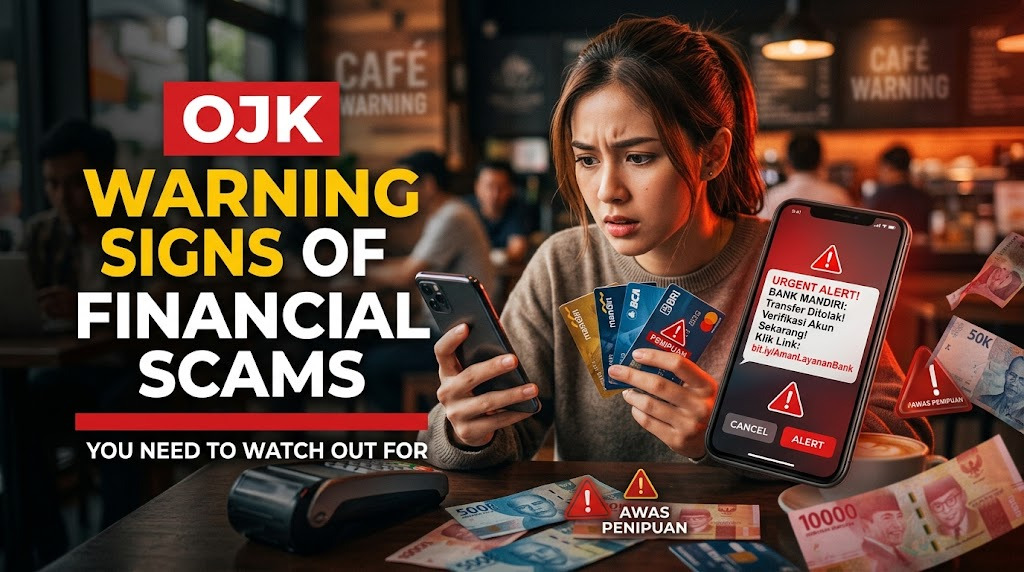
The development of digital financial services provides many conveniences for society. People can access loans, investments, banking services, insurance, and other financial products through digital platforms. However, this convenience is also used by scammers to offer fraudulent financial services. Understanding the warning signs of financial scams can help consumers identify suspicious offers before suffering financial losses.
Financial scams can appear in many forms and may use convincing websites, social media accounts, fake documents, or people pretending to represent legitimate institutions. Therefore, consumers should not make financial decisions based only on attractive promotions. Verification and caution are essential whenever money or personal information is involved.
PROMISES OF UNREALISTIC PROFITS
One of the most common warning signs is a promise of very high profits with little or no risk. Fraudulent investment offers may claim that investors can double their money quickly or receive guaranteed returns every day or month. Such claims should immediately encourage consumers to investigate further.
Legitimate investment products can offer potential returns, but they also involve risks that depend on the product and market conditions. Guaranteed high returns without meaningful risk should be treated with caution. Never transfer money simply because the promised profit sounds attractive.
PRESSURE TO MAKE A QUICK DECISION
Scammers often create a sense of urgency to prevent potential victims from conducting proper research. They may say that an investment opportunity will disappear within hours or that only a few places remain. This tactic encourages people to make emotional rather than rational decisions.
Do not allow pressure to determine your financial decisions. Take time to check the company, product, legal status, and payment instructions. A legitimate financial decision should allow you enough time to understand what you are buying or agreeing to.
CLAIMS OF GUARANTEED APPROVAL
Another warning sign can be a promise of guaranteed financial approval without reasonable verification. This may occur in illegal online loan offers that claim anyone can receive a large amount of money regardless of their circumstances.
Consumers should be cautious when a provider says that no assessment is necessary. Fast processing can be convenient, but it should not eliminate proper procedures. Guaranteed approval does not prove that a financial service is legitimate.
UNCLEAR COMPANY IDENTITY
A financial service should have a clear and verifiable identity. Consumers should know the legal name of the company, its business activity, and the appropriate regulatory status. If these details are difficult to find or constantly change, the offer should be treated cautiously.
Do not rely solely on brand names because fraudulent operators can imitate legitimate companies. Compare the exact legal identity with official information. A similar company name can be deliberately used to create confusion.
FAKE OJK CLAIMS
Scammers may use the OJK name or logo to make their financial offers look legitimate. They may display fake certificates, screenshots, or statements claiming that they are officially registered. These materials can be designed to make consumers stop asking questions.
Consumers should verify the company's status independently through official OJK information. Do not consider a logo or certificate displayed by the company as sufficient evidence. Official verification is more reliable than promotional claims.
REQUESTS FOR PERSONAL INFORMATION
Consumers should be cautious if a financial offer requests excessive personal or financial information. Fraudsters may collect identity documents, account information, passwords, or other sensitive data for unauthorized purposes.
Never provide OTP codes, PINs, passwords, or other security credentials to unknown individuals. If a person claiming to be customer service asks for confidential information, contact the company independently through its official channel. Protecting personal data is an important part of financial security.
SUSPICIOUS PAYMENT REQUESTS
Another warning sign is an unexpected request to transfer money before receiving a financial service. Scammers may describe the payment as a verification fee, administration charge, insurance payment, or security deposit. After receiving the money, they may ask for another payment.
Verify all payment instructions before transferring funds. Be especially careful if you are asked to send money to a personal account. Never transfer money simply because someone creates an urgent situation.
OFFERS THROUGH UNKNOWN CONTACTS
Financial scams are often distributed through WhatsApp, SMS, social media, email, or telephone calls from unknown contacts. The sender may claim to represent a bank, investment company, lending provider, or government institution.
Do not trust the offer simply because the sender knows your name or other basic information. Verify the company independently and use contact details obtained from an official source. Unknown communication should always be treated cautiously when money is involved.
SUSPICIOUS WEBSITES AND APPLICATIONS
A scammer can create a website or mobile application that looks similar to a legitimate financial platform. The design may include professional logos, testimonials, charts, and company information to create an impression of credibility.
Check the official website and application information carefully. Avoid installing applications from unknown links or submitting documents through suspicious websites. A professional appearance does not guarantee authenticity.
THREATS AND INTIMIDATION
Some financial scams, particularly illegal lending schemes, may involve threats, intimidation, harassment, or aggressive collection. Victims may be pressured into making payments or providing additional information.
If you receive threatening messages, save screenshots, phone numbers, and other relevant evidence. Do not respond by giving passwords, OTP codes, or additional personal information. Threatening behavior should be documented and reported through the appropriate channels.
FAKE CUSTOMER SERVICE REPRESENTATIVES
Scammers can pretend to be customer service officers from financial institutions. They may contact consumers to discuss account problems, loan payments, investment withdrawals, or alleged security issues.
Do not give confidential information to the caller. End the conversation and contact the financial company using an official telephone number or communication channel that you find independently. Never trust a caller solely because they claim to be from a legitimate institution.
HOW TO PROTECT YOURSELF FROM FINANCIAL SCAMS
Consumers can reduce financial risks by developing several simple habits. Always verify the company and its legal status, understand the financial product, check costs and risks, and protect personal information. Avoid making financial decisions while under pressure.
Keep important records such as agreements, receipts, screenshots, and communication history. If an offer appears suspicious, stop the transaction and seek information through official channels. Prevention is easier than recovering money after a scam occurs.
WHAT TO DO IF YOU ENCOUNTER A SUSPECTED SCAM
If you encounter a suspicious financial offer, do not transfer money or provide additional personal information. Save screenshots, account details, phone numbers, website addresses, advertisements, and transaction records. These materials can help explain what happened.
Verify the company through official OJK information and use appropriate official complaint or reporting channels. If you have already suffered financial losses or experienced threats, consider reporting the matter to the relevant authorities. Do not pay another person who promises guaranteed recovery of your lost money.
CONCLUSION
The OJK warning signs of financial scams include unrealistic returns, guaranteed approval, unclear company identities, fake OJK claims, suspicious payment requests, excessive data requests, unknown contacts, and aggressive pressure. Recognizing these signs can help consumers stop before a financial problem becomes more serious.
Always verify financial companies and products through official sources, understand the risks and obligations, and protect confidential information. Do not allow attractive promises or urgent messages to replace careful investigation. With greater financial awareness and caution, consumers can reduce the risk of becoming victims of financial scams.
About the Author
Gusti Ayu Tita P
Author — STEKOM University
An active author focused on academic issues, educational technology, and human resource development in the campus environment.