Pancasila Values That Remain Essential in the Digital Era
Gusti Ayu Tita P
4 Agustus 2026
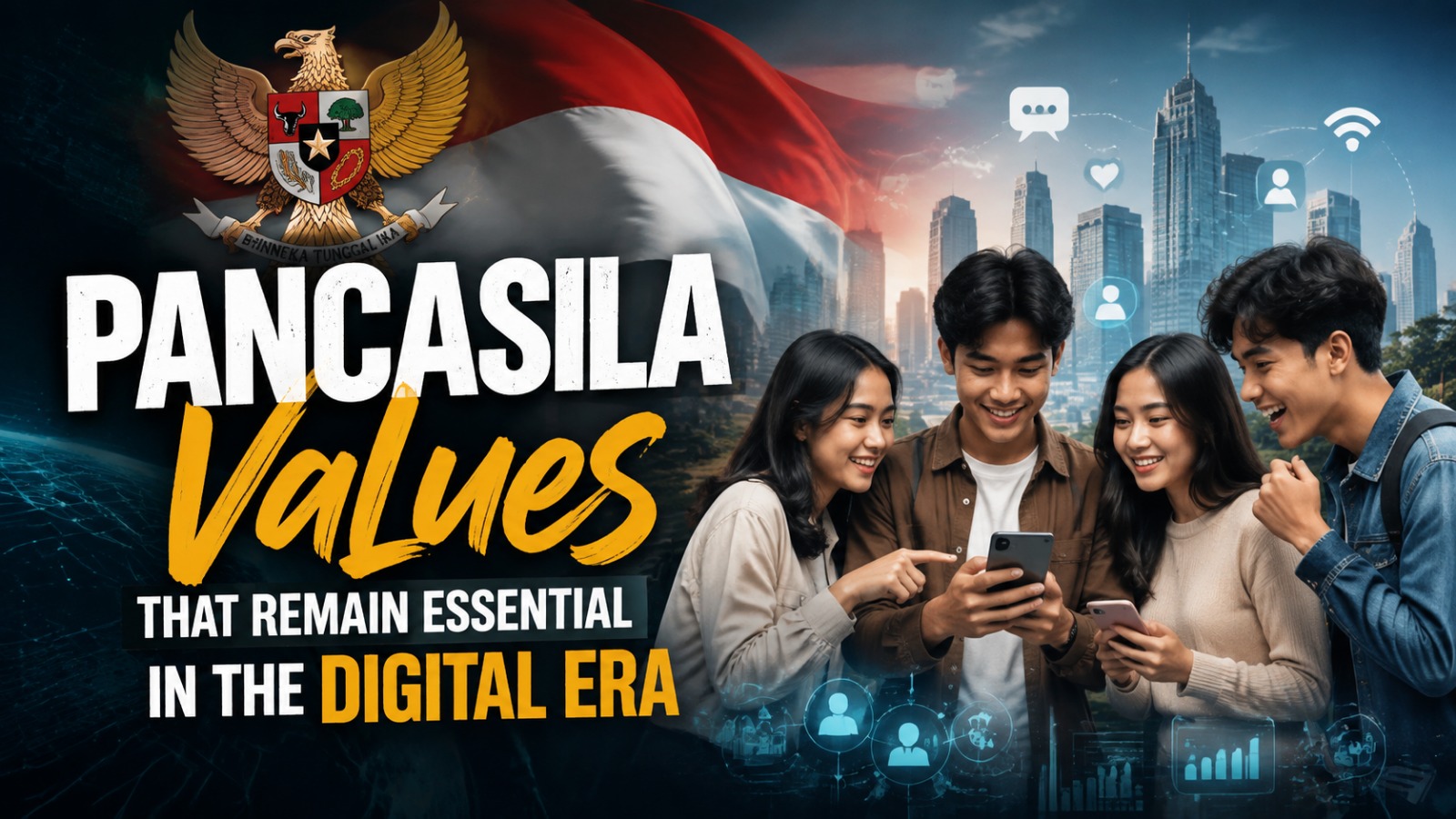
Pancasila is the foundation of Indonesia that contains values and principles guiding the behavior of citizens. Although society has entered a modern period dominated by technology and digital transformation, the importance of Pancasila values remains strong. The digital era brings many benefits, such as easier communication, faster access to information, and new opportunities for innovation. However, it also creates challenges, including misinformation, online conflicts, cyberbullying, and declining social responsibility.
In this situation, Pancasila as Indonesia’s national ideology becomes an important moral guide for society. The values of humanity, unity, democracy, and justice help people use technology wisely and responsibly. By applying Pancasila in digital life, Indonesian citizens can take advantage of technological development while maintaining national character and ethical behavior.
SEO Keywords: Pancasila Values, Digital Era, Digital Ethics, Indonesian Ideology, Technology Development
THE IMPORTANCE OF PANCASILA IN THE DIGITAL ERA
The rapid development of technology has changed the way people communicate, work, learn, and interact. Digital platforms allow people to share information quickly, but they also create risks if used without responsibility. Pancasila values in the digital era provide important guidance to ensure that technological progress remains aligned with moral and social principles.
Pancasila helps society understand that technology should be used for positive purposes. The principles of humanity and justice encourage digital users to respect others, protect privacy, and avoid harmful actions. Therefore, Pancasila remains relevant because it provides ethical direction in facing the challenges of modern technology.
APPLYING HUMANITY VALUES IN DIGITAL COMMUNICATION
The second principle of Pancasila, “Just and Civilized Humanity,” teaches people to respect human dignity in every interaction. This value is highly relevant in the digital world, where communication often happens through social media and online platforms. People must remember that behind every digital account is a real person with feelings and rights.
Applying humanity values online can be done by avoiding cyberbullying, hate speech, and harmful comments. Digital users should communicate politely, respect different opinions, and share information responsibly. Through ethical digital communication, society can create a safer and more positive online environment.
MAINTAINING NATIONAL UNITY THROUGH DIGITAL PLATFORMS
The third principle of Pancasila emphasizes The Unity of Indonesia, which encourages citizens to maintain togetherness despite differences. In the digital era, social media can connect people from different regions and backgrounds. However, it can also become a place where conflicts and divisions spread if users do not apply tolerance.
By practicing Pancasila values online, people can use digital platforms to promote unity and appreciation of diversity. Sharing positive content about Indonesian culture, supporting local communities, and respecting different perspectives are examples of maintaining national unity. Technology can become a tool that strengthens relationships among Indonesian citizens.
PANCASILA AND DIGITAL RESPONSIBILITY
Digital responsibility is an important attitude that every technology user needs to develop. The fourth and fifth principles of Pancasila teach the importance of democracy, fairness, and responsibility toward others. These values encourage people to think carefully before creating or sharing digital content.
Responsible digital behavior includes checking information accuracy, respecting intellectual property, and avoiding the spread of fake news or misinformation. By applying democratic and justice values, people can participate in digital spaces without harming others. This shows that Pancasila principles can guide responsible technology use.
PANCASILA AS A FILTER AGAINST NEGATIVE GLOBAL INFLUENCES
The digital era allows Indonesian society to access information and cultures from around the world. While globalization provides many advantages, it can also introduce negative influences that may affect national identity. Without strong values, young generations may easily adopt behaviors that conflict with Indonesian culture.
Pancasila as a national identity functions as a filter that helps people choose positive influences while rejecting harmful ones. The values of Pancasila encourage openness toward progress while maintaining Indonesian traditions and character. This balance allows society to become modern without losing its cultural foundation.
THE ROLE OF YOUNG GENERATIONS IN APPLYING PANCASILA DIGITALLY
Young people are among the most active users of digital technology. Therefore, they have an important role in maintaining Pancasila values in the digital era. As future leaders, young Indonesians need to understand that technology must be used with responsibility and awareness.
Young generations can apply Pancasila by creating positive digital content, spreading educational information, respecting others online, and avoiding digital conflicts. Their actions can influence the development of a healthier digital culture. By combining technological skills with Pancasila values, young people can contribute to a stronger Indonesia.
CONCLUSION
Pancasila values remain essential in the digital era because they provide moral guidance for dealing with technological changes. The principles of humanity, unity, democracy, and justice help citizens use digital technology responsibly and ethically. Although the world continues to change, the fundamental values of Pancasila remain important for maintaining national character.
By applying Pancasila principles in digital life, Indonesian society can create a safer, more respectful, and more productive digital environment. Technology and national values can work together to support Indonesia’s progress while preserving its identity.
About the Author
Gusti Ayu Tita P
Author — STEKOM University
An active author focused on academic issues, educational technology, and human resource development in the campus environment.