
Positive Scouting Values That Can Be Applied In Everyday Life
Gusti Ayu Tita P
31 Juli 2026
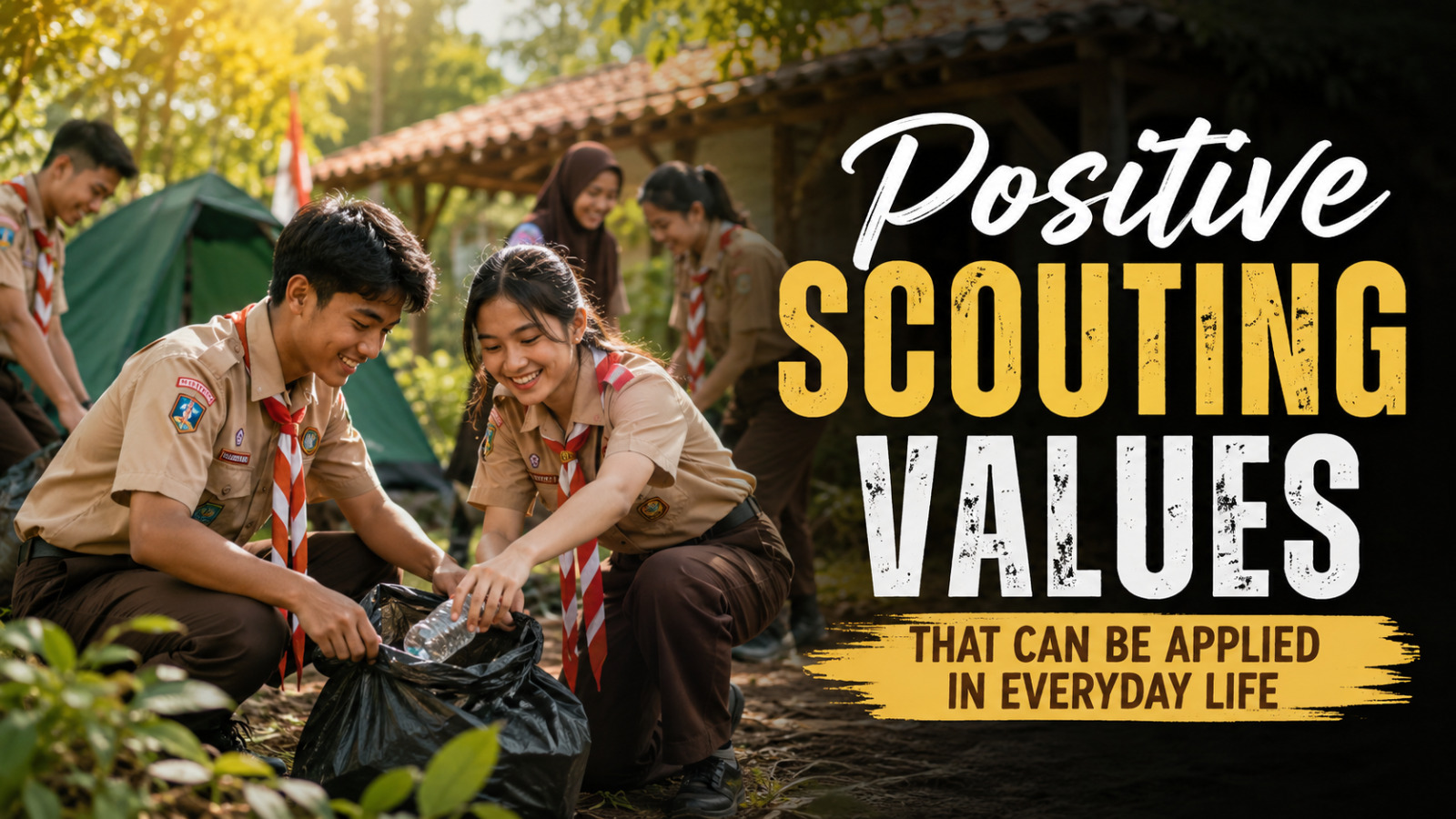
Scouting is more than an outdoor activity. It is a lifelong learning experience that helps young people develop strong character, leadership skills, and positive habits. The values taught in Scouting can be applied in school, at work, at home, and in the community. By practicing these values consistently, individuals become more responsible, caring, and confident. This article explores the most important Scouting values and explains how they can improve everyday life.
WHY SCOUTING VALUES ARE IMPORTANT
Scouting teaches people to become responsible, honest, and respectful in every situation. These values help build trust with family members, friends, teachers, and coworkers. People who consistently practice good values often make better decisions and create stronger relationships. They also become positive role models for others around them.
In today's fast-changing world, character is just as important as knowledge and technical skills. Scouting encourages young people to solve problems peacefully, respect differences, and contribute to society. These habits prepare them for future challenges in education, careers, and personal life. As a result, Scouting values remain relevant for people of all ages.
HONESTY AND INTEGRITY IN DAILY LIFE
Honesty is one of the most valuable lessons learned in Scouting. Being truthful creates trust and strengthens relationships with others. Whether completing school assignments, working on projects, or communicating with friends, honesty helps build a good reputation. People who act with integrity are respected because they keep their promises and accept responsibility for their actions.
Applying honesty also means admitting mistakes and learning from them instead of making excuses. This attitude encourages personal growth and self-confidence. Integrity becomes a foundation for ethical decision-making in both personal and professional life. Over time, honest behavior creates lasting respect and credibility.
TEAMWORK AND COOPERATION
Scouting activities often require members to work together toward a common goal. Through camping, community service, and outdoor challenges, Scouts learn the importance of teamwork, communication, and mutual support. Every member has a role that contributes to the success of the group. This teaches respect for different opinions and abilities.
These teamwork skills are valuable in classrooms, workplaces, and families. People who cooperate effectively can solve problems faster and reduce unnecessary conflicts. They also develop stronger leadership and communication abilities. Working together creates better results than working alone.
DISCIPLINE AND RESPONSIBILITY
Discipline helps individuals manage their time, complete tasks, and stay committed to their goals. Scouting encourages members to follow rules, respect schedules, and fulfill responsibilities. These habits improve productivity and help people become more dependable. Discipline also teaches patience and perseverance during difficult situations.
Responsibility goes beyond completing personal duties. It also includes caring for others, protecting shared resources, and contributing positively to society. Responsible individuals inspire confidence because they can be trusted to do the right thing. These qualities benefit both personal and professional success.
RESPECT FOR OTHERS AND THE ENVIRONMENT
One of the core principles of Scouting is showing respect to every person regardless of background or belief. Respect encourages kindness, empathy, and peaceful communication. It allows people to build healthy relationships based on understanding rather than judgment. This creates stronger communities where everyone feels valued.
Scouting also promotes environmental responsibility. Members are encouraged to protect nature, reduce waste, and participate in conservation activities. These habits help preserve natural resources for future generations. Respecting both people and nature creates a more sustainable and harmonious world.
LEADERSHIP THROUGH SERVICE
Scouting teaches that true leadership begins with serving others. A good leader listens carefully, encourages teamwork, and makes fair decisions. Leadership is not about controlling people but about helping everyone succeed together. This mindset creates supportive and productive environments.
Service activities such as volunteering and community projects help Scouts understand social responsibility. These experiences develop compassion, confidence, and practical problem-solving skills. Leaders who serve others earn genuine respect and inspire positive change. This approach benefits communities as well as personal development.
APPLYING SCOUTING VALUES EVERY DAY
Practicing Scouting values does not require wearing a uniform every day. Simple actions such as helping neighbors, respecting school rules, telling the truth, and protecting the environment reflect the spirit of Scouting. Small positive habits gradually become lifelong character traits. Consistency is the key to making these values part of everyday life.
People who apply these principles often enjoy stronger relationships and greater personal satisfaction. They become more resilient when facing challenges because their decisions are guided by positive values. Everyday actions based on Scouting principles can create meaningful improvements in both personal and community life. Even small contributions can make a significant difference.
CONCLUSION
Positive Scouting values provide practical guidance for becoming a responsible, respectful, and trustworthy individual. Honesty, discipline, teamwork, leadership, and respect are timeless qualities that benefit people in every stage of life. By practicing these principles consistently, anyone can build stronger relationships, achieve personal growth, and contribute positively to society. Applying Scouting values every day helps create better individuals, stronger communities, and a brighter future.
About the Author
Gusti Ayu Tita P
Author — STEKOM University
An active author focused on academic issues, educational technology, and human resource development in the campus environment.















