
Prambanan Temple and Its Fascinating History
Gusti Ayu Tita P
4 September 2026
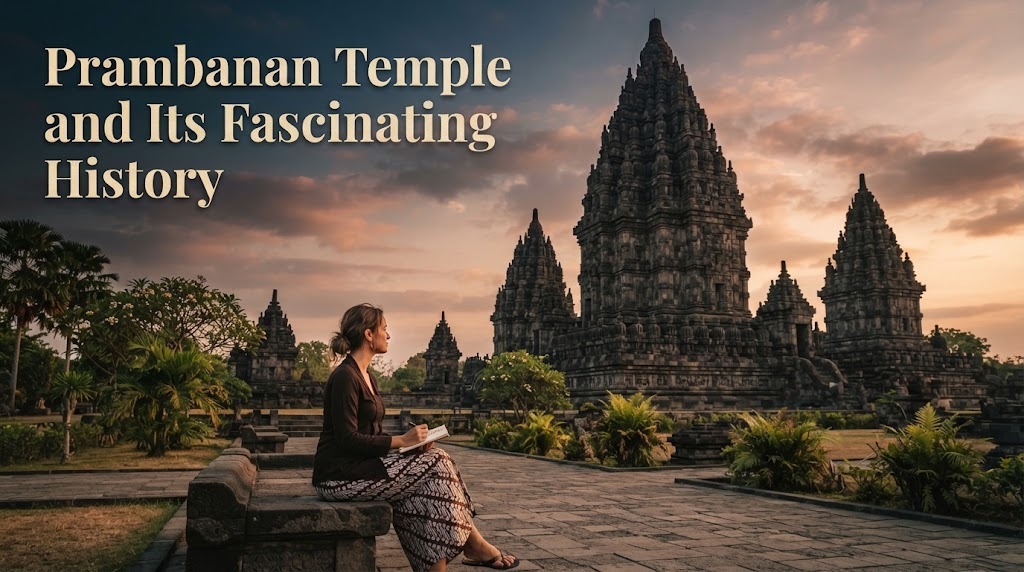
Prambanan Temple is one of Indonesia’s most impressive historical landmarks and an important example of ancient Hindu architecture in Java. Located near the border of Central Java and the Special Region of Yogyakarta, the temple complex attracts visitors with its towering structures, detailed stone carvings, and fascinating cultural history.
More than a beautiful tourist destination, Prambanan provides an opportunity to learn about the religious and cultural development of ancient Java. Its temples, statues, and reliefs preserve stories connected to Hindu traditions and the Ramayana. The complex was also recognized as a UNESCO World Heritage Site in 1991.
THE HISTORY OF PRAMBANAN TEMPLE
Prambanan Temple was built around the 9th century during the period of the Mataram Kingdom in Central Java. The complex is associated with Hindu religious traditions and was dedicated to the Trimurti, consisting of Shiva, Vishnu, and Brahma. Among the three, Shiva received particular prominence through the construction of the largest and tallest temple. The development of Prambanan reflects the important role of Hinduism in the political and cultural life of ancient Java.
Over time, the temple complex was affected by natural disasters, changes in political centers, and long periods of abandonment. Earthquakes also caused significant damage to many structures. For centuries, parts of the complex remained in ruins before archaeological attention and restoration efforts began. Reconstruction and conservation have continued to help protect this important historical heritage.
THE GRAND ARCHITECTURE OF PRAMBANAN
One of the most remarkable features of Prambanan is its tall and sophisticated architecture. The central area contains three major temples dedicated to Shiva, Vishnu, and Brahma. Each major temple is accompanied by a temple associated with its respective sacred vehicle. The arrangement reflects the religious concepts that influenced the design of the complex.
The walls of the temples contain detailed carvings and decorative elements. These carvings demonstrate the advanced artistic skills of the people who created the complex centuries ago. The tall central structures also create a dramatic appearance that makes Prambanan easily recognizable. Its combination of religious symbolism, architecture, and sculpture makes the complex especially valuable for cultural tourism.
THE SHIVA TEMPLE
The Shiva Temple is the largest and tallest structure in the Prambanan complex. It rises approximately 47 meters and stands prominently among the surrounding buildings. The temple contains several chambers associated with Hindu religious traditions. A statue of Shiva Mahadeva can also be found within the main structure.
The importance of the Shiva Temple can be seen from its size and central position within the complex. Its walls are decorated with various reliefs and ornamental details that add to its artistic value. Visitors can observe how religious ideas were expressed through architecture and sculpture. The temple therefore provides an important perspective on ancient Hindu culture in Java.
THE RAMAYANA RELIEFS
The Ramayana reliefs are among the most famous artistic features of Prambanan Temple. They portray scenes from the epic story of Rama and Sita, along with other important characters. The story is presented through a sequence of stone carvings that visitors can follow around parts of the temple. These reliefs demonstrate how literature, religion, and visual art were closely connected in ancient Java.
The carvings are valuable not only for their storytelling but also for their artistic detail. The figures, movements, and decorative patterns show the skill of ancient sculptors. The Ramayana tradition has continued to influence Indonesian performing arts and cultural traditions. One well-known example is the Ramayana ballet, which is frequently associated with the Prambanan area.
PRAMBANAN AS A UNESCO WORLD HERITAGE SITE
Prambanan Temple was inscribed on the UNESCO World Heritage List in 1991. The recognition reflects the site's outstanding cultural and architectural importance. The World Heritage property includes not only the main Prambanan complex but also other important temple remains in the surrounding archaeological area, including Sewu, Lumbung, and Bubrah.
Being a World Heritage Site also highlights the importance of continued conservation. Ancient stone structures can be affected by earthquakes, weather, environmental conditions, and human activity. Conservation work helps maintain the stability and historical character of the monuments. Visitors also contribute to preservation by following regulations and treating the site respectfully.
THE CULTURAL IMPORTANCE OF PRAMBANAN
Prambanan is an important source of information about the religious and cultural development of ancient Java. Its architecture provides evidence of sophisticated construction techniques and artistic traditions. The reliefs also preserve stories and visual representations that can help researchers understand aspects of ancient society. This makes the complex valuable not only for tourism but also for education and historical research.
The site also demonstrates the cultural diversity that existed in ancient Java. The wider archaeological area contains both Hindu and Buddhist monuments, including the nearby Sewu Temple complex. Their presence within the same broader landscape provides evidence of interaction between different religious traditions. This cultural richness makes Prambanan an important part of Indonesia's heritage.
VISITING PRAMBANAN TEMPLE
A visit to Prambanan can be an interesting experience for travelers who enjoy history, architecture, and cultural tourism. Visitors can explore the temple grounds, observe the reliefs, and learn about the history of the complex. The large open area also provides opportunities to appreciate the temple structures from different viewpoints. The surrounding archaeological landscape adds to the experience.
Travelers should check the latest information about opening hours, ticket requirements, access, and visitor regulations before arriving. Comfortable footwear is recommended because exploring the complex involves walking. Visitors should also avoid climbing restricted structures or touching fragile architectural elements. Keeping the area clean and respecting religious and cultural activities are important ways to help preserve the site.
WHY PRAMBANAN IS WORTH VISITING
Prambanan offers more than impressive ancient buildings. It allows visitors to experience a combination of history, religion, architecture, sculpture, and traditional storytelling in one destination. The towering temples create a memorable landscape, while the reliefs provide insight into stories and cultural traditions from the past. This makes the site suitable for both educational trips and cultural vacations.
Its location also makes Prambanan convenient to include in a wider exploration of Central Java and Yogyakarta. Visitors can discover other historical sites and cultural attractions in the surrounding region. For photographers, the detailed temple structures provide many interesting subjects. For history enthusiasts, the complex offers an opportunity to see how ancient traditions have survived through centuries of change.
CONCLUSION
Prambanan Temple is an extraordinary example of Indonesia's ancient cultural heritage. Built around the 9th century, the complex reflects the influence of Hinduism, the achievements of ancient Javanese architecture, and the artistic traditions of its time. Its magnificent temples and Ramayana reliefs make it one of the most fascinating historical destinations in Indonesia.
As a UNESCO World Heritage Site, Prambanan deserves continued protection and responsible tourism. Learning about its history can make a visit more meaningful while helping visitors appreciate the importance of preserving cultural heritage. With its remarkable architecture, fascinating stories, and historical significance, Prambanan remains a destination worth discovering.
About the Author
Gusti Ayu Tita P
Author — STEKOM University
An active author focused on academic issues, educational technology, and human resource development in the campus environment.















