Preserving Indonesian Culture As A Form Of Love For The Homeland
Gusti Ayu Tita P
5 Agustus 2026
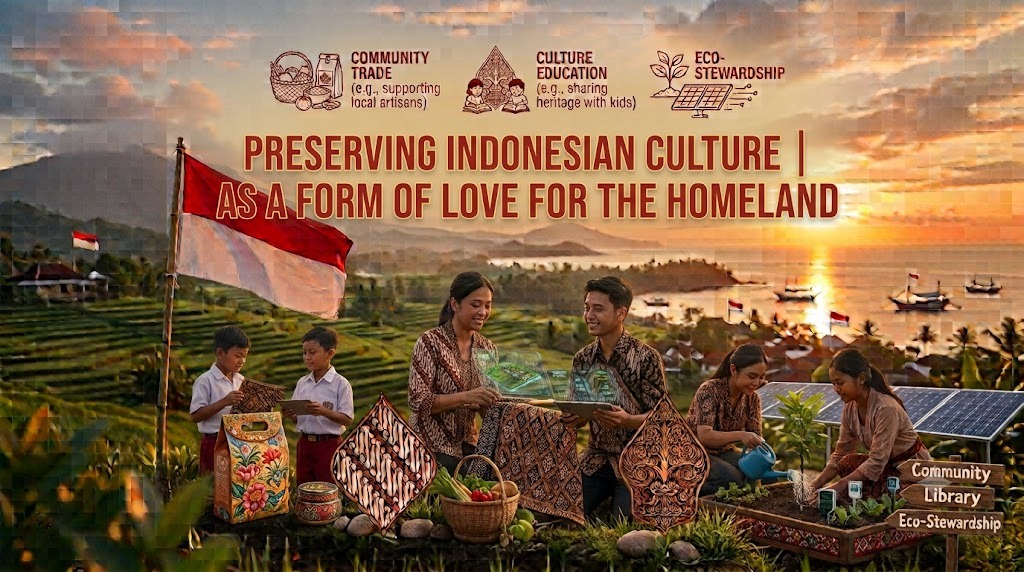
Preserving Indonesian culture is an important form of love for the homeland. Indonesia is known for its extraordinary cultural diversity, including traditional arts, languages, dances, music, clothing, food, customs, and local knowledge. This cultural heritage reflects the identity and history of communities across the country. Protecting it means ensuring that future generations can continue to understand and appreciate their roots.
Love for the homeland is not only demonstrated through national ceremonies or symbolic activities. It can also be shown through learning, practicing, respecting, and introducing Indonesian culture to others. In the modern era, cultural preservation requires participation from families, schools, communities, governments, and young people. With consistent efforts, Indonesia's cultural heritage can remain meaningful while adapting to changing times.
UNDERSTANDING INDONESIAN CULTURAL HERITAGE
Indonesian culture consists of diverse traditions and forms of expression developed by communities across the archipelago. Each region has its own characteristics, such as traditional ceremonies, local languages, music, dances, crafts, and culinary traditions. This diversity is an important part of Indonesia's national identity. Cultural heritage also reflects the knowledge and creativity of previous generations.
Cultural heritage can be preserved through documentation, education, practice, and community participation. People need to understand the meaning behind traditions rather than simply viewing them as entertainment. Learning about local culture can strengthen appreciation for the communities that maintain it. This understanding can encourage people to participate in preservation efforts.
WHY CULTURAL PRESERVATION SHOWS LOVE FOR THE HOMELAND
Culture is closely connected to national identity. When citizens care about their cultural heritage, they demonstrate respect for the history and communities that shaped Indonesia. Preserving traditions can also strengthen a sense of belonging among Indonesians. Cultural pride can encourage people to appreciate the uniqueness of their homeland.
Cultural preservation also supports national unity through diversity. Different traditions can coexist as part of one Indonesian identity. Learning about other regional cultures can increase tolerance and reduce misunderstanding. In this way, preserving culture can strengthen both national pride and social harmony.
PRESERVING LOCAL LANGUAGES
Indonesia has many regional languages that are important parts of local identity. Local languages carry traditional knowledge, stories, expressions, and ways of understanding the world. However, some languages face challenges as younger generations increasingly use Indonesian or international languages. Supporting local language use can help maintain cultural diversity.
Families can introduce local languages through daily conversations, stories, songs, and traditional expressions. Schools can also include local language and cultural materials in learning activities. Young people can create digital content using regional languages to make them more relevant to modern audiences. These efforts can help local languages remain part of everyday cultural life.
PROTECTING TRADITIONAL ARTS
Traditional arts such as dance, music, theater, crafts, and visual arts represent the creativity of Indonesian communities. Many forms of traditional art have been passed from one generation to another. Learning and practicing these arts can help prevent cultural knowledge from disappearing. It can also provide opportunities for young people to develop creativity.
Schools and communities can organize art performances, workshops, exhibitions, and cultural festivals. Young people can learn directly from artists and cultural practitioners. Digital platforms can also be used to document performances and introduce them to wider audiences. Responsible promotion can help traditional arts gain appreciation in contemporary society.
MAINTAINING TRADITIONAL FOOD
Indonesian cuisine is another important part of cultural heritage. Each region has unique ingredients, cooking methods, flavors, and food traditions. Traditional foods often reflect local history and environmental conditions. Preserving culinary traditions can therefore help maintain knowledge about Indonesia's diverse communities.
Families can teach younger generations how to prepare traditional dishes. Communities can organize culinary events and food festivals to introduce local specialties. Young entrepreneurs can also develop traditional foods into modern products while maintaining their cultural characteristics. Innovation can help traditional cuisine remain relevant without losing its identity.
INTRODUCING CULTURE THROUGH EDUCATION
Education plays a major role in cultural preservation. Schools can introduce students to Indonesian traditions through history, arts, language, and cultural projects. Students can learn about the cultural heritage of their own region as well as other parts of Indonesia. This knowledge can develop appreciation for national diversity.
Practical activities can make cultural education more engaging. Students can participate in traditional performances, cultural exhibitions, local research, craft workshops, and visits to cultural sites. These experiences allow them to interact directly with cultural heritage. Education can therefore transform cultural preservation from a concept into a meaningful experience.
THE ROLE OF YOUNG PEOPLE IN CULTURAL PRESERVATION
Young people have a crucial role in keeping Indonesian culture alive. They have access to technology and creative platforms that previous generations did not have. They can use these tools to document, promote, and introduce Indonesian traditions. Their involvement can make cultural preservation more attractive to younger audiences.
Young people can create videos, podcasts, articles, illustrations, photographs, and social media campaigns about Indonesian culture. They can also participate in cultural communities and learn traditional skills. By combining traditional knowledge with modern creativity, young people can help cultural heritage remain relevant. Their involvement can strengthen national pride.
USING TECHNOLOGY TO PROMOTE INDONESIAN CULTURE
Technology provides powerful opportunities for digital cultural preservation. Cultural information can be documented and shared through websites, social media, digital archives, videos, and educational platforms. This makes cultural knowledge easier to access for people in different regions. It can also introduce Indonesian culture to international audiences.
However, digital cultural content should be created responsibly. Information should be accurate, respectful, and properly contextualized. Creators should avoid changing or presenting traditions in misleading ways simply to gain attention. Responsible digital promotion can help protect cultural identity while making it accessible to modern audiences.
SUPPORTING LOCAL ARTISANS AND CREATIVE INDUSTRIES
Supporting local artisans and creative businesses can contribute to cultural preservation. Traditional crafts often depend on skills passed from one generation to another. When people purchase authentic local products, they can help artisans continue their work. Economic support can give cultural practitioners opportunities to maintain traditional skills.
Young people can promote local crafts through digital marketing, photography, storytelling, and creative business strategies. Schools can also introduce entrepreneurship projects involving local products. Combining cultural heritage with responsible innovation can create new economic opportunities. This approach allows culture to remain valuable both socially and economically.
RESPECTING CULTURAL DIFFERENCES
Preserving Indonesian culture requires respect for cultural diversity. People should understand that traditions may differ between regions and communities. No culture should be treated as inferior simply because it is unfamiliar. Respect allows cultural diversity to become a source of national strength.
Students and communities can develop respect by learning about different traditions, attending cultural events, listening to cultural practitioners, and avoiding stereotypes. Understanding differences can reduce prejudice and encourage cooperation. Cultural appreciation should be based on knowledge and respect. This attitude supports both cultural preservation and national unity.
KEEPING TRADITIONS RELEVANT IN THE MODERN ERA
Cultural preservation does not always mean keeping traditions completely unchanged. Some traditions can adapt to modern circumstances while maintaining their essential values and identity. Responsible adaptation can make cultural practices easier for younger generations to understand. The important point is to avoid losing the meaning of the tradition.
Modern approaches can include digital storytelling, contemporary performances, creative products, educational applications, and cultural content on social media. These methods can introduce traditional culture in formats that young people already understand. Innovation can therefore support preservation rather than replace tradition. A balance between heritage and modern creativity can keep culture alive.
THE ROLE OF FAMILIES AND COMMUNITIES
Families are often the first place where cultural values are introduced. Parents and older family members can teach children traditional stories, languages, food, customs, and respectful cultural practices. Everyday experiences can make cultural learning more natural. Strong family involvement can help younger generations develop a connection with their heritage.
Communities also have an important responsibility. Cultural groups can organize festivals, workshops, traditional performances, documentation projects, and educational activities. Cooperation between families, communities, schools, and cultural practitioners can create stronger preservation efforts. Shared responsibility makes cultural heritage more sustainable.
CULTURE AS A FOUNDATION FOR NATIONAL UNITY
Cultural diversity can become a strong foundation for Indonesian national unity. Different traditions show that Indonesia consists of many communities with unique identities. At the same time, these differences exist within one national framework. Appreciating cultural diversity can help citizens understand the meaning of unity in diversity.
People who understand and respect cultural differences are more likely to develop tolerance and cooperation. Cultural activities can bring people together and create opportunities for interaction. This can strengthen relationships between communities. Preserving culture therefore contributes not only to heritage protection but also to national harmony.
CONCLUSION
Preserving Indonesian culture is a meaningful way to demonstrate love for the homeland. It can be practiced by learning local traditions, using regional languages, supporting traditional arts, appreciating local food, helping artisans, and introducing cultural heritage through technology. Everyone can contribute according to their abilities. Cultural preservation becomes stronger when it is supported by families, schools, communities, and young people.
Ultimately, Indonesian culture belongs to both the present generation and future generations. Protecting it means respecting the knowledge, creativity, and history of communities across the country. Modern technology can provide new ways to preserve and promote traditions without abandoning their essential values. By appreciating and protecting Indonesia's cultural heritage, citizens can strengthen national identity and demonstrate genuine love for their homeland.
About the Author
Gusti Ayu Tita P
Author — STEKOM University
An active author focused on academic issues, educational technology, and human resource development in the campus environment.