
Professional Challenges in Functional Positions
Gusti Ayu Tita P
12 Agustus 2026
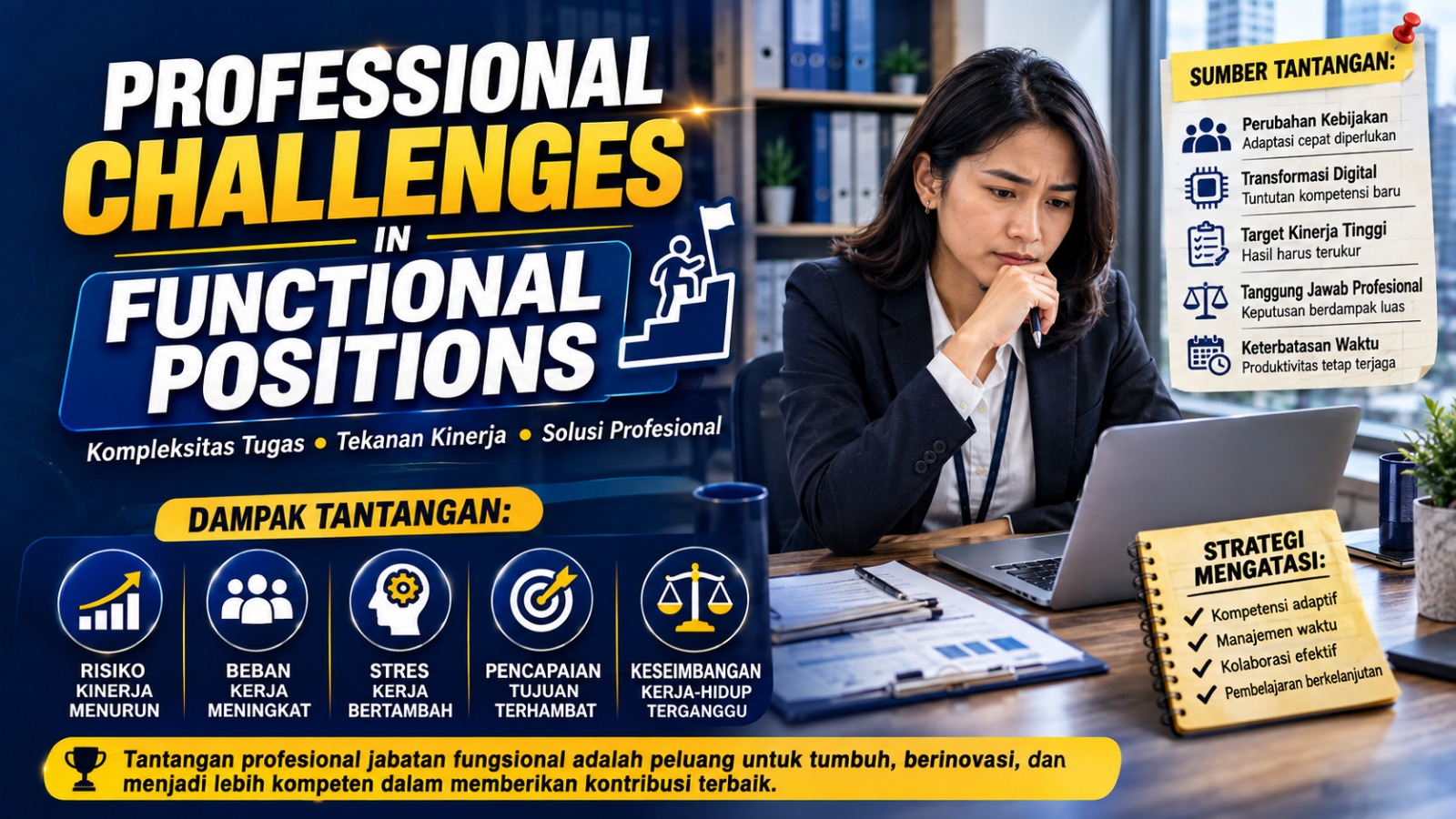
Functional positions play an important role in organizations because they rely on specialized knowledge and professional expertise. However, working in a functional position also involves challenges that require continuous learning and adaptation. Changes in technology, workplace systems, regulations, and organizational expectations can affect how professionals perform their responsibilities. Understanding these challenges can help employees prepare for a more dynamic professional environment.
Professional success in a functional position is not determined by technical expertise alone. Employees also need adaptability, communication skills, problem-solving abilities, and professional integrity. By recognizing common challenges and developing appropriate strategies, professionals can maintain performance while continuing to grow throughout their careers.
KEEPING COMPETENCIES UP TO DATE
One of the main challenges in functional positions is maintaining relevant professional competencies. Knowledge and skills that are useful today may need to be updated as technology and professional practices develop. Employees who rely only on existing knowledge may find it difficult to respond to new responsibilities. Continuous competency development is therefore essential for maintaining professional effectiveness.
Professionals can update their competencies through training, education, practical experience, mentoring, and independent learning. The most useful development activities should be connected to actual workplace requirements. By consistently improving their capabilities, employees can remain relevant and prepared for changing professional demands.
ADAPTING TO TECHNOLOGICAL CHANGE
Technology is changing how many functional positions are performed. Digital systems can automate routine processes, improve data management, and support communication. While these developments can increase efficiency, they also require professionals to learn new tools and working methods. Digital adaptability has therefore become an important professional competency.
Technology should not be viewed only as a challenge. When used appropriately, it can help professionals reduce repetitive tasks and focus on responsibilities that require greater expertise. Employees who combine technical knowledge with digital skills can become more effective in responding to workplace transformation.
MANAGING COMPLEX WORKLOADS
Functional professionals may face multiple responsibilities that require different levels of attention and expertise. Managing these tasks can become challenging when deadlines overlap or priorities change. Without effective planning, heavy workloads may affect both productivity and work quality. Time and priority management are therefore essential skills.
Professionals can manage complex workloads by identifying urgent tasks, establishing realistic schedules, and reviewing progress regularly. Breaking larger responsibilities into smaller stages can also make difficult assignments easier to manage. A structured approach helps employees maintain consistent performance without sacrificing quality.
MAINTAINING QUALITY UNDER PRESSURE
High expectations can create pressure to complete work quickly. However, speed should not come at the expense of accuracy, reliability, or professional standards. Functional positions often require decisions and outputs that must meet specific requirements. Maintaining quality under pressure is therefore an important professional challenge.
Regular review and careful planning can reduce avoidable mistakes. Professionals should also understand when a task requires additional verification or consultation with others. Balancing efficiency with accuracy helps protect professional credibility and organizational quality.
DEALING WITH CHANGING ORGANIZATIONAL NEEDS
Organizations can change their priorities, procedures, structures, and service requirements. These changes may result in new responsibilities for functional professionals. Employees need to understand how their expertise can be applied in different situations. Workplace adaptability allows professionals to respond to these changes without losing focus on their core responsibilities.
Adaptation requires an open attitude toward new methods and constructive feedback. Professionals should be willing to evaluate existing practices and identify opportunities for improvement. Combining flexibility with professional standards can make organizational transitions easier to manage.
STRENGTHENING PROFESSIONAL COMMUNICATION
Functional professionals often work with colleagues from different departments and areas of expertise. Technical knowledge may be difficult to apply effectively if information cannot be communicated clearly. Professionals need to explain findings, recommendations, and work requirements in a way that others can understand. Effective communication can reduce misunderstandings and improve collaboration.
Communication also involves listening and responding to feedback. Employees who understand different perspectives can collaborate more effectively when solving workplace problems. Strong communication skills can therefore support both professional relationships and organizational performance.
BUILDING A SUSTAINABLE CAREER
Long-term career development can be challenging when professionals focus only on their current responsibilities. A sustainable career requires individuals to consider future competencies, changing industry needs, and personal development goals. Career planning can help professionals identify the skills and experiences they need to progress.
Career development should remain flexible because professional opportunities and workplace requirements can change. Employees who continuously evaluate their strengths and areas for improvement are better prepared to make informed career decisions. Combining expertise, adaptability, and continuous learning can create a stronger foundation for long-term professional growth.
CONCLUSION
Professional challenges in functional positions include maintaining competencies, adapting to technology, managing workloads, preserving quality, and responding to organizational change. Communication and career planning are also important for professionals who want to remain effective and competitive. These challenges should not only be viewed as obstacles but also as opportunities to improve skills and professional performance. With continuous learning, adaptability, and strong professional standards, individuals can build a resilient and sustainable functional career.
About the Author
Gusti Ayu Tita P
Author — STEKOM University
An active author focused on academic issues, educational technology, and human resource development in the campus environment.















