
Public Transportation as a Solution for Urban Challenges
Gusti Ayu Tita P
11 Agustus 2026
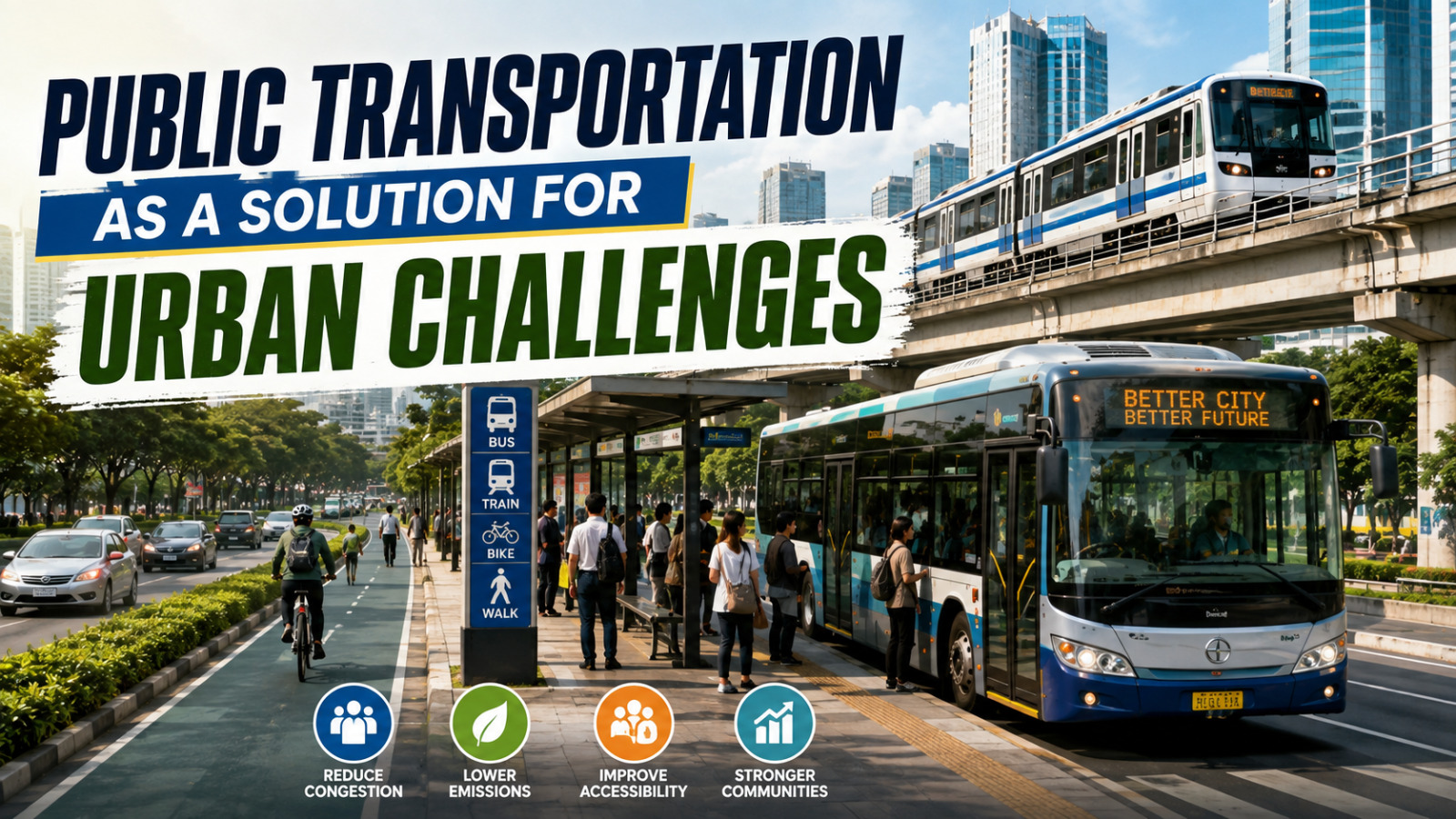
Urban areas continue to grow as more people move to cities for education, employment, business, and better access to services. This growth creates many challenges, including traffic congestion, air pollution, limited parking, and unequal access to transportation. Public transportation can help cities manage these problems by moving many passengers efficiently within a limited road space. Buses, trains, commuter rail, and other mass transit services can provide practical alternatives to private vehicles. With proper planning and investment, public transportation can become an important solution for modern urban challenges.
THE ROLE OF PUBLIC TRANSPORTATION IN MODERN CITIES
Public transportation allows large numbers of people to travel using shared vehicles and infrastructure. A single bus or train can carry many passengers at once, which can reduce the number of private vehicles on busy roads. This makes public transit especially important in densely populated areas where road space is limited. Reliable services also help residents reach workplaces, schools, hospitals, shopping areas, and other important destinations.
An effective public transportation network should provide reliable schedules, convenient routes, safe facilities, and reasonable fares. When these elements work together, people may find public transit more attractive than driving their own vehicles. Cities can also improve transportation access by connecting different modes, such as buses, trains, walking paths, and cycling facilities. Better connections can make daily travel more convenient and support a more organized urban environment.
REDUCING TRAFFIC CONGESTION
Traffic congestion is one of the most common problems in growing cities. As the number of private cars and motorcycles increases, roads can become crowded, especially during peak travel hours. Public transportation can reduce the pressure on roads by encouraging multiple passengers to share one vehicle. This can help cities use existing road infrastructure more efficiently.
The impact can become stronger when public transit is supported by frequent services and well-planned routes. Dedicated bus lanes, efficient rail systems, and coordinated schedules can make public transportation faster and more dependable. If commuters have practical alternatives to private vehicles, some may choose buses or trains for regular trips. As a result, reducing dependence on private vehicles can contribute to smoother urban mobility.
SUPPORTING A CLEANER URBAN ENVIRONMENT
Transportation is closely connected with urban environmental conditions. Large numbers of private vehicles can contribute to air pollution and greenhouse gas emissions, particularly when traffic moves slowly or remains congested. Public transportation can help address this issue by transporting many people with fewer vehicles. The environmental benefits can become greater when cities use cleaner buses, electrified rail systems, and energy-efficient technologies.
However, public transportation alone cannot solve every environmental problem. Cities also need better land-use planning, walking infrastructure, cycling facilities, and cleaner vehicle technologies. Encouraging people to combine public transit with walking or cycling can create more sustainable travel patterns. Sustainable mobility requires cooperation between transportation systems, urban planning, technology, and community behavior.
IMPROVING ACCESS TO JOBS AND SERVICES
Transportation plays an important role in determining how easily people can access economic and social opportunities. Residents who live far from business districts may depend on affordable transportation to reach their jobs. Students may also need reliable services to travel to schools and universities. Affordable public transportation can connect people with essential services without requiring them to own a private vehicle.
Good transit coverage can also support people who cannot drive because of age, disability, financial limitations, or other circumstances. Accessible stations, low-floor vehicles, clear information, and safe pedestrian connections can make the system more inclusive. When transportation is available to more residents, cities can create better opportunities for participation in economic and social activities. This makes public transit an important part of inclusive urban development.
MAKING URBAN TRAVEL MORE AFFORDABLE
The cost of transportation can have a significant effect on household budgets. Owning a private vehicle may involve expenses such as fuel, maintenance, insurance, parking, and other costs. Public transportation can offer a more affordable option for people who travel regularly. Reasonable fares and convenient payment systems can make daily commuting easier for workers, students, and families.
Affordable transit is especially important in cities where living costs are increasing. Transportation authorities can introduce fare policies that balance service quality with passenger affordability. Integrated ticketing can also allow passengers to transfer between different transportation modes without complicated payment processes. When public transportation is affordable and reliable, it can provide greater freedom of movement for urban residents.
USING TECHNOLOGY TO SOLVE TRANSPORTATION PROBLEMS
Digital technology is changing how public transportation operates and how passengers use transit services. Mobile applications can provide real-time arrival information, digital tickets, route planning, and service updates. These features help passengers make better decisions before and during their journeys. Transportation operators can also use digital systems to monitor vehicles and identify operational problems.
Smart transportation technology can improve efficiency when it is combined with accurate data and effective management. Traffic information can help authorities adjust services according to changing travel patterns. Digital payment systems can make boarding faster and reduce the need for physical tickets. However, cities should also ensure that digital services remain accessible to people who have limited internet access or are less familiar with technology.
IMPROVING SAFETY AND PASSENGER EXPERIENCE
Safety is one of the most important factors influencing people's willingness to use public transportation. Passengers need to feel secure while waiting at stations, boarding vehicles, and traveling to their destinations. Adequate lighting, security systems, clear signs, clean facilities, and trained staff can contribute to a safer experience. Regular maintenance is also necessary to keep vehicles and infrastructure in good condition.
Passenger comfort can further improve the attractiveness of public transit. Comfortable seating, reliable air circulation, accessible facilities, and accurate travel information can make journeys more pleasant. Transportation agencies should also listen to passenger feedback when improving their services. A system that is safe, clean, reliable, and easy to understand is more likely to gain public trust.
CONNECTING DIFFERENT MODES OF TRANSPORTATION
Urban transportation becomes more effective when different travel modes are connected. A passenger may use a bus to reach a train station and then walk or use another local service to reach the final destination. Integrated transportation networks can make these transfers easier and reduce unnecessary travel time. This approach can also help cities avoid isolated transportation systems that do not work well together.
Transit-oriented planning can support this connection by placing important services and activities near public transportation routes. Pedestrian-friendly streets and cycling infrastructure can help passengers complete the first and last parts of their journeys. Well-designed transfer points should provide clear information and convenient connections. By combining different modes, cities can create a transportation system that is more flexible and efficient.
SUPPORTING LOCAL ECONOMIC GROWTH
Public transportation can contribute to local economic activity by improving access to commercial areas and workplaces. Businesses may benefit when employees and customers can reach their locations more easily. Reliable transit connections can expand access to employment opportunities and help businesses reach a wider pool of workers and consumers. Transportation improvements can therefore have benefits beyond simply moving passengers.
New transit infrastructure may also encourage development around stations and major routes when supported by appropriate urban planning. Shops, offices, housing, and public facilities can become easier to access in well-connected areas. However, transportation investment should be combined with careful planning to ensure that development benefits local communities. The long-term goal should be a city where mobility supports economic opportunity without creating unnecessary social or environmental pressures.
CONCLUSION
Public transportation can provide practical solutions to many challenges faced by growing urban areas. It can help reduce traffic congestion, improve accessibility, support affordable mobility, and contribute to a cleaner environment. Technology, better infrastructure, integrated networks, and improved passenger services can make public transit more effective. Cities also need to ensure that transportation systems remain safe, inclusive, reliable, and accessible to different groups of residents. With consistent planning and investment, public transportation can become a strong foundation for more connected, sustainable, and livable cities.
About the Author
Gusti Ayu Tita P
Author — STEKOM University
An active author focused on academic issues, educational technology, and human resource development in the campus environment.















