
Reducing Traffic Through Better Public Transport
Gusti Ayu Tita P
11 Agustus 2026
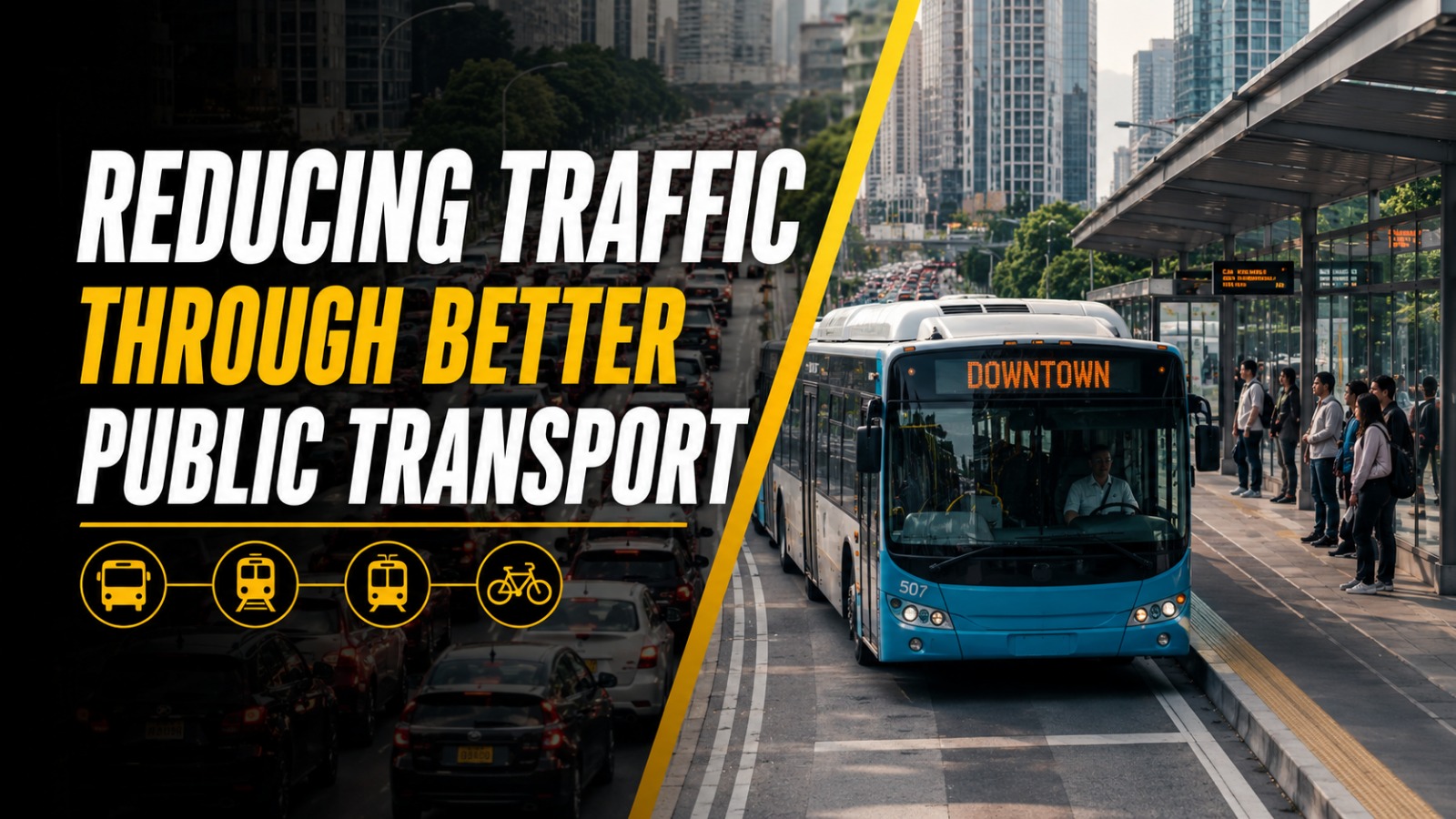
Traffic congestion is one of the biggest transportation problems in growing cities. Large numbers of private cars and motorcycles can fill roads beyond their available capacity, especially during peak hours. Better public transport can provide an effective alternative by moving many passengers in fewer vehicles. When public transportation is reliable, comfortable, affordable, and accessible, more people may choose it instead of using private vehicles.
Reducing traffic requires more than simply adding buses or trains. Cities need a well-connected transportation system that makes public transport convenient from the beginning to the end of a journey. Good routes, frequent services, integrated ticketing, safe stations, and efficient transfers can make public transportation a stronger alternative to private vehicle travel.
EXPANDING RELIABLE PUBLIC TRANSPORT
The first step toward reducing congestion is providing reliable public transportation that passengers can trust every day. Buses and trains should operate according to consistent schedules and provide sufficient capacity during busy periods. Long waiting times or unpredictable services can discourage people from using public transport. Reliable services give commuters greater confidence when planning their daily activities.
Transport authorities also need to understand passenger demand when designing routes and schedules. Services should connect residential areas with workplaces, schools, shopping centers, hospitals, and other important destinations. Frequent and well-planned services can make public transport more practical for both regular commuters and occasional travelers.
MAKING PUBLIC TRANSPORT MORE CONVENIENT
Convenience strongly influences people's transportation choices. Passengers are more likely to use buses and trains when stations are easy to reach and transfers between services are simple. Short walking distances, clear signs, comfortable waiting areas, and accessible facilities can improve the overall travel experience.
Convenience also depends on service frequency and journey time. If passengers have to wait too long or make several difficult transfers, they may return to private vehicles. Improving connections between bus routes, rail services, walking paths, and other modes can create a seamless travel experience that makes public transport more competitive.
IMPROVING ROUTE AND NETWORK INTEGRATION
A strong public transportation network should not consist of isolated routes. Integrated transport networks allow buses, trains, and other services to complement one another. Buses can serve neighborhoods and connect passengers to major railway stations, while high-capacity rail systems can handle large passenger volumes along busy corridors.
Transport authorities can coordinate schedules and routes to reduce unnecessary waiting and duplication. Major stations can function as transport hubs where passengers can easily change between different modes. Better network integration can increase the usefulness of public transportation and encourage more people to leave their private vehicles at home.
PROVIDING DEDICATED BUS LANES
Buses often share roads with private vehicles, which means they can become trapped in the same traffic congestion they are intended to reduce. Dedicated bus lanes can give buses priority on busy corridors and improve their travel speed and reliability. When buses can move more efficiently, passengers are less likely to experience delays caused by general traffic.
Bus priority measures can include dedicated lanes, traffic signal priority, and carefully designed bus stops. These measures should be planned according to local traffic conditions and passenger demand. A well-designed bus priority system can help public transportation carry more passengers without requiring every traveler to use a private vehicle.
USING SMART TRANSPORT TECHNOLOGY
Technology can make public transportation more efficient and predictable. GPS tracking allows operators to monitor vehicles and provide real-time arrival information to passengers. Mobile applications can show routes, schedules, service disruptions, and alternative travel options.
Digital ticketing can also simplify the payment process. Passengers may use smart cards, mobile applications, QR codes, or contactless payment systems, depending on the local network. Smart transportation technology can reduce uncertainty and make public transport easier to use, particularly for passengers who need accurate information when planning their journeys.
KEEPING FARES AFFORDABLE
Affordable fares are important for encouraging people to use public transportation regularly. Transportation costs can influence whether commuters choose a bus, train, motorcycle, or private car. If public transport provides good value for money, it can become a more attractive option for daily travel.
Fare systems can also be designed to support transfers between services. Integrated ticketing can prevent passengers from facing unnecessary payment barriers when changing from one mode to another. However, fare policies should balance affordability for passengers with the financial sustainability needed to operate and maintain reliable services.
IMPROVING COMFORT AND SAFETY
Passengers need to feel safe and comfortable when using public transportation. Clean vehicles, adequate lighting, comfortable seating, ventilation, and well-maintained stations can improve the passenger experience. Safety measures such as surveillance systems, emergency communication facilities, and appropriate station design can also increase public confidence.
Accessibility should receive equal attention. Accessible buses, stations, sidewalks, ramps, elevators, and clear information systems can help older adults, people with disabilities, and passengers traveling with children. A transportation system that serves different groups effectively is more likely to attract a wider range of passengers.
CONNECTING PUBLIC TRANSPORT WITH WALKING AND CYCLING
Public transport cannot solve congestion alone because passengers need ways to reach stations and their final destinations. Walking and cycling connections can strengthen public transportation by supporting the first and last parts of a journey. Safe sidewalks, pedestrian crossings, bicycle lanes, and secure bicycle parking can make these connections easier.
Improving these facilities can also reduce short private vehicle trips. Someone who can safely walk or cycle to a nearby station may not need to drive to the entire destination. First and last mile connections therefore play an important role in creating a transportation system that reduces dependence on private vehicles.
ENCOURAGING PEOPLE TO CHANGE TRAVEL HABITS
Better infrastructure is important, but reducing congestion also requires changes in travel behavior. People need practical reasons to choose public transport instead of driving alone. Reliable schedules, shorter travel times, reasonable fares, convenient routes, and comfortable services can provide those incentives.
Cities can also use transportation policies to manage private vehicle use in particularly congested areas. Parking management, congestion-related measures, and improved public transport can work together when designed carefully. The objective should be to provide attractive alternatives rather than simply restricting mobility.
SUPPORTING CLEANER URBAN MOBILITY
Better public transportation can contribute to cleaner and more sustainable urban mobility. Moving many passengers in high-capacity buses or trains can reduce the number of individual vehicles needed for the same travel demand. The environmental benefits can be strengthened through cleaner vehicle technologies and efficient operations.
Electric buses and other low-emission transport technologies are increasingly being considered as cities modernize their fleets. However, environmental performance also depends on electricity sources, vehicle utilization, infrastructure, and overall network efficiency. Sustainable public transport requires both clean technology and effective system planning.
CONCLUSION
Reducing traffic through better public transport requires a transportation system that is reliable, convenient, affordable, safe, and well connected. High-quality buses and trains can provide practical alternatives to private vehicles, while dedicated lanes, integrated routes, smart technology, and efficient ticketing can improve their performance. Walking and cycling facilities can further strengthen connections between public transport and local destinations.
The most effective approach combines better services with thoughtful transportation policies and long-term investment. Cities do not necessarily need to eliminate private vehicles, but they should provide attractive alternatives for as many journeys as possible. When public transportation becomes easier and more dependable, more people can choose it for daily travel, helping cities reduce congestion and build a more efficient mobility system.
About the Author
Gusti Ayu Tita P
Author — STEKOM University
An active author focused on academic issues, educational technology, and human resource development in the campus environment.















