
Regent Programs That Make a Difference in People’s Lives
Gusti Ayu Tita P
12 Agustus 2026
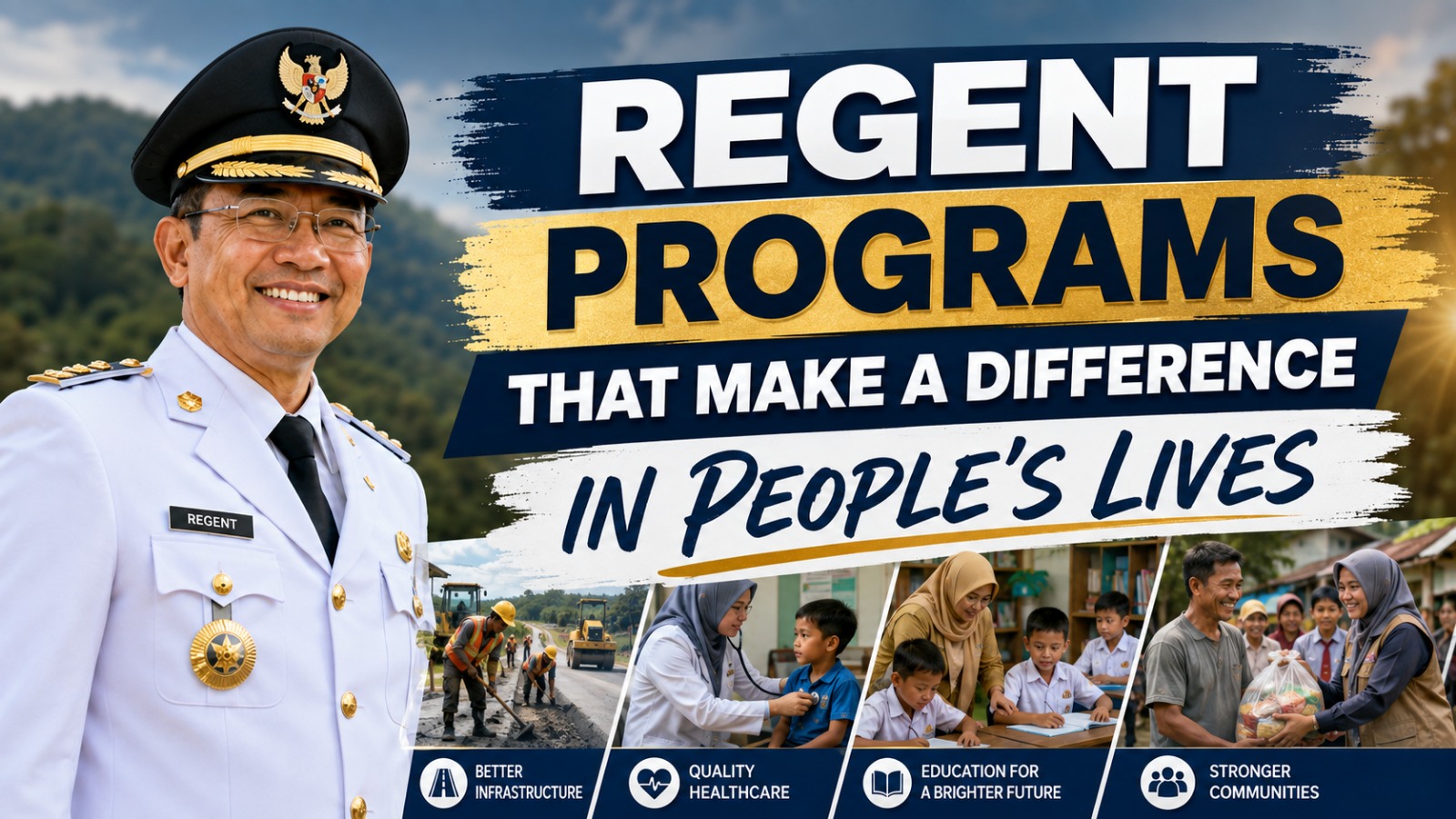
A regent has an important responsibility to ensure that regional government programs provide real benefits to local communities. Regent programs can influence many aspects of daily life, including education, healthcare, infrastructure, employment, economic development, and public services. Well-designed programs should respond to actual community needs rather than focusing only on short-term results. They should also be implemented transparently and evaluated regularly. When regional programs are planned effectively, they can contribute to a better quality of life and stronger community welfare.
UNDERSTANDING THE PURPOSE OF REGENT PROGRAMS
Regent programs are generally designed to support regional development and address problems experienced by local communities. The priorities can differ from one regency to another because every region has different geographical, economic, social, and demographic conditions. A regent needs to identify the most urgent issues before deciding which programs should receive attention. Evidence-based planning can help ensure that public resources are directed toward meaningful priorities. Programs should also be aligned with applicable regional development plans and regulations.
Successful programs should have clear objectives and measurable outcomes. It is not enough for a program to simply be launched or receive a large budget. The government needs to determine whether the program actually improves people's access to services, income, infrastructure, or other important needs. Regular monitoring can reveal what works and what needs improvement. This makes effective regional governance an ongoing process rather than a one-time activity.
EDUCATION SUPPORT PROGRAMS
Education programs can have a lasting impact on individuals and communities. A regent can support improvements in school facilities, teacher development, learning resources, and access to education within the responsibilities of regional government. Programs may also focus on helping students from disadvantaged families remain in school. Quality education can provide young people with knowledge and skills that are useful for future employment and entrepreneurship.
Education programs should also respond to changes in the labor market. Digital skills, vocational abilities, communication, problem-solving, and entrepreneurship can help students prepare for different career paths. Collaboration with educational institutions and local industries can make training more relevant to regional economic needs. Improving education is not only about increasing enrollment but also about supporting better learning outcomes. In the long term, strong education programs can strengthen human resource development.
HEALTHCARE AND COMMUNITY HEALTH PROGRAMS
Healthcare is another area where regional government programs can have a direct effect on people's lives. A regent can support the improvement of healthcare facilities, health workers, sanitation, preventive programs, and community health services within regional authority. Residents in remote areas may need special attention because distance can make access to healthcare more difficult. Accessible healthcare services can help communities maintain better health and productivity.
Preventive programs are also important because many health problems can be reduced through early intervention and public awareness. Health education can cover nutrition, sanitation, maternal and child health, healthy lifestyles, and disease prevention. Cooperation between local government, healthcare providers, schools, and communities can strengthen these initiatives. Programs should be evaluated to determine whether they are reaching the intended population. Effective healthcare policies can become an important foundation for community welfare.
LOCAL ECONOMIC DEVELOPMENT PROGRAMS
Regional economic programs can help residents increase their income and create more employment opportunities. A regent can support agriculture, fisheries, tourism, trade, manufacturing, creative industries, and other sectors that match local potential. Small and Medium Enterprises or SMEs can receive appropriate support such as business training, market information, digital skills, and opportunities to connect with wider markets. Strong local businesses can contribute to employment and economic resilience.
Economic development should benefit communities across the regency rather than only a few central areas. Rural entrepreneurs may require better transportation, internet access, financing information, and market connections. Government can also encourage partnerships between local businesses and larger companies where appropriate and lawful. These efforts can help create a more diverse and competitive regional economy. Local economic development should remain inclusive and sustainable.
EMPLOYMENT AND SKILLS DEVELOPMENT PROGRAMS
Employment opportunities are closely connected with household welfare. Regent-led initiatives can support vocational training, entrepreneurship, job fairs, business development, and cooperation with employers. Training should be designed around skills that are actually needed in the local and broader labor markets. Job creation programs can help young people and working-age residents improve their chances of finding productive employment.
Skills programs should not focus only on technical abilities. Communication, digital literacy, teamwork, problem-solving, and financial management can also improve employability and business performance. Local government can work with training institutions and businesses to create practical learning opportunities. Programs should also consider groups that may face greater barriers to employment. A skilled workforce can make the region more attractive to responsible investment while improving local incomes.
INFRASTRUCTURE DEVELOPMENT PROGRAMS
Infrastructure is one of the most visible forms of regional development. Roads, bridges, drainage systems, clean water facilities, public buildings, transportation networks, and digital connectivity can directly influence daily activities. A regent can prioritize infrastructure projects based on community needs, regional plans, available resources, and applicable regulations. Regional infrastructure can improve access to schools, hospitals, markets, workplaces, and other essential services.
Infrastructure programs should also include proper maintenance and monitoring. A newly built facility can quickly become less useful if it is not maintained. Development should consider long-term costs, environmental impacts, safety, and accessibility. Remote and underserved areas should receive appropriate attention so that infrastructure development does not increase regional inequality. Good infrastructure can support both community welfare and economic growth.
SOCIAL WELFARE AND POVERTY REDUCTION PROGRAMS
Regional governments can contribute to poverty reduction by supporting programs that address income, employment, education, healthcare, housing, and access to basic services. A regent needs reliable data to identify households and communities that require targeted assistance. Poverty reduction programs should be coordinated with relevant government institutions to avoid duplication and improve effectiveness. Short-term support can be important, but long-term empowerment should also be considered.
Economic empowerment can help vulnerable households become more independent. Training, employment opportunities, entrepreneurship support, and access to productive resources may complement social assistance. Regular monitoring is necessary to determine whether beneficiaries experience meaningful improvements. Programs should also be adjusted when conditions change. A balanced approach can strengthen social protection while encouraging long-term economic participation.
DIGITAL GOVERNMENT PROGRAMS
Digital technology can make government services faster and more accessible. A regent can encourage digital platforms for administrative services, public information, complaints, data management, and other suitable government functions. Digital government services can reduce unnecessary administrative procedures and allow citizens to access certain services without repeatedly visiting government offices. Technology can also help agencies share information and monitor program performance more effectively.
Digital transformation must be implemented carefully. Residents with limited internet access or digital skills should still have access to appropriate service alternatives. Government systems should also consider data security, privacy, reliability, and accessibility. Digital literacy programs can help residents use new services more confidently. When properly managed, digital government can support efficient and transparent public services.
ENVIRONMENTAL AND SUSTAINABILITY PROGRAMS
Regional development should not ignore environmental protection. A regent can support programs related to waste management, clean water, conservation, disaster preparedness, sustainable agriculture, and environmental awareness within regional authority. These programs can protect natural resources while supporting long-term economic activity. Sustainable development is especially important for regions that depend on agriculture, fisheries, forests, tourism, or other natural resources.
Environmental programs should involve communities because local residents often play a direct role in protecting natural resources. Schools, businesses, community organizations, and government agencies can work together to improve environmental practices. Development projects should also consider environmental risks and applicable regulations. Protecting the environment can reduce future costs and improve regional resilience. A healthy environment is an important part of long-term community welfare.
PUBLIC PARTICIPATION AND PROGRAM EVALUATION
Community participation can make government programs more relevant and responsive. Residents can provide information about local problems, suggest priorities, and offer feedback on program implementation. A regent can encourage participation through consultations, public meetings, surveys, and other lawful mechanisms. Public participation can also strengthen citizens' sense of ownership toward regional development.
Evaluation is equally important because even well-planned programs may face unexpected challenges. Government agencies should measure results, identify weaknesses, and make improvements based on evidence. Feedback from citizens can complement administrative data and performance reports. Programs that do not achieve their intended objectives should be reviewed rather than continued without improvement. Continuous evaluation helps create more effective regional programs.
CONCLUSION
Regent programs can make a meaningful difference when they are designed around real community needs and implemented responsibly. Important areas include education, healthcare, local economic development, employment, infrastructure, poverty reduction, digital government, and environmental sustainability. Strong programs require accurate data, clear objectives, transparent management, community participation, and regular evaluation. The most successful regional initiatives are not simply those that are large or highly visible, but those that create measurable and lasting benefits for residents. Through effective leadership and responsible governance, regent programs can help build a more prosperous, inclusive, and sustainable region.
About the Author
Gusti Ayu Tita P
Author — STEKOM University
An active author focused on academic issues, educational technology, and human resource development in the campus environment.















