Reincarnation in Asian Culture and Spiritual Traditions
Gusti Ayu Tita P
9 September 2026
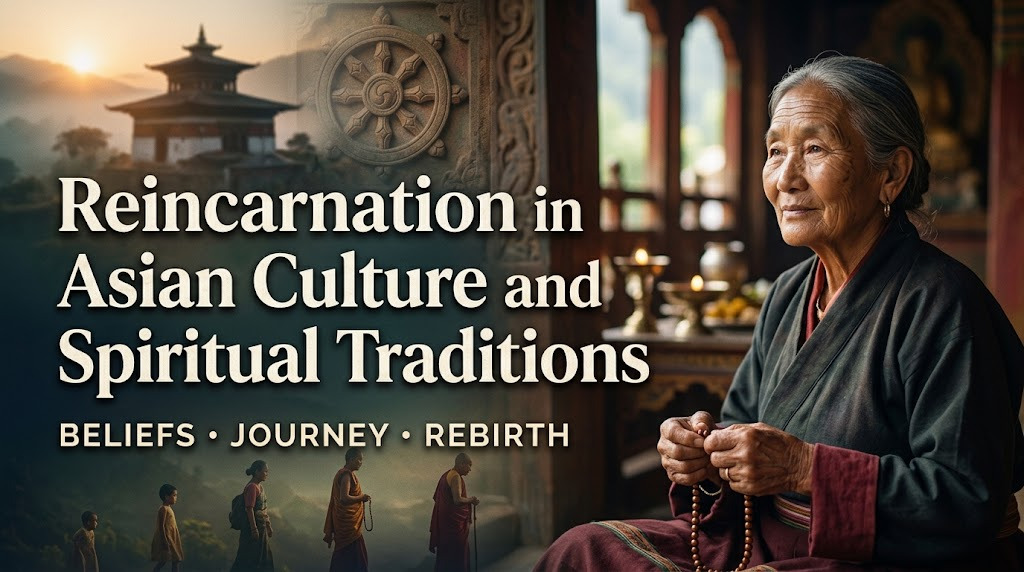
Reincarnation is an important concept found in several Asian cultures and spiritual traditions. The idea generally refers to Rebirth, in which existence continues in another form after death. However, the meaning and interpretation of reincarnation can differ depending on the religion, local customs, and philosophical traditions of each society.
Across Asia, beliefs about reincarnation are often connected with Karma, spiritual development, morality, and the cycle of life and death. These ideas have influenced religious practices, cultural traditions, and the way people understand human existence. Understanding these differences provides a broader perspective on the role of Reincarnation in Asian societies.
REINCARNATION IN HINDU TRADITIONS
In Hindu traditions, reincarnation is closely connected with the concept of Samsara, the continuing cycle of birth, death, and rebirth. A person's actions, commonly described through the concept of Karma, are believed to influence future circumstances. Good and harmful actions are therefore viewed as having consequences that can extend beyond one lifetime.
The ultimate spiritual goal in many Hindu philosophical traditions is Moksha, or liberation from the cycle of samsara. Reincarnation is therefore not simply viewed as repeatedly starting a new life. It is part of a larger spiritual framework concerning responsibility, knowledge, ethical conduct, and liberation. Different Hindu schools may explain these concepts in different ways.
REBIRTH IN BUDDHIST TRADITIONS
Buddhism also teaches a concept of rebirth, but its explanation differs from many Hindu interpretations. Rather than describing an eternal and unchanging soul moving from one body to another, Buddhist teachings generally emphasize a continuing process shaped by causes and conditions. Karma plays an important role in this process.
The cycle of existence is commonly associated with Samsara, while liberation from this cycle is connected with attaining Nirvana. Buddhist traditions differ in their philosophical explanations of consciousness, rebirth, and existence. Because of these differences, it is more accurate to understand Buddhist rebirth on its own terms rather than simply treating it as identical to Hindu reincarnation.
REINCARNATION IN OTHER ASIAN CULTURES
Ideas about rebirth and life after death can also be found in various Asian cultural and religious traditions. In some communities, beliefs about ancestors, spirits, and the continuation of existence have developed alongside major religious traditions. Local customs may combine spiritual ideas with practices related to family, community, and remembrance.
In countries influenced by Buddhism, Hinduism, or other traditional belief systems, ideas about previous lives may appear in stories, festivals, folklore, and religious practices. However, not every Asian culture understands Past Lives in the same way. The meaning of these beliefs can change according to historical background and local traditions.
THE ROLE OF KARMA AND SPIRITUAL DEVELOPMENT
The concept of Karma is one of the ideas frequently associated with reincarnation and rebirth in Asian spiritual traditions. It generally concerns the relationship between actions and their consequences. In many traditions, ethical behavior is considered important because actions are believed to influence a person's spiritual journey.
Reincarnation can therefore be connected with ideas about learning, moral responsibility, and Spiritual Development. The purpose is not necessarily to seek repeated lives but to understand existence and progress toward liberation. These concepts have influenced philosophical discussions about responsibility, suffering, compassion, and the meaning of life.
CONCLUSION
Reincarnation and rebirth have an important place in various Asian cultures and spiritual traditions. Hindu traditions commonly connect reincarnation with Samsara, Karma, and the pursuit of liberation, while Buddhist traditions explain rebirth through a different understanding of existence and consciousness.
Other Asian cultures may combine beliefs about Past Lives, ancestors, spirits, and traditional customs in their own ways. Although the interpretations differ, these traditions show how ideas about death, rebirth, morality, and spiritual development have shaped Asian culture for centuries.
About the Author
Gusti Ayu Tita P
Author — STEKOM University
An active author focused on academic issues, educational technology, and human resource development in the campus environment.