
Requirements for Getting a Land Ownership Certificate You Need to Prepare
Gusti Ayu Tita P
28 Agustus 2026
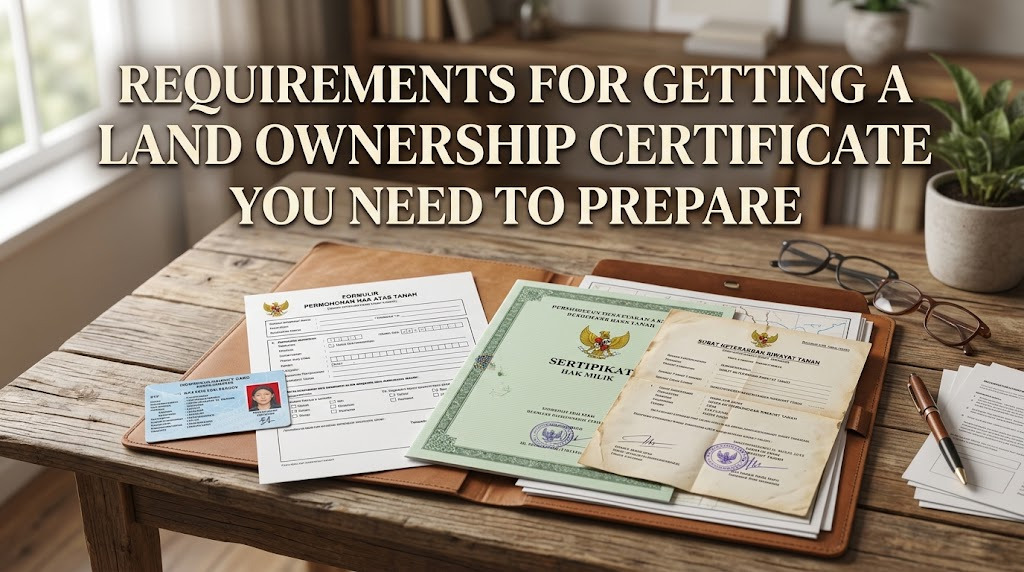
Obtaining a Land Ownership Certificate is an important step for people who want stronger administrative and legal certainty over their land. In Indonesia, land registration records the rights and physical information of a particular plot through the official land administration system. However, applicants need to prepare the appropriate documents before submitting their application.
The requirements can differ depending on how the land was acquired, whether it has previously been registered, and the type of land right being requested. Therefore, applicants should not assume that every land certificate application requires exactly the same documents. Preparing the documents carefully can help prevent delays during the registration process.
UNDERSTANDING LAND CERTIFICATE REQUIREMENTS
The requirements for obtaining a land ownership certificate are intended to establish the identity of the applicant, the legal basis for the land claim, and the physical details of the land. Applicants generally need to provide personal documents and evidence relating to the land. The relevant Land Office then examines these materials according to the applicable procedure.
The documents required can vary for land obtained through purchase, inheritance, grants, or other forms of acquisition. Previously registered land may also follow a different process from land that has never been registered. For this reason, applicants should confirm the latest requirements with the relevant ATR/BPN Land Office.
PERSONAL IDENTIFICATION DOCUMENTS
One of the basic requirements is valid identification of the applicant. Depending on the application and applicable procedures, this can include an identity card and other supporting personal documents. The information should be consistent across the documents being submitted.
If the application involves several people, such as joint ownership or inheritance, additional identification documents may be required. The applicant should ensure that names and other personal information are written consistently. Differences in identity information can result in requests for clarification or additional documentation.
PROOF OF LAND ACQUISITION
Applicants need to provide documents showing the legal basis for acquiring or possessing the land. The appropriate evidence depends on how the land was obtained. For example, a purchase may involve transaction documents, while inherited land may require documents establishing the inheritance relationship.
The applicant should not rely only on informal statements regarding ownership. Written evidence and a clear history of the land are important parts of the registration process. If the available documents are incomplete, the applicant should seek clarification through the appropriate land administration procedure before submitting the application.
DOCUMENTS RELATING TO THE LAND
Information about the physical characteristics of the property is also important. Applicants may need documents or information concerning the location, area, boundaries, and other details of the land. This information will be examined and, where required, confirmed through the official measurement and mapping process.
The boundaries should be identified clearly and consistently with the available documents. Accurate boundary information can help prevent disputes with neighboring landowners. Applicants should therefore make sure they understand the exact location and boundaries of the land being registered.
TAX AND ADMINISTRATIVE DOCUMENTS
Certain land registration processes may require tax-related or administrative documents. These documents help support the administration of the property and may be required depending on the type and history of the application. Applicants should distinguish these documents from the certificate itself because they serve different administrative purposes.
Tax documents should contain accurate information about the property and the relevant taxpayer. Completing tax-related obligations does not by itself replace land registration, so applicants still need to complete the required land administration process. Keep payment evidence and other official records for future reference.
REQUIREMENTS FOR INHERITED LAND
If the land is obtained through inheritance, applicants may need additional documents proving the death of the previous rights holder and the legal status of the heirs. The exact documents can depend on the circumstances and applicable regulations. All parties with relevant inheritance rights should be properly identified.
If there are multiple heirs, the intended ownership arrangement should be clearly established. Ignoring the rights of another heir can create future disputes. When necessary, heirs should seek professional assistance to ensure that the transfer or division of land is properly documented.
LAND MEASUREMENT AND VERIFICATION
Applicants should be prepared for the possibility of an official land survey and measurement. This stage helps establish the physical data of the land, including its area and boundaries. The information obtained can become part of the land registration record.
The land may also undergo legal and administrative verification. Officials examine the supporting documents and relevant information before registration is completed. If inconsistencies are found, the applicant may need to provide clarification or additional evidence.
CHECKING THE DOCUMENTS BEFORE SUBMISSION
Before submitting an application, applicants should carefully review all documents. Check the name, identification details, land location, area, boundaries, and acquisition documents for consistency. Small errors should be addressed before they become obstacles during the registration process.
Applicants should also keep copies of every document submitted and retain official receipts or proof of application. These records can be useful if the application requires follow-up. Most importantly, use official ATR/BPN service channels and avoid relying on unofficial sources for current requirements.
KESIMPULAN
The requirements for obtaining a Land Ownership Certificate generally involve personal identification, proof of land acquisition, information about the land, and other supporting administrative documents. Additional requirements may apply depending on whether the land was purchased, inherited, granted, or acquired through another legal process.
Before applying, make sure all documents are complete, consistent, and supported by a clear history of the land. Confirm the latest requirements and official procedures with the relevant ATR/BPN Land Office because requirements can vary according to the type of application. Careful preparation can make the land registration process more organized and reduce the risk of unnecessary delays.
About the Author
Gusti Ayu Tita P
Author — STEKOM University
An active author focused on academic issues, educational technology, and human resource development in the campus environment.















