
Rights and Responsibilities of Citizens Under the 1945 Constitution
Gusti Ayu Tita P
4 Agustus 2026
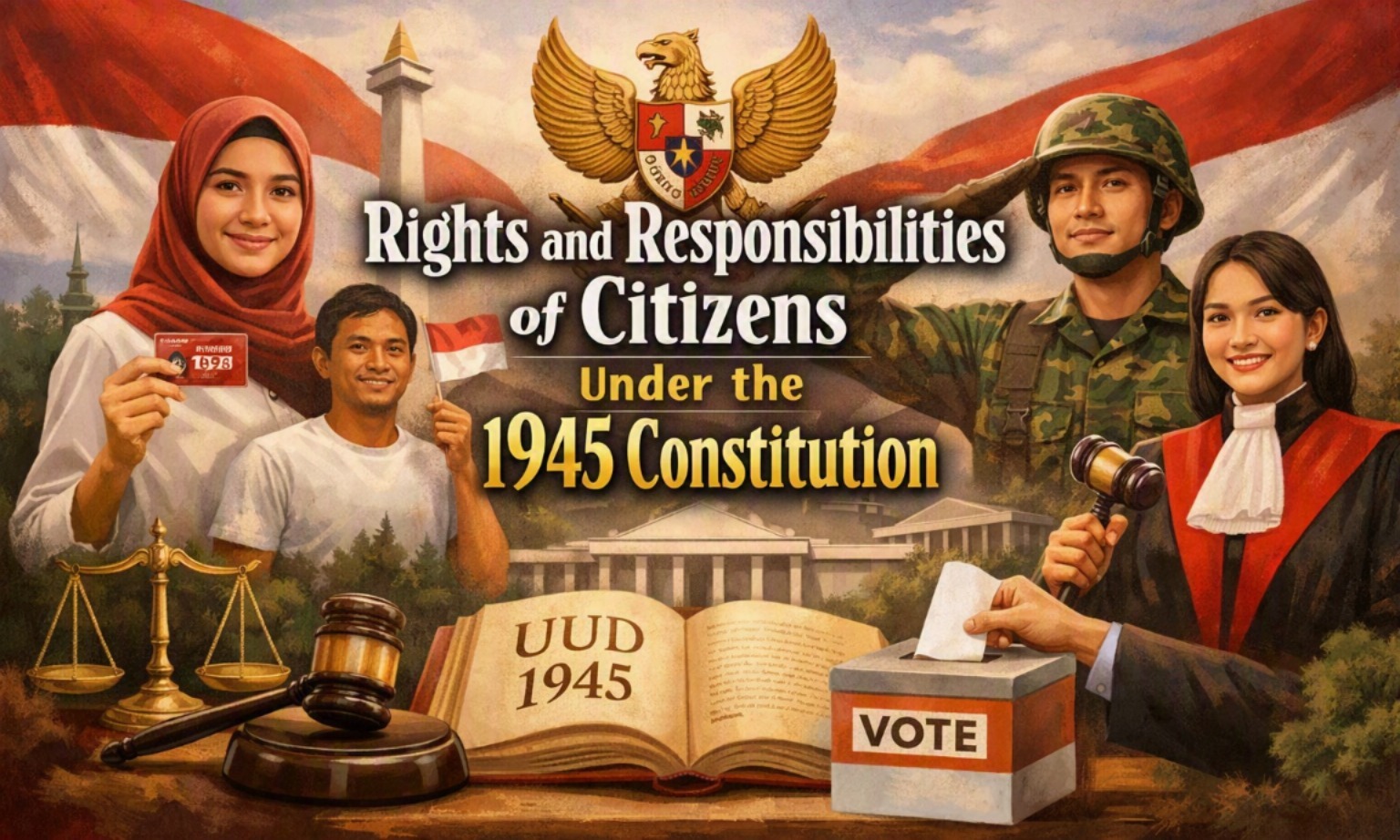
The 1945 Constitution of the Republic of Indonesia is the highest legal foundation of the country. It establishes the rights and responsibilities of citizens, ensuring that every individual receives legal protection while also contributing to the nation's development. Understanding these constitutional principles is essential because they shape the relationship between citizens and the state. By knowing both their rights and obligations, people can actively participate in creating a democratic, just, and prosperous society. This article explains the key rights and responsibilities of citizens under the 1945 Constitution in a simple, informative, and SEO-friendly way.
RIGHTS OF CITIZENS UNDER THE 1945 CONSTITUTION
The 1945 Constitution guarantees a wide range of fundamental rights for every Indonesian citizen. These rights include the right to education, freedom of religion, freedom of expression, equal treatment before the law, and the right to work. The Constitution ensures that every citizen has equal opportunities regardless of their background, ethnicity, religion, or social status. These protections promote fairness and strengthen national unity. They also encourage citizens to participate confidently in social, economic, and political life.
In addition, the Constitution protects the right to social welfare, healthcare, and a safe living environment. Citizens are entitled to receive public services and legal protection from the government. The state is responsible for respecting, protecting, and fulfilling these constitutional rights. When these rights are properly implemented, they improve the quality of life and support sustainable national development. Therefore, understanding these rights helps citizens become more aware of the protections guaranteed by the Constitution.
RESPONSIBILITIES OF CITIZENS UNDER THE 1945 CONSTITUTION
Besides enjoying constitutional rights, every citizen also has important responsibilities. One of the main responsibilities is to obey the law and respect the legal system established by the state. Citizens are also expected to respect the rights of others, maintain public order, and contribute positively to society. Fulfilling these responsibilities helps create a peaceful and harmonious environment. Responsible citizenship is an essential element of a strong democracy.
Another important responsibility is to defend the country when required by law and participate in national development. Citizens should also pay taxes, protect public property, and preserve the environment for future generations. Active participation in elections and community activities reflects a commitment to democratic values. By carrying out these obligations, citizens strengthen national stability and promote social welfare. Rights and responsibilities must always be balanced to achieve sustainable progress.
THE IMPORTANCE OF BALANCING RIGHTS AND RESPONSIBILITIES
A successful nation depends on the balance between individual rights and civic responsibilities. Citizens who only demand their rights without fulfilling their obligations may weaken social harmony and national development. Likewise, a government must protect constitutional rights while ensuring that laws are enforced fairly. This balance creates trust between the people and the state. It also supports justice, equality, and long-term stability.
When citizens understand both aspects, they become more active in solving community problems and supporting national goals. Respecting diversity, following regulations, and participating in democratic processes are practical examples of responsible citizenship. Schools, families, and communities all play important roles in teaching constitutional values. As more people understand the Constitution, the stronger the country's democratic foundation becomes. This awareness contributes to a more united and prosperous Indonesia.
CONCLUSION
Learning about the 1945 Constitution helps citizens recognize the legal principles that guide the nation. It provides a clear understanding of how the government functions and how citizens can exercise their constitutional rights responsibly. Knowledge of the Constitution also helps people protect themselves from discrimination and unfair treatment. An informed society is more capable of making responsible decisions and contributing to national progress. Constitutional literacy is therefore an important part of civic education.
Furthermore, understanding constitutional rights and responsibilities encourages greater participation in democracy. Citizens become more confident in expressing opinions, respecting differences, and supporting peaceful solutions to public issues. This awareness strengthens national unity while promoting accountability at every level of society. A well-informed population is one of the strongest foundations of a democratic country. Ultimately, the 1945 Constitution serves as a guide for protecting freedom, promoting justice, and ensuring the welfare of all Indonesians.
About the Author
Gusti Ayu Tita P
Author — STEKOM University
An active author focused on academic issues, educational technology, and human resource development in the campus environment.















