Risks of Buying Land Without a Land Ownership Certificate You Should Know
Gusti Ayu Tita P
28 Agustus 2026
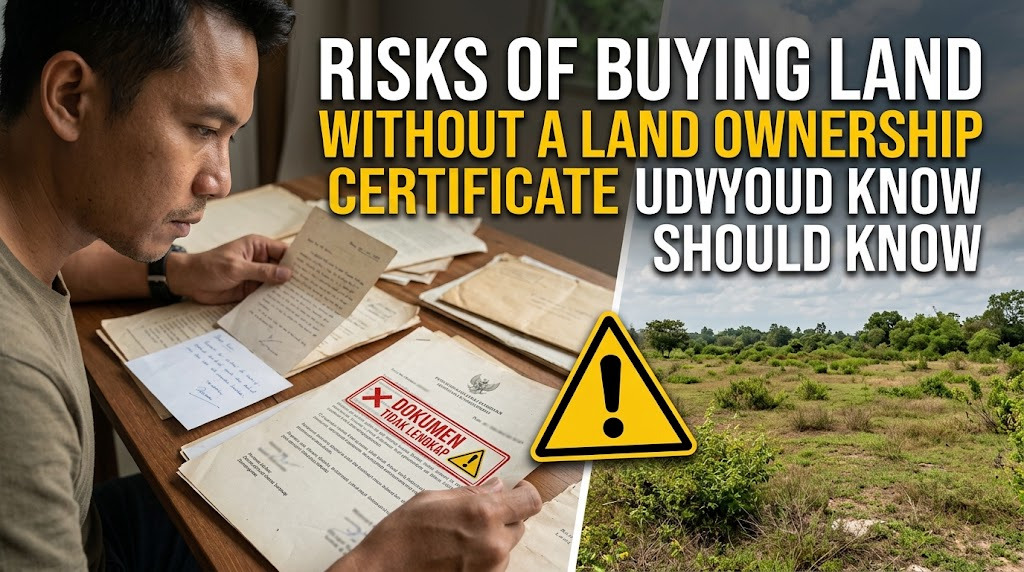
Buying land is a major financial decision, so checking its legal status and ownership documents should be a priority. One of the most important documents to examine is the land certificate, particularly when the seller claims that the property should eventually have a Land Ownership Certificate or Sertifikat Hak Milik (SHM).
Land without a certificate is not automatically illegal, because some land may have other valid evidence of rights or may still be undergoing registration. However, buying land without sufficient documentation can create greater legal, administrative, and financial risks. Buyers should therefore investigate the land history and supporting documents before making a payment.
WHY LAND CERTIFICATES ARE IMPORTANT
A Land Ownership Certificate provides evidence of registered land rights and records important information about the property. It can identify the registered rights holder and provide information about the relevant land. This makes certificate verification an important part of a property transaction.
Without a registered certificate, buyers may have more difficulty establishing the exact status of the land. The absence of a certificate should not simply be treated as a minor administrative issue. Buyers need to determine why the land has not been certified and whether the available documents are sufficient to support the claimed ownership.
RISK OF UNCLEAR OWNERSHIP
One major risk is uncertainty regarding who has the legal right to the land. A seller may claim to own a property, but the buyer needs evidence supporting that claim. Without adequate documentation, another person may later assert rights over the same land.
This situation can become more complicated when the land comes from inheritance or multiple previous transfers. Several parties may have interests in the property, even if only one person is offering it for sale. Buyers should investigate the ownership history before agreeing to the transaction.
RISK OF LAND DISPUTES
Buying undocumented land can increase the possibility of boundary or ownership disputes. Neighboring parties may have different claims regarding the location or extent of the property. Resolving such disputes can take considerable time and may involve legal expenses.
A buyer should therefore verify the location, boundaries, land area, and history of the property. If the boundaries cannot be clearly established, the transaction should not be rushed. It is safer to resolve uncertainty before transferring a significant amount of money.
RISK OF FRAUDULENT DOCUMENTS
Another concern is the use of false or misleading land documents. Informal receipts, statements, or other papers may look convincing but may not establish registered land rights. Buyers who rely solely on these documents can face serious problems later.
Do not assume that a photocopy or handwritten agreement proves ownership. Official verification is essential, especially when the property is being sold at a price significantly below the surrounding market. If the seller refuses reasonable verification, this should be treated as a warning sign.
DIFFICULTY SELLING THE PROPERTY AGAIN
Land without clear registered documentation can be more difficult to resell or transfer. Future buyers may request a certificate or stronger evidence of land rights before agreeing to the transaction. This can reduce the property's marketability.
The absence of clear documentation may also affect property financing. Financial institutions generally require specific documentation when assessing land or buildings as collateral. Therefore, buyers should consider not only their current needs but also their future plans for the property.
RISK OF FINANCIAL LOSS
If a land transaction later turns out to have serious legal problems, the buyer may face financial losses. Recovering money from a problematic transaction is not always simple, particularly if the seller cannot be located or disputes arise between multiple parties.
Buyers should avoid paying the full purchase price before the necessary checks have been completed. A low selling price is not necessarily a good deal if the legal status of the land is uncertain. The cost of resolving a land dispute can exceed the amount saved from purchasing the property cheaply.
HOW TO REDUCE THE RISKS
Before purchasing land without a certificate, first determine why the land has not been certified. Examine the available evidence of acquisition or possession and check the land's history. Where possible, verify the information through the relevant ATR/BPN Land Office.
For transactions requiring formal documentation, consider obtaining assistance from a PPAT or qualified legal professional. The professional can help identify documents and procedures that need attention. Most importantly, do not sign or pay simply because the seller promises that the certificate will be completed later.
THINGS TO CHECK BEFORE BUYING
Buyers should check the seller's identity, land history, boundaries, area, supporting documents, and legal status. If the land is inherited, make sure the relevant heirs and inheritance documents are properly addressed. If another person controls the property, determine the legal basis for that person's involvement.
All agreements should be properly documented. Keep copies of contracts, receipts, identification documents, and other transaction records. A well-documented transaction provides stronger evidence if questions arise in the future.
CONCLUSION
Buying land without a Land Ownership Certificate can carry significant risks, including unclear ownership, land disputes, fraudulent documents, difficulty reselling the property, financing limitations, and potential financial losses. However, the absence of a certificate does not automatically mean that the land has no valid rights; the underlying status and available evidence must be investigated.
Before purchasing, carefully verify the land history, seller's authority, boundaries, supporting documents, and official land records. Use official ATR/BPN procedures and consider PPAT or professional legal assistance for complicated transactions. Taking these precautions can help buyers make safer property decisions.
About the Author
Gusti Ayu Tita P
Author — STEKOM University
An active author focused on academic issues, educational technology, and human resource development in the campus environment.