
Risks of Duplicate Land Certificates for Landowners
Gusti Ayu Tita P
28 Agustus 2026
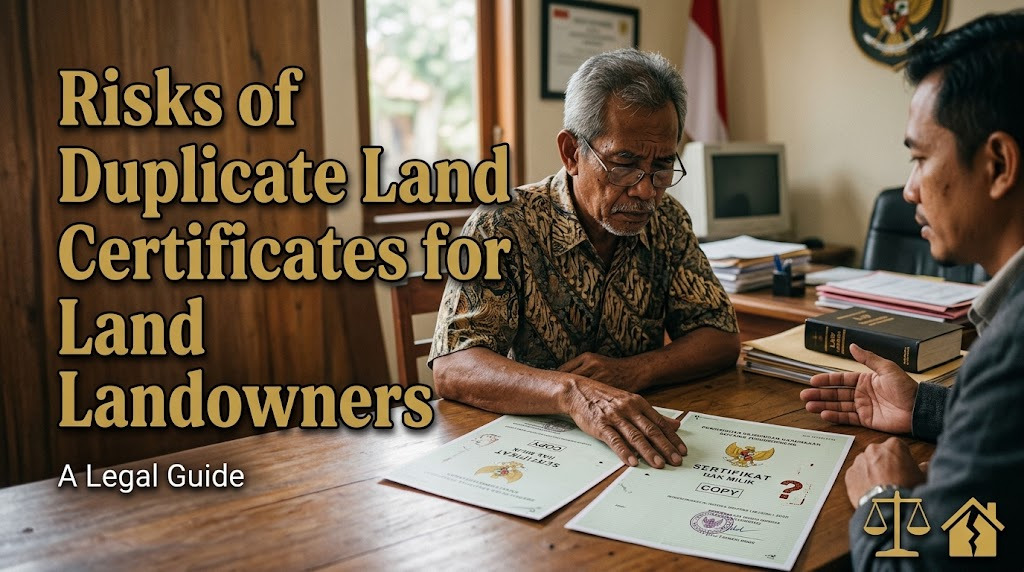
A duplicate land certificate can create serious risks for landowners because more than one certificate may be associated with the same land parcel or overlapping areas. This situation can make it difficult to determine the legal status of the property. If the problem is not addressed properly, it may affect the owner's ability to use, sell, or transfer the land.
The risks are not limited to ownership disputes. Duplicate certificates can also create administrative, financial, and legal complications. Understanding these risks allows landowners to take appropriate steps when they discover that their property may be affected by duplicate registration.
RISK OF OWNERSHIP DISPUTES
One of the biggest risks is the possibility of a land ownership dispute. Another party may claim rights over the same land based on a different certificate or supporting document. This can create uncertainty for the registered owner and may lead to a lengthy process of verification and dispute resolution. The actual status of the land needs to be determined based on official records and relevant evidence.
A dispute can also affect the owner's ability to peacefully use the property. Disagreements may arise over boundaries, possession, or the right to use the land. The owner should therefore avoid taking unilateral action while the status of the property is being examined. Proper documentation can be important when defending a land claim.
DIFFICULTIES IN SELLING LAND
A duplicate certificate can make it difficult to sell or transfer the land. Potential buyers may hesitate when they discover that another certificate is associated with the same property. This can delay a transaction while the land status is investigated. In some circumstances, a transaction may need to be postponed until the dispute is clarified.
The issue can also affect the work required for a land transfer process. Buyers, sellers, and relevant officials may need additional documents or clarification before the transaction can proceed. Landowners should not conceal a known dispute from potential buyers. Transparency and proper verification can help prevent additional problems.
FINANCIAL AND ADMINISTRATIVE RISKS
Resolving a duplicate certificate dispute may require time, documentation, and administrative expenses. The landowner may need to gather historical records, request official verification, and participate in dispute-resolution procedures. If the matter becomes more complicated, professional legal assistance may also be considered. The overall burden depends on the circumstances of each case.
Administrative complications may arise when physical and legal land data do not match. Differences in area, location, boundaries, or ownership information may require further examination. These issues can make land administration more difficult until the records are clarified. Keeping all relevant documents organized can help support the verification process.
RISK OF LEGAL PROCEEDINGS
If the parties cannot reach an agreement, a duplicate certificate issue may develop into formal legal proceedings. The dispute may involve questions concerning administrative decisions, ownership rights, document validity, or land registration. The appropriate legal process depends on the specific facts of the case. Landowners should understand the nature of the dispute before deciding what action to take.
During a legal dispute, the owner may need to provide certificates, survey records, ownership documents, and evidence of the land's history. A clear chronology can help explain how the land was acquired and transferred. Professional legal advice can be useful when the dispute involves complicated documents or competing claims. The owner should preserve all relevant evidence throughout the process.
RISK OF UNCERTAIN LAND RIGHTS
The most fundamental risk is uncertainty regarding the legal status of the land. Until the duplicate registration or overlap is properly examined, the parties may not have a clear understanding of which rights should be recognized. This uncertainty can affect the property's use, development, sale, and transfer.
Landowners should respond by checking official land records and preserving ownership evidence. If a dispute has already arisen, mediation may be considered when appropriate. Further administrative or legal measures may be necessary if the issue cannot be resolved through discussion. Acting carefully and relying on official information can help reduce the impact of the dispute.
CONCLUSION
The risks of duplicate land certificates include ownership disputes, difficulties in selling land, administrative complications, financial burdens, legal proceedings, and uncertainty over land rights. These risks can become more serious when the issue is ignored or handled without proper verification. Landowners should therefore investigate potential duplication as soon as it is discovered.
The most appropriate response is to verify official land records, collect complete ownership evidence, and follow the applicable dispute-resolution procedures. Mediation may be considered when suitable, while legal action can be pursued when necessary. Careful documentation and professional assistance can help landowners protect their interests and work toward greater legal certainty.
About the Author
Gusti Ayu Tita P
Author — STEKOM University
An active author focused on academic issues, educational technology, and human resource development in the campus environment.















