
Salaries of PhD Graduate Researchers
Gusti Ayu Tita P
22 Agustus 2026
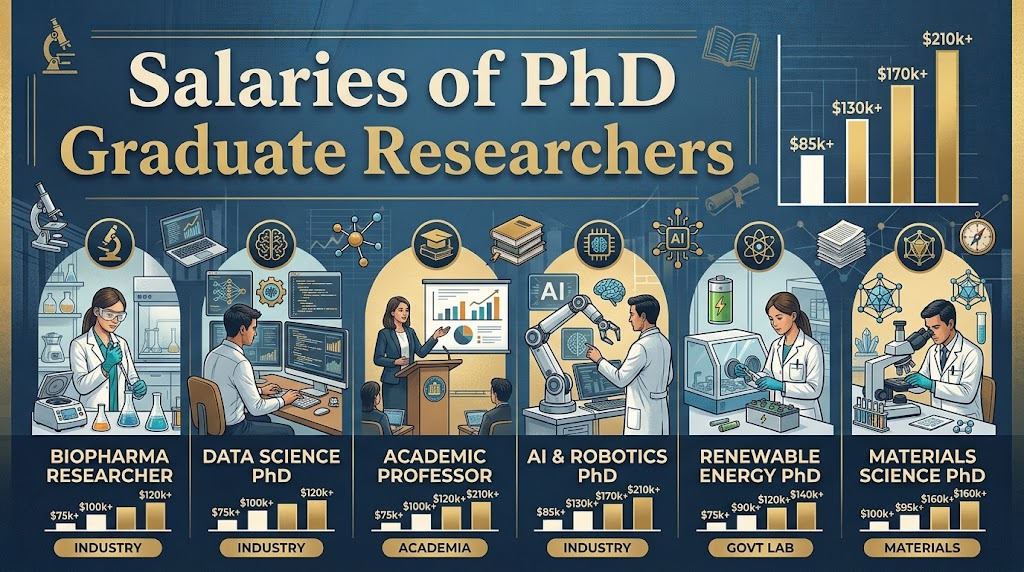
A PhD degree prepares graduates to conduct advanced research and develop specialized knowledge in a particular field. Researchers with doctoral qualifications can work in universities, government institutions, private companies, laboratories, research centers, and other organizations that depend on evidence and innovation. Because research careers exist across many industries, PhD researcher salaries can vary considerably.
A doctoral qualification can improve access to research positions, but it does not guarantee a specific level of income. Salary is influenced by research field, professional experience, employer, location, responsibilities, technical skills, and research achievements. Understanding these factors can help PhD graduates make realistic career decisions.
ROLE OF PHD RESEARCHERS
PhD researchers are generally responsible for conducting systematic studies and producing reliable findings. Their work may involve developing research questions, designing methodologies, collecting information, analyzing data, and presenting conclusions. Depending on the field, they may also conduct experiments, develop technologies, or evaluate scientific evidence.
Researchers can work independently or as part of multidisciplinary teams. Their responsibilities may include publishing research papers, managing research projects, supervising junior researchers, presenting findings, and collaborating with external organizations. These responsibilities require strong analytical, technical, and communication skills.
PHD RESEARCHER SALARY FACTORS
Several factors influence the salary of PhD researchers. The research discipline is important because different industries have different levels of demand for specialized knowledge. Researchers working in areas such as artificial intelligence, biotechnology, engineering, pharmaceuticals, and advanced sciences may encounter different employment conditions from researchers in other fields.
Experience is another important factor. A newly graduated researcher may begin at a different level from a senior researcher who has managed major projects for many years. Professional achievements, technical expertise, leadership responsibilities, and research impact can also influence career progression and compensation.
RESEARCH CAREERS IN UNIVERSITIES
Universities are among the most common employers of PhD researchers. Academic researchers may conduct studies, publish papers, supervise students, participate in research grants, and collaborate with other institutions. Their work can contribute to both academic knowledge and practical solutions.
Research careers in universities often involve teaching responsibilities as well. A PhD graduate may combine lecturing, student supervision, research, academic administration, and community engagement. Career progression can depend on academic rank, research productivity, publications, and institutional requirements.
RESEARCH CAREERS IN GOVERNMENT AND PUBLIC INSTITUTIONS
Government research organizations and public institutions can provide opportunities for doctoral researchers in many fields. Researchers may work on public policy, technology, environmental issues, health, agriculture, economics, social development, or scientific research. Their findings can support government programs and evidence-based decision-making.
Compensation and career progression in public institutions may follow structured employment systems. Researchers may also participate in national research projects and collaborations with universities or international organizations. The exact career benefits depend on the institution, position, qualifications, and applicable regulations.
RESEARCH CAREERS IN PRIVATE INDUSTRY
Private companies increasingly depend on research and development to improve products, services, and processes. PhD graduates may work in technology, pharmaceuticals, biotechnology, manufacturing, energy, finance, and other specialized industries. In these environments, researchers are often expected to connect advanced knowledge with practical business objectives.
Industry researchers may work on product development, testing, innovation, data analysis, or technical problem-solving. Compensation can depend heavily on the commercial value of their expertise and the complexity of their responsibilities. Researchers with both doctoral knowledge and industry experience may have stronger opportunities for career advancement.
HOW RESEARCH EXPERIENCE AFFECTS INCOME
Research experience can become increasingly valuable as a PhD graduate progresses through their career. Professionals who have successfully managed projects, published influential research, developed innovations, or secured research funding may qualify for more advanced positions. These achievements can demonstrate their ability to create measurable value.
Developing complementary skills can also improve earning potential. Data analysis, programming, project management, leadership, scientific communication, and collaboration can make researchers more versatile. Professionals who can work across academic and industry environments may have access to a broader range of career opportunities.
HOW PHD RESEARCHERS CAN IMPROVE THEIR CAREERS
PhD researchers can strengthen their professional prospects by building a strong research portfolio. Publishing high-quality work, participating in conferences, collaborating with other researchers, and contributing to significant projects can improve professional visibility. Developing relationships with academic and industry professionals can also support future opportunities.
Researchers should also remain aware of changes in their field. New technologies and research methods can change employer requirements quickly. Continuous learning and the development of technical and transferable skills can help PhD researchers remain competitive and prepare for senior research or leadership roles.
CONCLUSION
Salaries of PhD graduate researchers vary according to field, employer, experience, location, responsibilities, and professional achievements. Researchers can work in universities, government organizations, private companies, laboratories, and specialized research institutions, giving doctoral graduates a wide range of career options.
A PhD provides a strong foundation for advanced research, but long-term income depends on how effectively graduates apply their expertise. Building research achievements, technical skills, industry experience, leadership abilities, and professional networks can improve career prospects. For prospective researchers, evaluating both salary potential and professional development opportunities is essential when planning a doctoral career.
About the Author
Gusti Ayu Tita P
Author — STEKOM University
An active author focused on academic issues, educational technology, and human resource development in the campus environment.















