
Ship Facilities You Should Know Before Traveling
Gusti Ayu Tita P
11 Agustus 2026
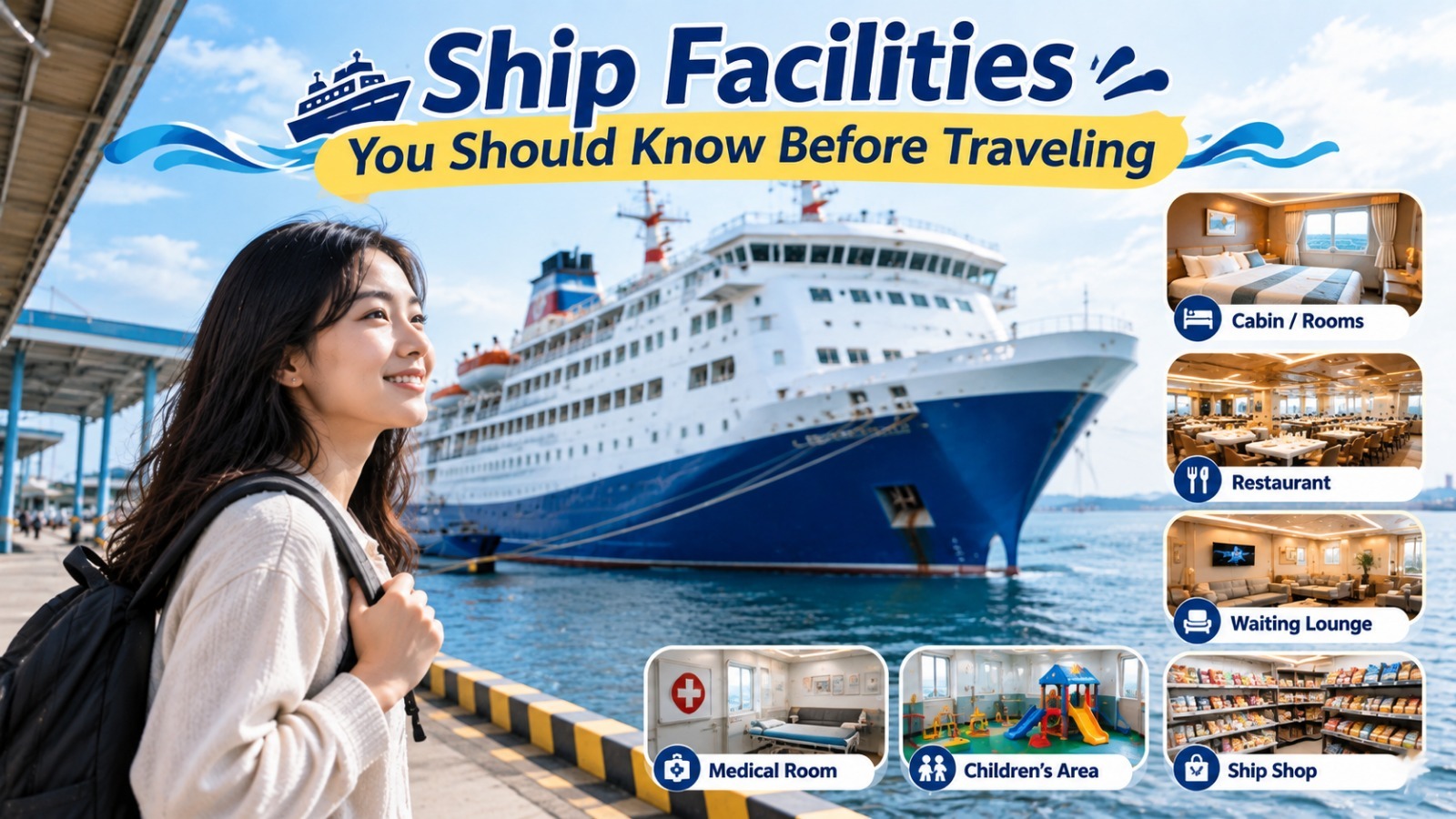
Traveling by ship can be a comfortable experience when passengers understand the facilities available on board. Unlike traveling by car or train, a ship may provide a wide range of services because passengers can spend several hours or even days at sea. Knowing these facilities before departure can help travelers prepare properly, choose suitable accommodation, and enjoy their journey more comfortably.
The facilities available on a ship depend on its type, size, route, operator, and travel duration. A passenger ferry may offer basic seating and dining areas, while a cruise ship can provide accommodation, entertainment, restaurants, fitness areas, and other services. Understanding the differences can help passengers know what to expect before boarding.
PASSENGER SEATING AREAS
Passenger seating areas are among the most basic ship facilities available on many passenger vessels. These areas allow travelers to sit and relax during the journey without needing to book a private cabin. The type and comfort of seating can vary depending on the ship and ticket category.
Some vessels provide standard seats, reclining seats, lounges, or designated passenger areas. Before traveling, passengers should check whether their ticket includes a specific seat or allows access to a general seating area. Choosing a comfortable location can make a long journey more enjoyable.
CABINS AND SLEEPING AREAS
For longer journeys, ship cabins can provide a more comfortable place to rest. Cabins may be available in different categories, including shared rooms, private rooms, or larger accommodation options. The facilities inside a cabin depend on the ship and ticket category.
Some cabins may include beds, storage areas, lighting, power outlets, private bathrooms, or other basic amenities. Passengers should check the cabin description before booking because facilities can differ significantly. Choosing the right cabin can be particularly important when traveling overnight.
DINING AND FOOD SERVICES
Many passenger ships provide dining facilities where travelers can purchase or consume food and drinks. Depending on the vessel, these may include restaurants, cafeterias, snack counters, or simple food stalls. Larger ships may offer several dining options with different menus.
Passengers should check whether meals are included in their ticket or must be purchased separately. It is also useful to consider dietary needs before traveling. Bringing permitted snacks or water may be helpful, especially during longer journeys, but passengers should always follow the operator's rules.
RESTROOMS AND HYGIENE FACILITIES
Clean restrooms are essential on passenger ships, particularly during long journeys. Restrooms are usually located in accessible areas around passenger decks, although their number and design depend on the vessel.
Passengers should maintain cleanliness when using shared facilities. Some larger ships may also provide additional hygiene facilities, such as showers or washing areas. Knowing where these facilities are located can make the journey more convenient.
INFORMATION DESKS
An information desk or passenger service area can help travelers find important information during the journey. Passengers may ask about ship facilities, schedules, dining services, cabins, baggage, or other onboard matters.
First time travelers should not hesitate to ask crew members for assistance. Crew members can also provide guidance during emergencies or operational changes. Knowing where to find passenger assistance can make travelers feel more confident while onboard.
WIFI AND INTERNET ACCESS
Some modern ships provide WiFi or internet services, although availability can vary depending on the vessel and route. Ships operating far from land may have limited connectivity because internet services can depend on satellite communication.
Passengers who need internet access should check the available service before departure. Some operators may offer free basic access, while others may charge additional fees. It is useful to download important documents, entertainment, or maps in advance in case the connection is slow or unavailable.
POWER OUTLETS AND CHARGING AREAS
Power outlets are increasingly important because passengers often travel with smartphones, tablets, cameras, and other electronic devices. Some ships provide charging points inside cabins, seating areas, or designated public spaces.
However, the number and location of outlets can be limited. Passengers should bring appropriate charging equipment and follow the operator's rules regarding electrical devices. A fully charged phone is especially useful because it can provide access to tickets, communication, navigation information, and emergency contacts.
LOUNGES AND RELAXATION AREAS
Larger passenger vessels may provide lounges and relaxation areas where travelers can rest during the journey. These spaces may include comfortable seating, tables, large windows, or areas with views of the sea.
Relaxation areas are particularly useful during long journeys. Passengers can read, listen to music, talk with companions, or simply enjoy the scenery. However, shared spaces should be used respectfully so other travelers can also enjoy them.
OUTDOOR DECKS
Many passenger ships have outdoor decks where travelers can enjoy fresh air and views of the sea. These areas can provide a different experience compared with indoor passenger spaces.
Passengers should always follow safety instructions when using outdoor decks. Strong winds, slippery surfaces, and rough sea conditions can create hazards. If an area is closed by the crew, passengers should not attempt to enter it.
ENTERTAINMENT FACILITIES
Some modern passenger ships offer various entertainment facilities to make long journeys more enjoyable. Depending on the vessel, these may include television areas, cinemas, game rooms, music spaces, swimming pools, or other recreational facilities.
Cruise ships generally provide more extensive entertainment options than regular ferries. Before booking, passengers should check which activities are included in the ticket and which require additional payment. This helps travelers plan their onboard activities and budget.
MEDICAL FACILITIES
Certain passenger ships provide medical facilities or first aid services. The level of medical support depends on the vessel, route, passenger capacity, and travel duration. Larger ships may have dedicated medical staff or more comprehensive facilities.
Passengers who have regular medication should bring enough supplies for the journey and keep them in an accessible place. Anyone with specific medical concerns should check the operator's available services before traveling. Emergency medical procedures should always follow the instructions of the ship's crew.
BAGGAGE STORAGE
Ships usually have designated areas for baggage storage, especially when passengers are traveling with large luggage. The arrangement can vary depending on the vessel and ticket type. Some passengers may keep smaller bags with them, while larger baggage may need to be stored separately.
Passengers should clearly identify their luggage and avoid placing important documents or valuable items in baggage that they cannot easily access. Always check the operator's baggage policy before boarding to understand the permitted size, weight, and storage procedures.
SAFETY AND EMERGENCY FACILITIES
Safety equipment is one of the most important categories of ship facilities. Passenger vessels normally have life jackets, emergency exits, evacuation routes, alarms, lifeboats or life rafts, and designated assembly areas according to applicable requirements.
Passengers should pay attention to safety briefings and learn where the nearest emergency exit and assembly area are located. Do not ignore instructions from crew members during an emergency. Understanding the location of emergency equipment can help passengers respond more effectively if a dangerous situation occurs.
ACCESSIBILITY FACILITIES
Modern passenger vessels may provide facilities designed to support passengers with disabilities or limited mobility. Depending on the ship, these can include accessible cabins, elevators, ramps, accessible restrooms, and designated seating areas.
Passengers who require special assistance should contact the shipping operator before departure whenever possible. Early communication allows the crew to understand the passenger's needs and determine what assistance is available. Accessibility facilities can vary significantly between vessels and routes.
CONCLUSION
Understanding ship facilities before traveling can make a sea journey more comfortable, convenient, and safe. Common facilities may include seating areas, cabins, dining services, restrooms, baggage storage, charging points, lounges, and outdoor decks. Larger vessels may also provide entertainment, medical, accessibility, and internet services.
However, passengers should remember that facilities vary depending on the ship type, operator, route, and ticket category. Checking the official information before departure is the best way to know exactly what will be available. By understanding the facilities in advance, travelers can pack appropriately, choose suitable services, and enjoy a smoother journey at sea.
About the Author
Gusti Ayu Tita P
Author — STEKOM University
An active author focused on academic issues, educational technology, and human resource development in the campus environment.















