Small Corruption with Massive Consequences
Gusti Ayu Tita P
16 Juli 2026
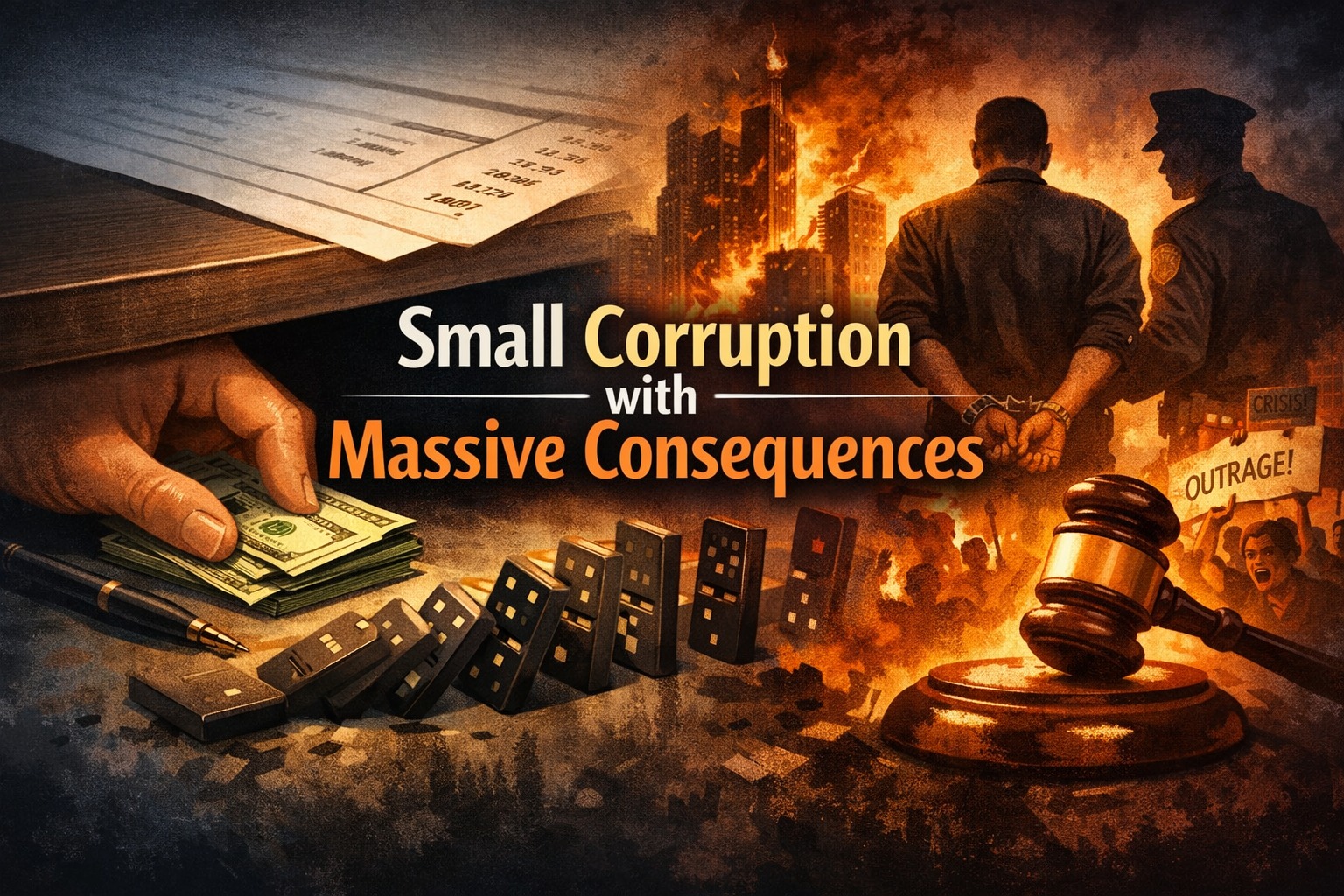
Corruption is often associated with large-scale scandals involving politicians, corporations, or government officials. However, small acts of corruption that happen in everyday life can be equally dangerous. Bribing an officer to avoid a ticket, giving extra money for faster services, or manipulating small financial reports may seem harmless at first. Yet these actions slowly damage trust, fairness, and economic stability within society.
In many countries, small corruption has become a common habit that people no longer question. Unfortunately, when dishonest behavior is normalized, the impact can spread across institutions and future generations. Understanding the hidden dangers of minor corruption is essential to building a more transparent and responsible society.
WHAT IS SMALL CORRUPTION?
Small corruption refers to unethical actions involving relatively low amounts of money or small abuses of power. These practices usually happen in daily activities and are often ignored because they appear insignificant.
Examples of small corruption include:
- Paying unofficial fees for public services
- Giving gifts to influence decisions
- Falsifying attendance or expense reports
- Using public property for personal purposes
- Offering bribes to speed up administrative processes
Although the value may be small, the repeated occurrence of these actions creates a culture of dishonesty that becomes difficult to eliminate.
HOW SMALL CORRUPTION DAMAGES SOCIETY
Many people underestimate the long-term effects of small corruption. In reality, the damage can be severe and widespread.
1.WEAKENING PUBLIC TRUST
When corruption becomes common, people lose confidence in institutions and authorities. Citizens begin to believe that fairness no longer exists and that success depends on money or connections rather than merit.
This distrust can reduce public participation and weaken democracy itself.
2.CREATING ECONOMIC LOSSES
Small corruption may involve minor amounts individually, but collectively it causes significant financial damage. Governments and organizations lose resources that should be used for public welfare, education, healthcare, and infrastructure.
Over time, corruption also discourages investment because businesses prefer transparent and stable environments.
3.ENCOURAGING BIGGER CORRUPTION
Minor dishonest actions often become the starting point for larger crimes. Someone who becomes comfortable with small unethical behavior may eventually engage in more serious corruption practices.
This gradual normalization creates an environment where large-scale corruption can thrive.
4.DESTROYING FAIR COMPETITION
Corruption removes equal opportunities. Honest individuals may lose access to jobs, promotions, or services because others use unfair methods to gain advantages.
As a result, talent and hard work become less valued in society.
WHY PEOPLE STILL ENGAGE IN SMALL CORRUPTION
Several factors contribute to the persistence of corruption in daily life.
1.LACK OF AWARENESS
Some individuals do not fully understand the consequences of their actions. They may view small bribes or dishonest shortcuts as normal behavior.
2.CULTURAL ACCEPTANCE
In some communities, corruption has become deeply rooted and socially tolerated. Refusing to participate may even be seen as unusual.
3.WEAK LAW ENFORCEMENT
When regulations are poorly enforced, people feel safer engaging in corrupt activities because the risk of punishment is low.
4.ECONOMIC PRESSURE
Financial difficulties can push individuals to seek quick and unethical solutions to improve their situation.
HOW TO PREVENT SMALL CORRUPTION
Fighting corruption starts with small but consistent actions from individuals, institutions, and governments.
1.PROMOTING HONESTY EDUCATION
Teaching integrity and ethical values from an early age can help create responsible future generations. Schools and families play an important role in shaping character.
2.IMPROVING TRANSPARENCY
Clear procedures and open systems reduce opportunities for corruption. Digital services and public monitoring can help minimize dishonest practices.
3.STRENGTHENING LAW ENFORCEMENT
Fair and consistent punishment is necessary to discourage corrupt behavior at all levels.
4.ENCOURAGING PERSONAL RESPONSIBILITY
Every individual has the power to reject corruption in daily life. Small acts of honesty can inspire larger positive changes within society.
CONCLUSION
Small corruption may appear harmless, but its consequences can be enormous. It weakens trust, damages economies, destroys fairness, and encourages larger unethical behavior. If ignored, these seemingly minor actions can slowly undermine the foundation of society itself.
Preventing corruption requires awareness, integrity, and collective responsibility. By choosing honesty in everyday situations, individuals can help build a fairer, cleaner, and more trustworthy future for everyone.
About the Author
Gusti Ayu Tita P
Author — STEKOM University
An active author focused on academic issues, educational technology, and human resource development in the campus environment.