Small Hydropower Plants for Regional Energy Needs
Gusti Ayu Tita P
31 Agustus 2026
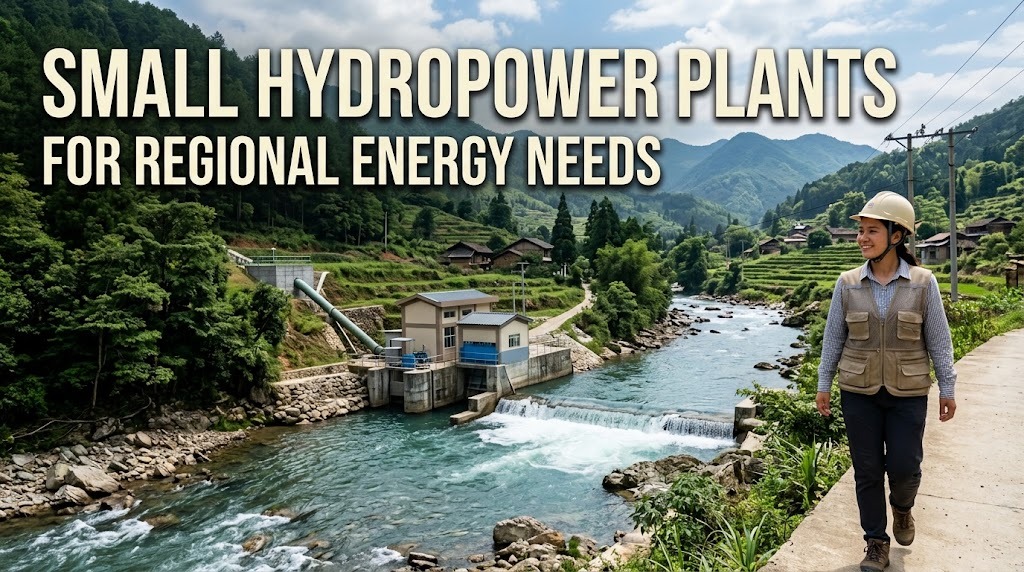
Small hydropower plants can provide an important source of renewable electricity for regions with suitable rivers and water resources. Unlike very large hydropower projects, small plants can be designed to serve more localized electricity needs. They are particularly relevant for rural and remote areas where extending large transmission networks can be difficult or expensive.
Indonesia has extensive river systems and varied terrain, creating opportunities for small-scale hydropower development. When carefully designed, these facilities can support households, public services, agriculture, and local businesses. However, small hydropower is not automatically free from environmental or social impacts. Good planning, reliable water data, community involvement, and environmental protection are essential for successful projects.
WHAT IS SMALL HYDROPOWER?
Small hydropower refers to hydroelectric facilities with relatively limited generation capacity compared with large hydropower plants. There is no single universal definition of "small hydropower," because capacity classifications differ between countries and organizations. In practice, the category can include mini, small, and microhydropower systems.
The basic operating principle remains the same. Water flows through a turbine, causing it to rotate, and the turbine drives a generator to produce electricity. The amount of electricity depends mainly on water flow and hydraulic head, along with turbine and generator efficiency. Smaller systems can therefore generate useful electricity when local river conditions are suitable.
WHY REGIONS NEED LOCAL ENERGY SOURCES?
Electricity demand is not limited to major cities. Rural communities need power for homes, schools, healthcare facilities, agriculture, communications, and small industries. Some locations, particularly in remote or mountainous areas, may face challenges when connecting to large centralized electricity networks.
Local renewable generation can help address these challenges. A small hydropower plant can generate electricity relatively close to where it is consumed, reducing dependence on long-distance power delivery. In suitable areas, this can improve energy access and support local economic activity. Reliable local electricity can become an important foundation for regional development.
HOW SMALL HYDROPOWER GENERATES ELECTRICITY?
A small hydropower system typically directs water toward a turbine through an intake and water-conveyance system. The moving water turns the turbine, and the connected generator converts mechanical energy into electricity. After passing through the turbine, water is normally returned to the river.
Different turbine types are suitable for different combinations of water flow and hydraulic head. Pelton turbines are commonly associated with high-head applications, while Francis and Kaplan turbines can be suitable for different flow and head conditions. The correct choice depends on detailed site assessment. Using an appropriately sized turbine can improve efficiency and reliability.
RUN OF RIVER SYSTEMS CAN LIMIT RESERVOIRS
Many small hydropower projects use a run-of-river design. Instead of storing large quantities of water behind a major dam, the system diverts part of the river flow through a channel, pipe, or penstock toward the turbine.
This design can reduce the need for extensive reservoirs and large areas of inundation. However, it still changes part of the river's natural flow and can affect aquatic habitats if poorly designed. Maintaining appropriate downstream flows is therefore important. Smaller infrastructure does not mean environmental assessment is unnecessary.
SMALL HYDROPOWER CAN SUPPORT REMOTE COMMUNITIES
Remote communities may have limited access to reliable electricity because of difficult terrain or distance from major grids. In locations with suitable rivers, microhydropower or small hydropower can provide a local electricity source.
Electricity can support lighting, refrigeration, water pumping, communication equipment, education, and healthcare. It can also enable productive activities such as food processing and small-scale manufacturing. These benefits can improve local livelihoods and reduce reliance on diesel generators. However, successful projects require long-term maintenance and local technical capacity.
SMALL HYDROPOWER CAN REDUCE DIESEL DEPENDENCE
Some isolated communities rely on diesel generators for electricity. Diesel generation requires continuous fuel deliveries, which can be expensive and logistically challenging in remote areas. Fuel price changes can also affect the cost of electricity.
Where water resources are reliable, small hydropower can reduce the need for diesel generation. The plant does not require regular fossil fuel deliveries to produce electricity. This can reduce fuel transportation requirements and potentially lower operating costs over the long term. The actual economic advantage depends on construction costs, water availability, maintenance, and local electricity demand.
WATER AVAILABILITY DETERMINES PERFORMANCE
Small hydropower depends directly on river conditions. A river may have abundant water during the rainy season but much less flow during dry months. Electricity production can therefore change throughout the year.
Before construction, developers need reliable hydrological data to understand seasonal and long-term river behavior. Drought risk, rainfall patterns, extreme weather, and future climate conditions should also be considered. An appropriately designed project should match its expected generation with realistic water availability. Overestimating river resources can lead to poor financial and operational outcomes.
CLIMATE CHANGE CREATES UNCERTAINTY
Climate change may influence rainfall patterns, droughts, floods, and river flows. These changes can affect the amount of water available for small hydropower generation. Extreme rainfall may also increase the risk of flooding, landslides, and damage to infrastructure.
Climate-resilient planning is therefore increasingly important. Developers can use hydrological forecasting, climate projections, stronger infrastructure, and watershed protection to reduce certain risks. Small plants should be designed with local environmental conditions in mind. Long-term operation should also allow adjustments when water conditions change.
ENVIRONMENTAL IMPACTS MUST BE MANAGED
Small hydropower generally uses less infrastructure than large dam projects, but it can still affect river ecosystems. Water diversion can reduce flow in sections of a river, while construction can disturb soil, vegetation, and aquatic habitats.
Projects should maintain appropriate environmental flows and minimize unnecessary disturbance. Fish movement, sediment transport, water quality, and downstream ecosystems should be considered during design and operation. Environmental monitoring can identify problems after the plant begins operating. Responsible management is essential for maintaining river health.
COMMUNITY INVOLVEMENT IMPROVES PROJECT SUCCESS
Local communities are directly connected to many rivers used for small hydropower. They may depend on rivers for farming, fishing, household water, livestock, or other activities. Their knowledge can provide valuable information about seasonal river conditions.
Community participation should begin during the planning stage. Residents should understand how the project could affect water use, land, livelihoods, and electricity access. Local people can also participate in maintenance, administration, or other project activities when appropriate. Strong community involvement can increase local ownership and improve long-term sustainability.
SMALL HYDROPOWER CAN SUPPORT LOCAL BUSINESSES
Reliable electricity can create opportunities beyond household consumption. Small businesses can use electricity for food processing, refrigeration, workshops, agricultural equipment, telecommunications, and digital services. This can increase productivity and create new income opportunities.
Agriculture can also benefit from electricity-powered irrigation and processing equipment. Farmers may be able to process products closer to production areas rather than transporting raw materials elsewhere. Local electricity can therefore contribute to value-added economic activity. Energy access can become a driver of regional economic growth.
TRANSMISSION AND DISTRIBUTION STILL MATTER
A small hydropower plant may be located close to consumers, but electricity still requires an appropriate distribution system. In off-grid areas, local networks must be designed to safely deliver electricity to households and businesses. In grid-connected areas, the plant must meet relevant technical requirements.
Good distribution infrastructure helps ensure that generated electricity is actually useful to the community. Poorly maintained lines or insufficient capacity can reduce the benefits of the project. Generation and electricity distribution must be planned together rather than treated as separate issues.
TECHNOLOGY CAN IMPROVE SMALL HYDROPOWER
Modern equipment can improve the performance of small hydropower systems. Efficient turbines, digital controllers, sensors, and remote monitoring can help operators manage generation and identify technical problems.
Automation can be particularly useful in remote locations where specialized technicians are not always available. Remote monitoring can provide information about water flow, electricity output, temperature, and equipment conditions. This can reduce unnecessary travel and help detect failures earlier. Technology can therefore improve both operational efficiency and maintenance.
ENERGY STORAGE CAN COMPLEMENT SMALL HYDROPOWER
Small hydropower can also work together with other renewable energy sources. Solar power can produce electricity during daylight hours, while hydropower may provide generation at different times depending on water availability. Battery storage can help balance short-term changes in supply and demand.
A hybrid system combining hydropower, solar, batteries, and appropriate controls can improve energy reliability in some locations. The best combination depends on local demand, river flow, solar resources, costs, and grid conditions. Diversifying local energy sources can reduce dependence on a single resource. Integrated renewable systems can be especially useful for isolated communities.
FINANCING CAN BE A CHALLENGE
Small projects may require less investment than major dams, but financing can still be difficult. Construction costs include turbines, generators, civil works, electrical equipment, access roads, transmission or distribution systems, and environmental management.
The financial viability of a project depends on expected electricity production, local demand, operating costs, financing conditions, and electricity tariffs. Developers need realistic feasibility studies before construction. Low capacity does not automatically mean low project risk. Careful financial planning is essential for long-term operation.
MAINTENANCE IS IMPORTANT FOR LONG TERM OPERATION
A small hydropower plant needs regular maintenance to remain reliable. Turbines, generators, electrical systems, control equipment, waterways, and intake structures can experience wear or blockage. Sediment and debris can also affect plant performance.
Training local operators can make maintenance more practical in remote locations. Preventive maintenance can reduce unexpected failures and extend equipment life. Spare parts and technical support should also be considered during project planning. A plant that cannot be maintained properly may fail to deliver its expected long-term benefits.
SMALL HYDROPOWER IN INDONESIA'S ENERGY TRANSITION
Indonesia is expanding renewable electricity as part of its broader energy transition. The RUPTL PLN 2025–2034 plans significant additional renewable generation, including 11.7 GW of hydropower capacity. Large and small hydropower projects can contribute to this broader renewable electricity strategy when suitable sites are available.
Small hydropower can be particularly valuable where electricity demand is local and grid expansion is difficult. It can complement larger renewable projects and contribute to energy access in remote regions. However, development should remain consistent with environmental safeguards and local conditions. Indonesia's hydropower potential should be developed selectively and responsibly.
THE FUTURE OF REGIONAL HYDROPOWER
The future of small hydropower will depend on better site selection, modern technology, reliable hydrological data, community participation, and environmental management. Digital monitoring and efficient equipment can improve performance, while hybrid systems can combine hydropower with solar and battery storage.
The strongest projects will be those that match local energy needs with realistic water resources. Instead of focusing only on installed capacity, planners should consider reliability, affordability, environmental impact, and long-term maintenance. Small hydropower can provide meaningful regional benefits when the project is designed around the needs and conditions of the local area.
CONCLUSION
Small hydropower plants can help meet regional energy needs by providing renewable electricity close to communities. They can support households, public facilities, agriculture, and local businesses while reducing dependence on diesel in suitable remote areas. Their smaller scale can make them useful for locations where large centralized power projects are difficult to develop.
However, small hydropower still requires careful planning. Water availability, climate risks, environmental flows, community interests, financing, transmission, and maintenance all influence project success. With appropriate technology and responsible management, small hydropower can become a practical part of regional renewable energy development and Indonesia's broader transition toward cleaner electricity.
About the Author
Gusti Ayu Tita P
Author — STEKOM University
An active author focused on academic issues, educational technology, and human resource development in the campus environment.