
Smart Airport Technologies That Make Air Travel Easier
Gusti Ayu Tita P
10 Agustus 2026
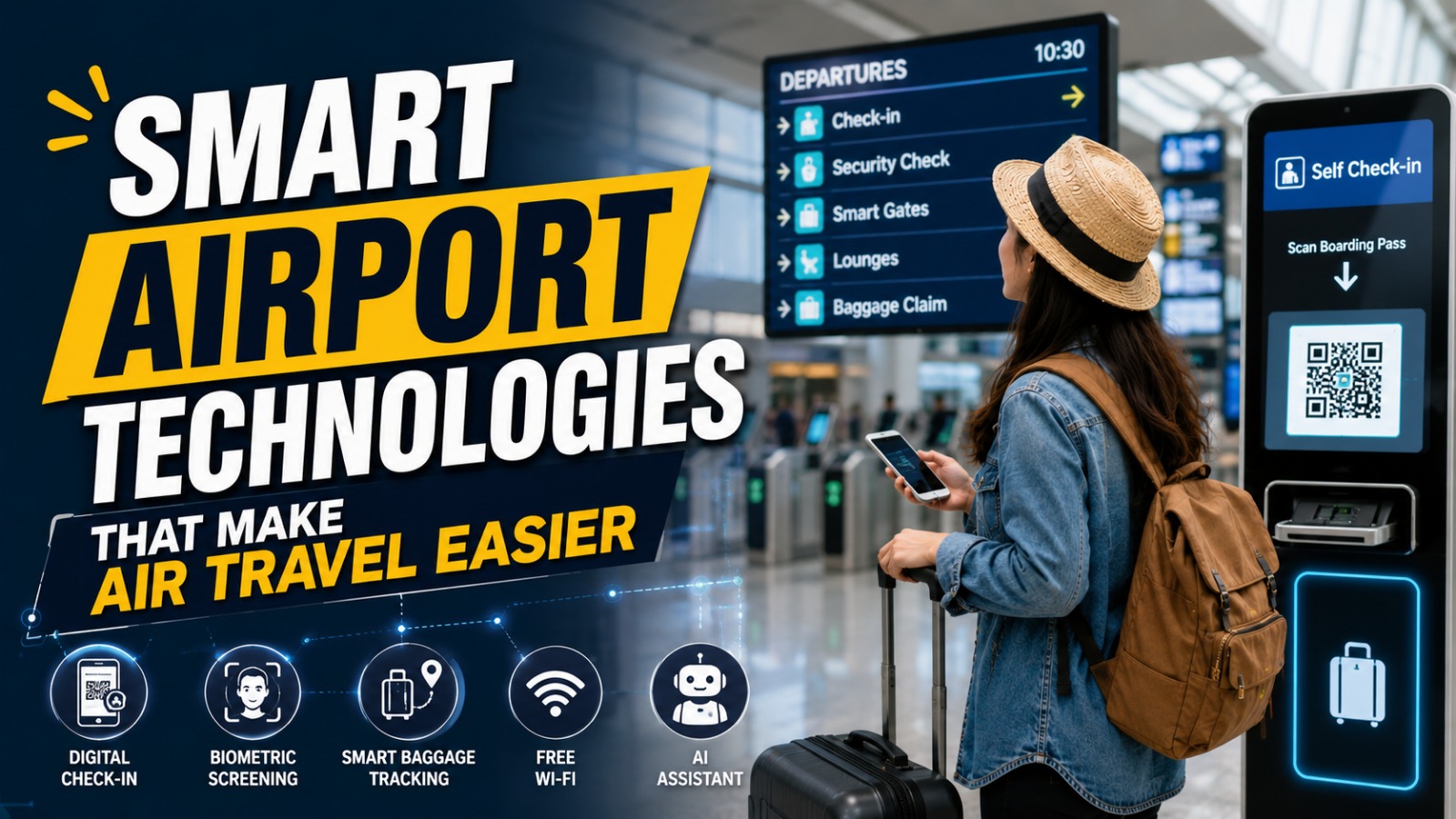
Technology is changing the way people travel through airports. Smart airport technologies can make check in, security screening, baggage handling, and boarding faster and more convenient. Many airports now use digital systems, biometric identification, self service machines, and automated processes to improve the passenger experience. These innovations can also help airports manage large numbers of travelers more efficiently.
SELF SERVICE CHECK IN
Self service check in kiosks allow passengers to complete important steps without waiting at a traditional check in counter. Travelers can often enter their booking information, select an available seat, and print a boarding pass using the machine. Some airports and airlines also provide automated baggage tag printing as part of the process. This can reduce queues and save time during busy travel periods.
Passengers should still check their flight details carefully before completing the process. If they have special travel requirements or encounter a problem, assistance from airline staff may still be necessary. Self service technology is designed to make routine processes easier, not to replace human support completely. Availability also depends on the airport and airline.
BIOMETRIC IDENTIFICATION
Biometric technology is becoming an important part of modern airport operations. Facial recognition can be used to verify a passenger's identity at certain points of the airport journey. Depending on the airport and airline, biometric systems may support processes such as security checks, immigration, or boarding. This can reduce the need for repeated manual document checks.
Biometric services are not available in every airport and may operate under different rules. Passengers should understand how the system works and follow the applicable privacy and consent requirements. A passport or other travel document may still be required at certain checkpoints. Travelers should therefore keep their documents accessible throughout the journey.
AUTOMATED BAG DROP
Automated bag drop systems allow passengers to check in their luggage with limited assistance from airport staff. After completing check in and attaching the appropriate baggage tag, travelers can place their luggage on the designated machine. The system can weigh the bag and verify relevant information before accepting it. This can make the baggage drop process faster during busy periods.
Passengers must still follow the airline's baggage weight and size requirements. If the machine detects a problem, staff may need to inspect the luggage or provide further instructions. Travelers should keep their baggage receipt or tracking information after completing the process. This information can be useful if the baggage is delayed or misplaced.
SMART SECURITY SCREENING
Modern security screening systems use advanced scanning technology to examine passenger belongings more efficiently. Some airports use computed tomography based scanners that can create detailed images of baggage contents. These systems can help security personnel identify potential threats more effectively. They may also change the procedures passengers follow at security checkpoints.
Passengers should never assume that advanced scanners mean security rules no longer apply. Travelers still need to follow instructions about liquids, electronics, and prohibited items. Security procedures can differ between airports and countries. Checking the latest requirements before traveling can make the screening process smoother.
E GATES AND AUTOMATED BOARDING
Electronic gates can automate parts of the passenger verification and boarding process. Depending on the system, passengers may scan a boarding pass and have their identity verified before entering the boarding area or aircraft. Automated boarding can reduce queues and help airlines process passengers more efficiently. It is particularly useful at airports handling large numbers of travelers.
The exact process varies depending on the airport and airline. Some passengers may need to use a traditional boarding counter or receive additional document checks. If an e gate does not work correctly, passengers should follow staff instructions instead of repeatedly trying the machine. Keeping the boarding pass and required identification ready can speed up the process.
DIGITAL FLIGHT INFORMATION
Digital flight information systems help passengers stay updated while moving through the airport. Large electronic displays can show departure times, gate numbers, boarding status, and other important information. Some airports and airlines also provide updates through mobile applications or digital notifications. These services make it easier for travelers to monitor changes during their journey.
Passengers should check flight information regularly because gates and schedules can sometimes change. It is also useful to compare mobile notifications with the official airport information screens. Keeping a phone charged is important when relying on digital boarding passes or travel notifications. Digital information should complement rather than replace attention to airport announcements.
SMART BAGGAGE TRACKING
Smart baggage systems can improve the way luggage is tracked throughout the airport journey. Digital identification and tracking technologies can help airlines monitor baggage as it moves through different handling points. Some services may allow passengers to receive information about their luggage through digital platforms. Better tracking can make it easier to identify and manage delayed baggage.
Passengers can also take simple steps to improve baggage identification. A unique luggage tag, distinctive suitcase design, and a photograph of the bag can help prevent mix ups. Travelers should keep their baggage receipt until they have collected their luggage. These simple practices remain useful even when airports use advanced tracking technology.
MOBILE TRAVEL SERVICES
Mobile technology allows passengers to manage many parts of their trip using a smartphone. Depending on the airline and airport, travelers may access digital boarding passes, flight updates, airport maps, and other services through mobile applications. Some airports also provide digital navigation tools to help passengers find gates and facilities. This can make the airport experience more convenient and personalized.
However, passengers should prepare for situations where mobile services are unavailable. Save important travel information offline whenever possible and keep the phone sufficiently charged. Travelers should also carry required physical documents for international journeys. Using mobile services together with basic travel preparation provides a more reliable experience.
BENEFITS OF SMART AIRPORT TECHNOLOGY
Smart airport technology can reduce waiting times and make common travel processes easier. Automated systems can handle routine tasks while allowing airport employees to focus on situations that require human assistance. Digital services can also provide passengers with information more quickly. Together, these technologies can create a smoother and more efficient airport experience.
Technology can also help airports manage increasing passenger numbers without relying entirely on traditional manual processes. However, implementation differs from one airport to another. Some services may only be available to certain airlines, passengers, or travel routes. Travelers should always check which technologies and services are available for their specific journey.
CONCLUSION
Smart airport technologies are making air travel more convenient by improving check in, security screening, baggage handling, boarding, and access to flight information. Self service kiosks, biometric identification, automated bag drop, e gates, smart baggage tracking, and mobile services are examples of innovations changing the passenger experience. Although not every airport offers the same features, these technologies are becoming increasingly important in modern aviation. By understanding and using the available services, travelers can save time and enjoy a smoother journey from the terminal to the aircraft.
About the Author
Gusti Ayu Tita P
Author — STEKOM University
An active author focused on academic issues, educational technology, and human resource development in the campus environment.















