
Smart Roads for Safer Journeys
Gusti Ayu Tita P
11 Agustus 2026
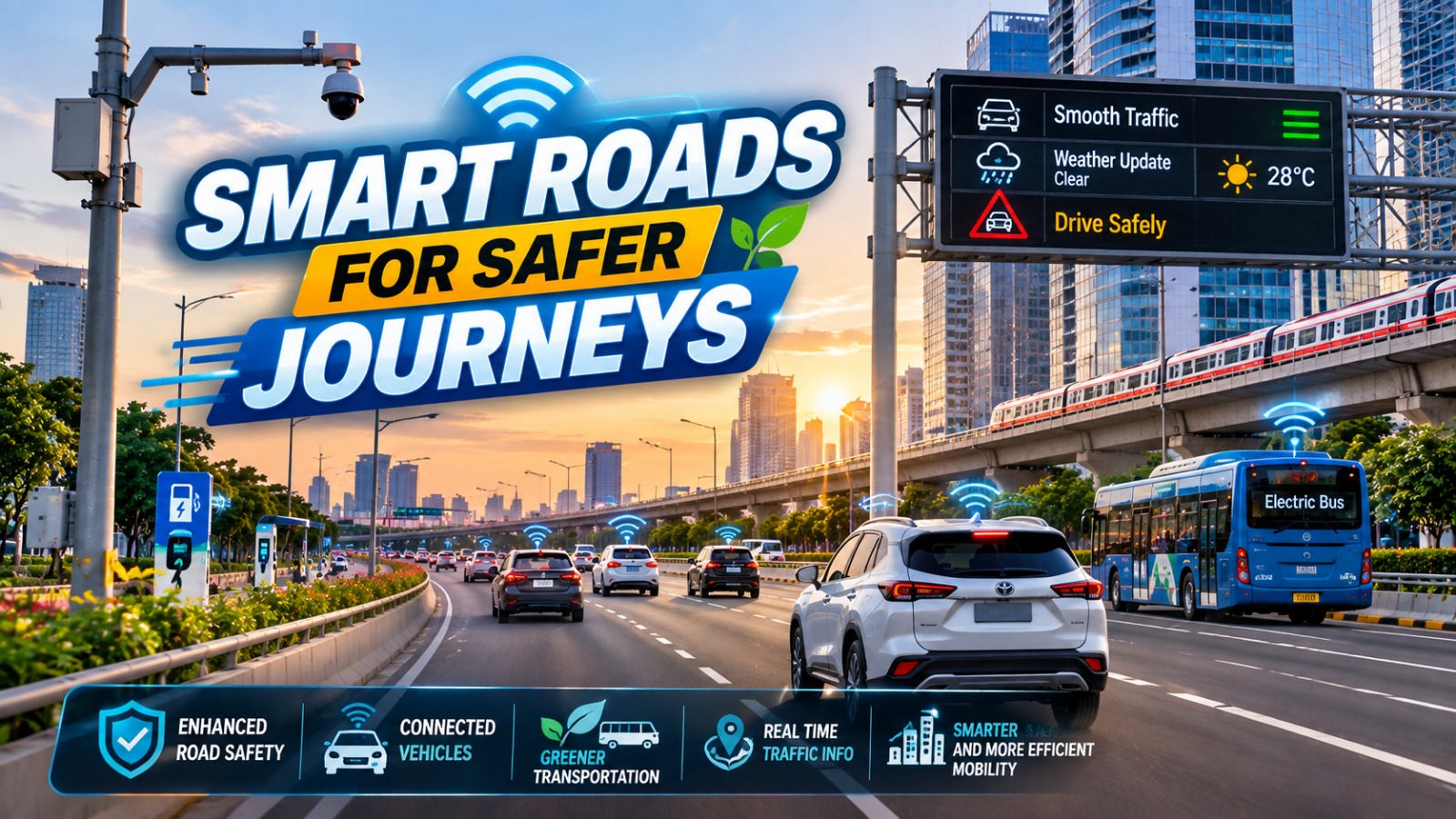
Modern transportation is not only about better vehicles. The roads themselves are also becoming smarter through the use of digital technology, sensors, cameras, and real time data. These innovations can help road operators monitor traffic conditions, identify potential hazards, and respond to problems more quickly.
Smart roads are designed to make transportation safer, more efficient, and better connected. They can communicate information about traffic, weather, road conditions, and incidents to drivers and transportation authorities. As technology continues to develop, smart roads are becoming an important part of the future of safer and more sustainable mobility.
WHAT ARE SMART ROADS?
Smart roads are road systems that use technology to collect, process, and share information about road conditions and traffic. They can include sensors, digital signs, traffic cameras, connected traffic lights, and communication systems. These technologies allow road operators to understand what is happening on the road more quickly. The information can then be used to improve traffic management and road safety.
Unlike traditional roads, smart roads can respond to changing conditions through connected systems. For example, digital signs can provide warnings about congestion, accidents, or dangerous weather. This gives drivers useful information before they reach a potential hazard. As a result, smart roads can support safer and more informed driving decisions.
HOW SMART TECHNOLOGY IMPROVES ROAD SAFETY?
One of the main benefits of smart roads is their ability to detect dangerous situations earlier. Road sensors and cameras can monitor traffic flow, vehicle movement, and certain road conditions. When an incident occurs, information can be sent to traffic management centers for further action. Faster detection can help emergency services and road operators respond more efficiently.
Smart traffic systems can also provide warnings directly to road users. Variable message signs can display information about accidents, road closures, congestion, or adverse weather conditions. Connected vehicles may also receive relevant warnings when communication systems are available. These features can help drivers reduce speed and pay greater attention when approaching risky areas.
SMART TRAFFIC LIGHTS FOR BETTER TRAFFIC FLOW
Traffic lights are another important part of smart road systems. Traditional traffic lights often operate according to fixed timing, while smart traffic signals can adjust their operation based on traffic conditions. Sensors and traffic monitoring systems can provide information about vehicle volumes at intersections. This information can help traffic controllers manage road capacity more effectively.
Better traffic signal management can also improve safety at busy intersections. Reducing unnecessary congestion may lower the pressure caused by long queues and unpredictable traffic movements. In some systems, priority can also be given to emergency vehicles or public transportation. This shows how connected traffic signals can support both traffic efficiency and public safety.
THE ROLE OF CONNECTED VEHICLES
Smart roads become more useful when they can communicate with connected vehicles. Vehicle to infrastructure communication allows vehicles and road infrastructure to exchange information when compatible communication systems are available. A vehicle may receive information about traffic signals, road hazards, or changing traffic conditions. This can give drivers more time to react appropriately.
Connected vehicle technology can also support future automated driving systems. Vehicles can combine information from their own sensors with data received from surrounding infrastructure. However, connected technology does not remove the need for responsible driving. Drivers must still remain attentive, follow traffic regulations, and understand that digital information may not always be complete.
SMART ROADS AND WEATHER MONITORING
Weather conditions can significantly affect road safety. Rain, fog, strong winds, flooding, and icy surfaces in colder regions can reduce visibility and vehicle control. Smart road systems can use weather sensors and monitoring equipment to detect certain environmental conditions. The collected information can then support warnings and operational decisions.
Early information can help road users prepare for changing conditions. Digital signs may warn drivers to reduce speed or expect hazardous conditions ahead. Road authorities can also use available data to inspect affected areas and take appropriate action. By combining road monitoring with weather information, smart infrastructure can improve situational awareness and risk management.
CHALLENGES OF SMART ROAD DEVELOPMENT
Although smart roads offer many advantages, developing them requires significant investment. Governments and road operators may need to install sensors, communication networks, cameras, digital signs, and advanced traffic management systems. These technologies also require regular maintenance to remain reliable. Poorly maintained equipment could reduce the effectiveness of the entire system.
Another important issue is data security and privacy. Connected transportation systems can generate large amounts of information, so data must be handled responsibly. Systems should also be designed to remain reliable during technical failures or communication disruptions. Careful planning is therefore essential to ensure that smart roads improve safety without creating new risks.
THE FUTURE OF SMART ROADS
The future of smart roads will likely involve greater connectivity between vehicles, infrastructure, traffic management centers, and road users. Artificial intelligence and data analytics can help identify traffic patterns and support better transportation decisions. More advanced systems may also predict congestion or identify unusual traffic conditions before they become serious problems.
Smart roads are also expected to work together with electric vehicles, public transportation, and sustainable mobility systems. This can create a transportation network that is not only safer but also more efficient and environmentally responsible. However, successful implementation will depend on reliable infrastructure, clear regulations, skilled personnel, and cooperation between different stakeholders.
CONCLUSION
Smart roads for safer journeys represent an important development in modern transportation. By combining sensors, connected infrastructure, digital communication, and intelligent traffic management, roads can provide better information and faster responses to potential hazards. These technologies can help drivers and authorities make safer decisions.
Smart roads are not a replacement for responsible road users, but they can provide valuable support. With careful planning and proper maintenance, smart road technology can improve safety, traffic efficiency, and the overall travel experience. As cities and transportation networks become increasingly connected, smart roads will play an important role in building safer journeys for the future.
About the Author
Gusti Ayu Tita P
Author — STEKOM University
An active author focused on academic issues, educational technology, and human resource development in the campus environment.















