
Smart Ways to Adapt Quickly in an International Campus Environment
Gusti Ayu Tita P
22 Agustus 2026
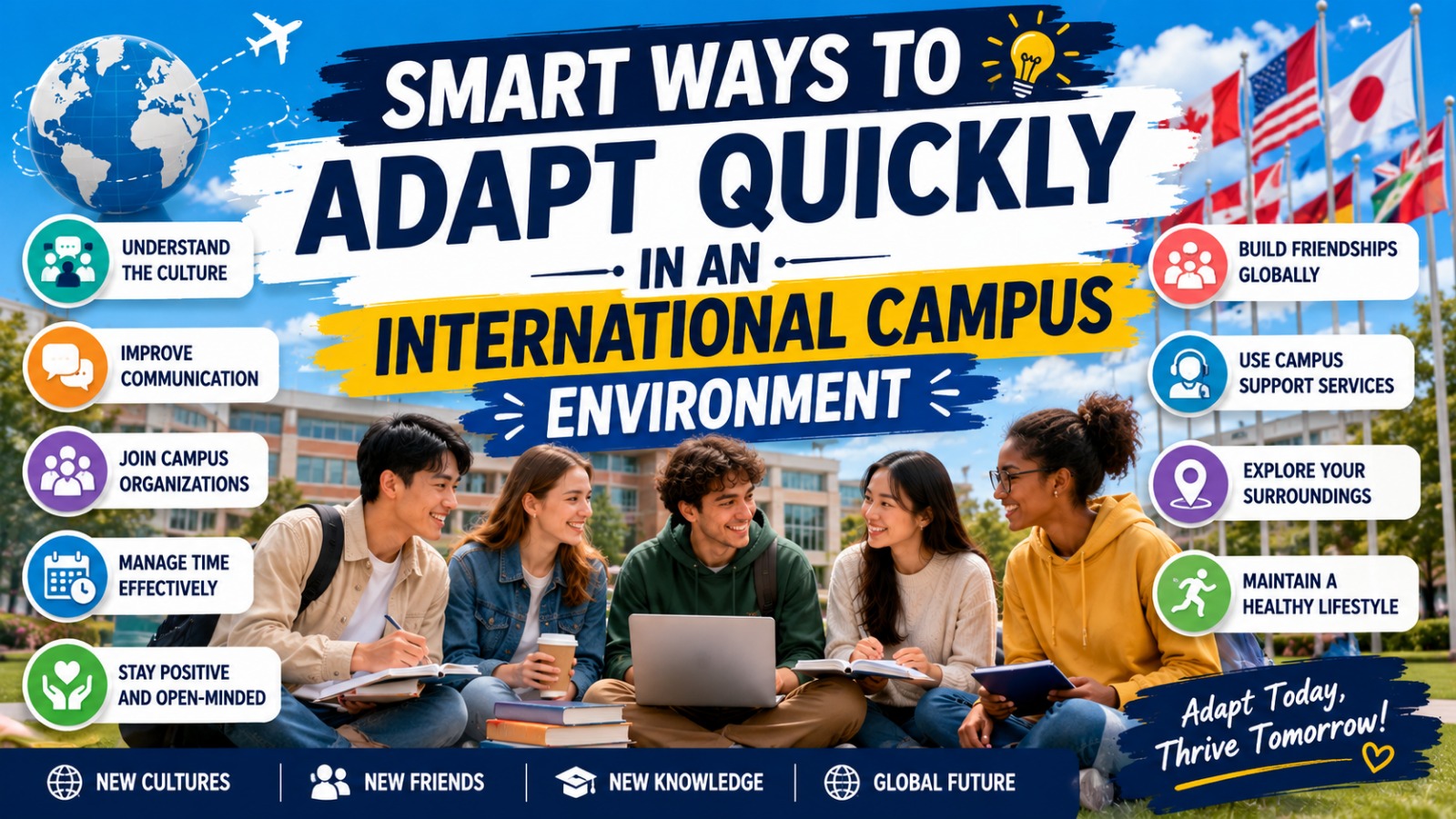
Studying at an international campus is an exciting experience that offers students opportunities to meet people from different cultures, improve language skills, and gain global knowledge. However, adapting to a new academic and social environment can sometimes feel challenging, especially for first-year international students.
Different cultures, teaching methods, lifestyles, and communication styles may create culture shock during the early months. Fortunately, there are many smart ways students can adapt quickly and enjoy their international campus experience successfully.
UNDERSTAND THE LOCAL CULTURE
One of the best ways to adapt quickly is by learning about the local culture before and after arriving on campus. Understanding cultural values, traditions, social etiquette, and daily habits can help students avoid misunderstandings and communicate more comfortably.
Students should stay open-minded and respectful toward cultural differences. Simple actions such as learning greetings, local customs, and dining manners can create positive relationships with classmates and local communities.
Cultural awareness also helps students feel more confident in social situations.
IMPROVE COMMUNICATION SKILLS
Communication is very important in an international campus environment. Students may interact daily with people from different countries and backgrounds, so strong communication skills can help build friendships and academic connections.
Practicing English or the main language used on campus every day can improve confidence. Students should not be afraid of making mistakes because communication skills develop through regular practice.
Joining discussions, presentations, and campus activities can also improve speaking and listening abilities.
JOIN CAMPUS ORGANIZATIONS
Campus organizations provide excellent opportunities for students to meet new friends and become part of the university community. Many international campuses offer clubs related to sports, arts, technology, volunteering, and culture.
Participating in organizations helps students:
- Build social connections
- Improve teamwork skills
- Reduce feelings of loneliness
- Gain leadership experience
Being active outside the classroom can make adaptation much easier and more enjoyable.
LEARN TO MANAGE TIME EFFECTIVELY
Academic systems at international campuses may differ from what students experienced in their home countries. Assignments, presentations, research projects, and independent study often require strong time management skills.
Creating a study schedule and setting priorities can help students balance academics and personal activities. Using digital calendars or productivity apps may also improve organization.
Good time management reduces stress and increases academic performance.
BUILD FRIENDSHIPS WITH INTERNATIONAL STUDENTS
Making friends with students from different countries can help international students feel more comfortable and supported. Diverse friendships also provide opportunities to learn about new cultures and perspectives.
Students should participate in orientation programs, group assignments, and social events to expand their network. Being friendly, approachable, and open to conversations can make it easier to form meaningful friendships.
Strong social support is important for emotional well-being while studying abroad.
STAY POSITIVE DURING CULTURE SHOCK
Culture shock is a common experience for many international students. Homesickness, language barriers, and unfamiliar environments may create feelings of stress or anxiety.
Instead of focusing on difficulties, students should view challenges as part of personal growth. Staying positive and patient can help them adapt more naturally over time.
Maintaining regular communication with family and friends at home can also provide emotional support.
USE CAMPUS SUPPORT SERVICES
Most international universities provide support services specifically for international students. These services may include:
- Academic counseling
- Mental health support
- Career guidance
- Language assistance
- Student mentoring programs
Students should not hesitate to ask for help when facing academic or personal challenges. Using available campus resources can make the adaptation process smoother.
EXPLORE THE SURROUNDING ENVIRONMENT
Exploring the local city and surrounding environment can help students feel more connected to their new home. Visiting tourist attractions, local markets, cafes, and cultural events allows students to better understand local life.
Traveling with friends can also strengthen friendships and create memorable experiences during college life abroad.
Exploration helps students develop independence and adaptability.
MAINTAIN A HEALTHY LIFESTYLE
Physical and mental health play important roles in successful adaptation. Students should maintain healthy habits such as:
- Eating nutritious food
- Getting enough sleep
- Exercising regularly
- Managing stress properly
A healthy lifestyle helps students stay focused, energetic, and emotionally balanced while adjusting to campus life.
CONCLUSION
Adapting to an international campus environment may take time, but it becomes easier with the right mindset and strategies. Understanding local culture, improving communication skills, joining campus organizations, building friendships, and maintaining a positive attitude can help students adjust more quickly.
Studying abroad is not only about academic achievement but also about personal growth and global experience. With smart adaptation strategies, international students can fully enjoy their journey and succeed in their new environment.
About the Author
Gusti Ayu Tita P
Author — STEKOM University
An active author focused on academic issues, educational technology, and human resource development in the campus environment.















