
Snorkeling Vs Diving What Is The Difference?
Gusti Ayu Tita P
4 September 2026
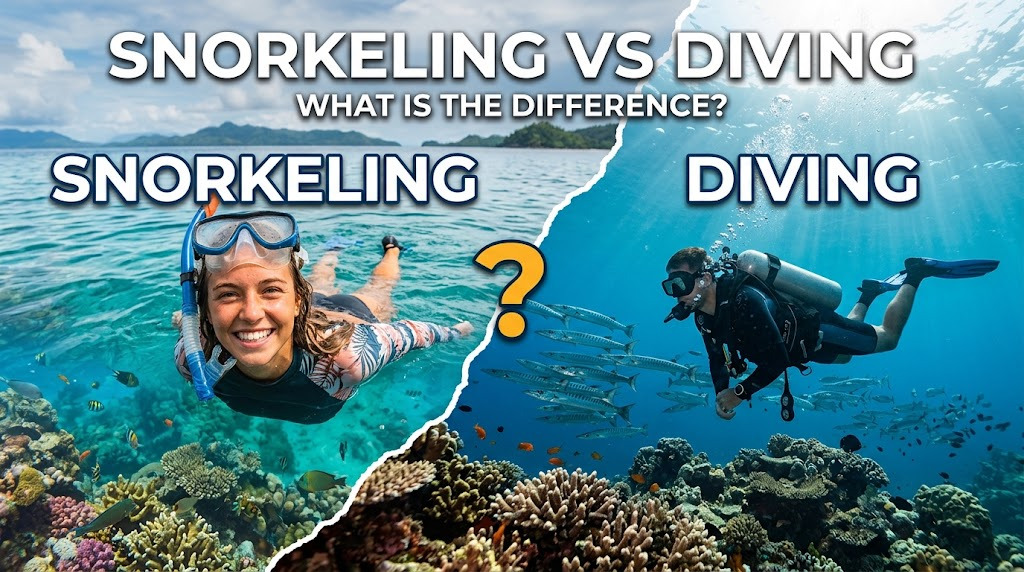
Snorkeling and diving are both popular ways to explore the underwater world, but they are different activities with different techniques, equipment, and levels of preparation. Snorkeling Vs Diving is an important comparison for travelers who are deciding which activity suits their interests and abilities. Snorkeling is generally focused on observing marine life from near the surface, while diving involves going underwater with specialized equipment. Understanding these differences can help beginners choose an activity that matches their experience. Both activities should be carried out responsibly while respecting the marine environment.
DIFFERENCES IN HOW SNORKELING AND DIVING ARE PERFORMED
The main difference between snorkeling and diving is how participants experience the underwater environment. Snorkeling is generally performed near the surface while using a mask and snorkel to observe marine life below. Diving allows participants to spend time farther below the surface with specialized breathing equipment. Because the activities involve different environments and techniques, their preparation requirements are also different. Beginners should understand these differences before choosing between Snorkeling Vs Diving.
DIFFERENCES IN EQUIPMENT
The equipment used for snorkeling is generally simpler than the equipment required for diving. Basic Snorkeling Equipment commonly includes a mask and snorkel, with fins often used to support movement in the water. Diving requires specialized equipment designed to support breathing underwater and manage the diving environment. The additional equipment means diving generally requires more preparation and appropriate training. Understanding the difference in Diving Equipment can help travelers recognize why the two activities should not be treated as identical.
DIFFERENCES IN DEPTH AND DURATION
Snorkeling generally takes place close to the water's surface, allowing participants to observe marine life without making a deep descent. Diving involves spending time underwater at greater depths, depending on the type of dive and the diver's training. The difference in depth also affects the techniques, equipment, and safety considerations involved. Because of these differences, Snorkeling Safety and diving safety involve different considerations. Participants should always stay within the limits appropriate for their experience and follow local guidance.
DIFFERENCES IN PREPARATION AND SKILLS
Snorkeling usually requires less specialized preparation than diving, although beginners still need to understand basic water safety and equipment use. Diving requires more extensive preparation because participants need to learn specialized techniques and understand how to use diving equipment properly. For this reason, Diving Training is an important part of learning to dive safely. Snorkelers should also understand their abilities and avoid entering areas that are unsuitable for their experience. Choosing an activity based on personal ability can create a more comfortable and responsible experience.
CONCLUSION
The main difference in Snorkeling Vs Diving can be seen in the way each activity is performed, the equipment used, the depth reached, and the preparation required. Snorkeling generally focuses on surface-level exploration with simpler Snorkeling Equipment. Diving involves specialized equipment, greater underwater depth, and additional training. Both activities offer opportunities to appreciate marine environments when performed responsibly. Understanding these differences can help travelers choose an activity that matches their abilities, preparation, and interests.
About the Author
Gusti Ayu Tita P
Author — STEKOM University
An active author focused on academic issues, educational technology, and human resource development in the campus environment.















