
Social Justice in The Digital Era and Its Challenges
Gusti Ayu Tita P
7 Agustus 2026
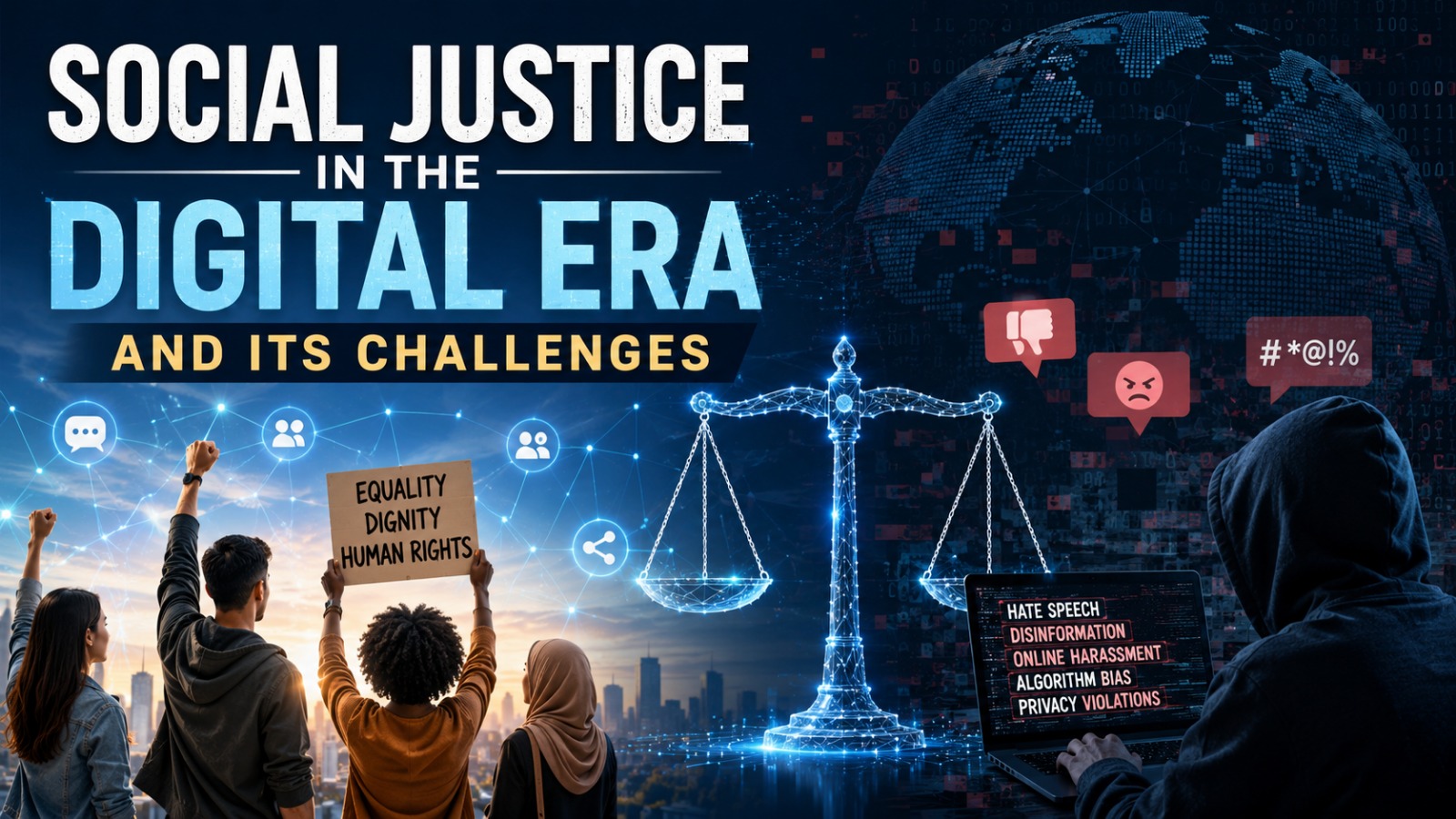
The development of digital technology has changed the way people communicate, work, study, and interact with society. In today’s modern world, the internet and social media have become powerful tools for spreading information and raising public awareness about important social issues. Social justice in the digital era refers to equal rights, fair treatment, and equal access to opportunities for everyone in online and offline environments. Many people now use digital platforms to support human rights, equality, and freedom of expression.
However, despite the positive impact of technology, there are still many challenges that prevent true equality in the digital world. Some communities still face discrimination, limited internet access, and unequal opportunities in education and employment. The digital era offers many benefits, but it also creates new forms of injustice that must be addressed carefully and responsibly.
THE ROLE OF TECHNOLOGY IN PROMOTING SOCIAL JUSTICE
Technology plays an important role in increasing public participation in social movements and humanitarian campaigns. Social media platforms allow people to share opinions, support important causes, and spread awareness quickly across the world. Many online campaigns related to gender equality, racial justice, environmental protection, and human rights have gained global attention because of digital communication. This shows how technology can become a strong tool for creating positive social change.
In addition, digital technology provides easier access to education and information for many people. Online learning platforms, digital libraries, and educational videos help students improve their knowledge regardless of location. Digital inclusion is important because equal access to technology can reduce educational and economic gaps in society. When people have access to accurate information and learning opportunities, they are more likely to achieve better social and economic conditions.
DIGITAL DIVIDE AND INEQUALITY
One of the biggest challenges in achieving social justice is the digital divide. The digital divide refers to the gap between people who have access to technology and those who do not. In many developing regions, internet access is still limited due to poor infrastructure, high costs, and lack of technological resources. As a result, many individuals cannot fully participate in the digital economy and modern educational systems.
This inequality creates disadvantages for people living in rural or low-income areas. Students without internet access may struggle to complete online learning activities, while workers with limited digital skills may find it difficult to compete in the job market. Governments and organizations need to improve internet accessibility and provide affordable technology so that more people can benefit from digital development equally.
CYBERBULLYING AND ONLINE DISCRIMINATION
Although digital platforms can support freedom of expression, they can also become places for harmful behavior. Cyberbullying, hate speech, and online harassment continue to affect many people, especially teenagers and minority groups. Negative comments, discrimination, and online attacks can seriously impact mental health and emotional well-being. This issue has become one of the major social challenges in the digital era.
Furthermore, online discrimination can spread false information and increase social conflict within communities. Some individuals misuse digital platforms to spread racism, sexism, and intolerance. To overcome these problems, digital literacy and ethical online behavior must be taught from an early age. People should learn how to communicate respectfully and use technology responsibly to create a safer digital environment for everyone.
THE IMPORTANCE OF DIGITAL LITERACY
Digital literacy is an essential skill in modern society because it helps people use technology wisely and safely. Individuals with good digital literacy can identify false information, protect personal data, and communicate effectively online. In the digital era, people must understand how technology works and how digital content can influence public opinion and social behavior.
Schools, families, and governments should work together to improve digital literacy education. Teaching people how to verify information and avoid online scams is very important for building a healthy digital society. Better digital literacy can reduce misinformation, prevent online fraud, and encourage responsible internet use. This will support a more equal and fair digital environment for future generations.
SOLUTIONS FOR ACHIEVING SOCIAL JUSTICE IN THE DIGITAL ERA
Achieving social justice in the digital era requires cooperation from governments, educational institutions, technology companies, and society. Governments should improve internet infrastructure and create policies that support equal digital access for all citizens. Affordable internet services and technology training programs can help reduce inequality and increase opportunities for disadvantaged communities.
Technology companies also have a responsibility to protect users from harmful online behavior and misinformation. Stronger regulations, better content moderation, and improved privacy protection can create safer online spaces. At the same time, individuals should practice ethical behavior and support respectful communication in digital communities. Through cooperation and awareness, society can create a digital environment that promotes fairness, equality, and human dignity.
CONCLUSION
The digital era has created many opportunities to promote social justice, education, and global communication. Technology can help people raise awareness, support equality, and improve access to information. However, challenges such as the digital divide, cyberbullying, and online discrimination still threaten fairness and equality in society.
To create a more inclusive digital future, people must improve digital literacy, encourage ethical online behavior, and support equal access to technology. Social justice in the digital era can only be achieved when everyone has the opportunity to participate safely and fairly in the digital world. By working together, society can build a more responsible and inclusive technological future.
About the Author
Gusti Ayu Tita P
Author — STEKOM University
An active author focused on academic issues, educational technology, and human resource development in the campus environment.















