Social Media Algorithm Changes and Their Impact on Content Creators
Gusti Ayu Tita P
7 Agustus 2026
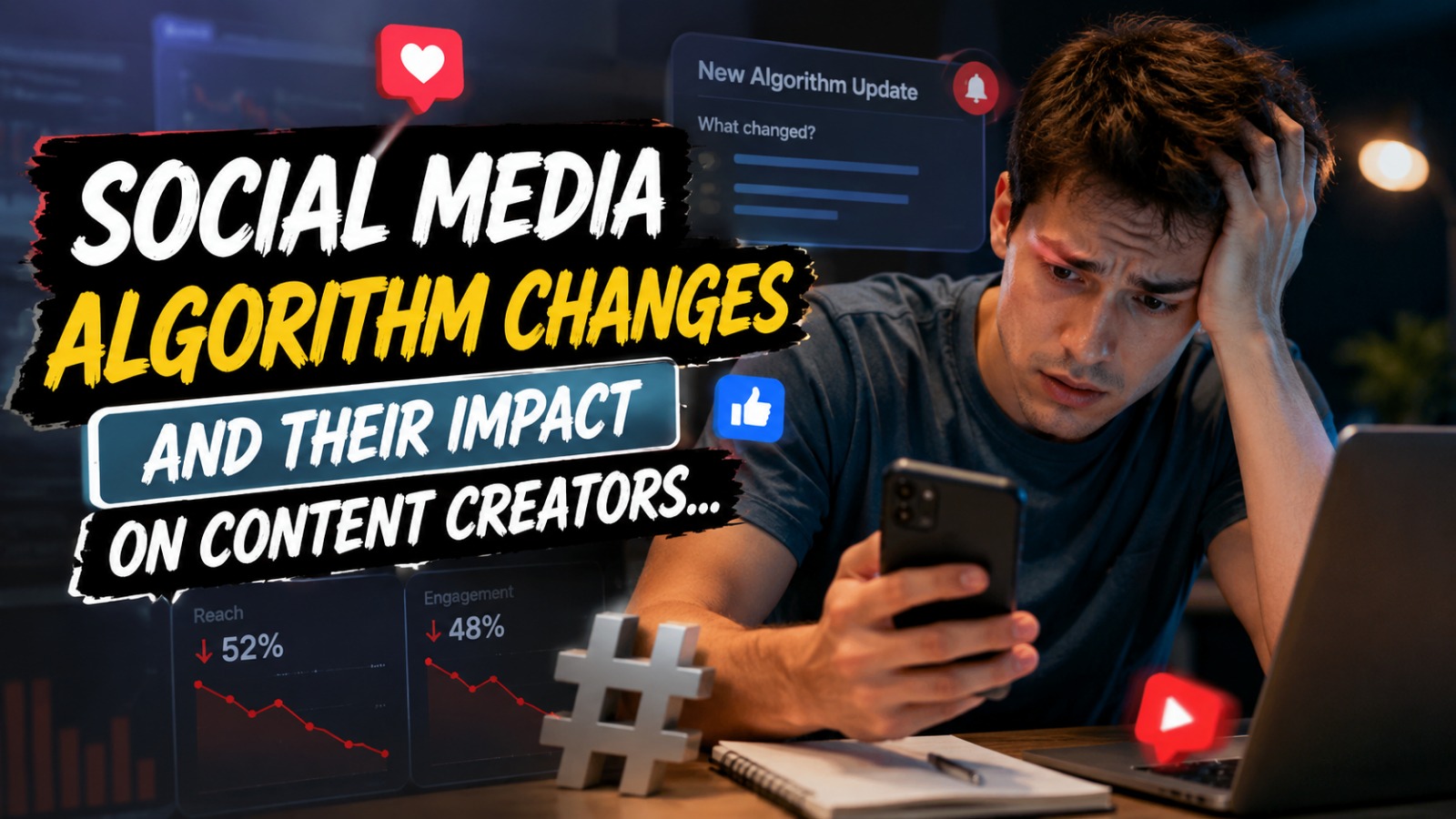
Social media algorithms play a major role in deciding which content users see on their feeds and recommendations. These systems are designed to organize large amounts of content and show users posts that are likely to be relevant or interesting. When platforms change their algorithms, the visibility and performance of content can also change. This situation makes it important for content creators to understand how algorithm updates may affect their strategies.
Algorithm changes do not always mean that creators are doing something wrong when their reach decreases. Platforms may adjust recommendation systems, ranking signals, features, or policies for many different reasons. Creators should therefore focus on understanding changes through reliable information and their own performance data. With the right approach, creators can adapt without losing their identity or audience.
WHY SOCIAL MEDIA ALGORITHMS CHANGE?
Social media platforms regularly improve their algorithms to provide users with more relevant and useful experiences. Changes may be introduced to improve recommendations, reduce unwanted content, support new features, or respond to changing user behavior. Platforms may also adjust how different types of content are ranked and distributed. As a result, the factors that influence content visibility can change over time.
Algorithm updates are not necessarily designed to reduce the reach of creators. In many cases, platforms are trying to improve the overall quality of content users discover. Creators should avoid assuming that every reach decline is caused by a single algorithm update. Instead, they should examine reliable platform information and compare performance data before changing their strategy.
HOW ALGORITHM CHANGES AFFECT CONTENT REACH?
One of the most noticeable effects of algorithm changes is a change in content reach. A post that previously received strong distribution may receive fewer impressions after the platform changes how content is ranked. On the other hand, some creators may experience increased reach when their content fits the platform's updated recommendation system. The impact can therefore be different for every account.
Reach should not be evaluated using one post alone. Content performance can also be influenced by topic, audience interest, competition, timing, format, and current events. Creators should compare several posts over a reasonable period to identify whether a real pattern exists. This makes it easier to distinguish temporary fluctuations from broader changes.
CHANGES IN CONTENT DISCOVERY
Algorithm updates can influence how users discover content beyond the accounts they already follow. Recommendation systems may introduce posts from creators that match a user's interests based on viewing behavior and interactions. This can create new opportunities for smaller accounts to reach relevant audiences. At the same time, competition for recommendation space can become stronger.
Creators should therefore focus on making content that clearly communicates its value and target audience. Topics, captions, visuals, and formats should be relevant to the people the creator wants to reach. Content should also accurately represent what users will receive after clicking or watching. Clear and relevant content has a better foundation for sustainable discovery than misleading tactics.
CHANGES IN AUDIENCE ENGAGEMENT
Algorithm changes can also affect how users interact with content. Depending on the platform, signals such as comments, shares, saves, clicks, and viewing behavior may contribute to content distribution. When ranking systems change, the relative importance of these signals may also change. Creators may notice that some types of engagement become more valuable for their goals than others.
This does not mean creators should chase engagement at any cost. Artificial interactions, engagement bait, and misleading content can damage audience trust and may conflict with platform policies. Instead, create content that naturally encourages people to respond because it is useful, entertaining, informative, or relevant. Genuine engagement is more valuable for building a long term community.
WHY CONTENT QUALITY MATTERS MORE THAN EVER
Algorithm changes can make creators feel pressured to constantly adjust their content. However, quality and relevance should remain the foundation of any social media strategy. Useful content gives audiences a reason to keep watching, reading, saving, sharing, or following an account. It also helps creators build a recognizable identity instead of relying entirely on algorithmic trends.
Quality does not necessarily mean producing highly complicated content. A simple tutorial, clear explanation, useful tip, or relatable story can perform well when it meets audience needs. Creators should focus on clarity, accuracy, originality, and good presentation. The goal should be to create content that provides genuine value rather than simply trying to satisfy a suspected algorithm preference.
THE IMPORTANCE OF ANALYTICS FOR CREATORS
Analytics can help creators understand the impact of algorithm changes on their accounts. Depending on the platform, creators may have access to information such as reach, impressions, watch time, engagement, saves, shares, clicks, and follower growth. These metrics can reveal which content performs well and where audience behavior may have changed. However, the most useful metrics depend on the creator's specific goals.
Creators should compare groups of posts rather than relying on one successful or unsuccessful upload. Look for patterns across topics, formats, content length, opening hooks, and audience responses. If performance changes consistently after a platform update, the data can help guide further testing. This makes adaptation more evidence based and less dependent on speculation.
CREATORS NEED TO ADAPT THEIR CONTENT STRATEGY
Adaptability is essential because social media platforms are constantly evolving. Creators can experiment with different formats, topics, posting approaches, and ways of presenting information. However, changes should be tested gradually rather than replacing an entire strategy overnight. Controlled experiments make it easier to understand which changes actually improve performance.
Creators should also avoid copying strategies simply because they work for another account. Every audience has different interests and behaviors, and the same format may produce different results across niches. Use successful ideas as inspiration while adjusting them to your own audience and expertise. This creates a more sustainable strategy that can adapt to future changes.
FOLLOW OFFICIAL PLATFORM INFORMATION
Creators often hear claims about algorithm changes through social media discussions and online communities. Some information may be useful, but other claims can be based on personal experiences or speculation. A change in one creator's reach does not automatically prove that the platform has changed its algorithm. For this reason, creators should prioritize official platform announcements, creator resources, and reliable documentation whenever possible.
Following official information can also help creators understand changes in features and policies. This is especially important when platforms introduce new recommendation systems or content guidelines. Creators can then adjust their strategies based on actual information instead of rumors. Combining official updates with account analytics provides a stronger basis for decision making.
AVOID DEPENDING ON ONE PLATFORM
Relying entirely on one social media platform can make creators more vulnerable to algorithm changes. If a platform changes its recommendation system, a creator's reach may be affected quickly. Building a presence across multiple suitable channels can reduce this dependency. However, creators should choose platforms that match their audience rather than trying to maintain an account everywhere.
Creators can also develop assets that are less dependent on a single algorithm, such as a website, email list, portfolio, or community. The goal is not to abandon social media but to create a more balanced digital presence. A diversified strategy gives creators more ways to communicate with their audience. It can also provide greater stability when platform conditions change.
FOCUS ON LONG TERM AUDIENCE RELATIONSHIPS
Algorithm changes may affect reach, but creators should not lose sight of their relationship with their audience. A loyal audience can remain valuable even when content distribution changes. Build trust by consistently providing useful, accurate, entertaining, or meaningful content. Respond to relevant comments and pay attention to audience feedback to strengthen the community.
Long term growth is more sustainable when creators focus on people rather than only numbers. High views are useful, but they do not always lead to loyal followers or meaningful results. Creators should evaluate whether their content attracts the right audience and supports their broader goals. This approach makes algorithm changes easier to manage because the strategy is not based entirely on short term reach.
CONCLUSION
Social media algorithm changes can affect content reach, discovery, engagement, and overall performance. However, these changes do not automatically mean that creators must completely change their content strategy. The most effective response is to monitor reliable platform information, analyze performance data, understand audience behavior, and test adjustments carefully.
Creators should continue prioritizing relevant, high quality, and authentic content while remaining flexible when platforms evolve. Avoid relying on rumors, artificial engagement, or constant attempts to make every post viral. Building strong audience relationships and maintaining a diversified digital presence can also reduce dependence on a single algorithm. With a data driven and adaptable approach, creators can continue growing even as social media platforms change.
About the Author
Gusti Ayu Tita P
Author — STEKOM University
An active author focused on academic issues, educational technology, and human resource development in the campus environment.