
Social Pressure That Quietly Changes How People Think
Gusti Ayu Tita P
8 September 2026
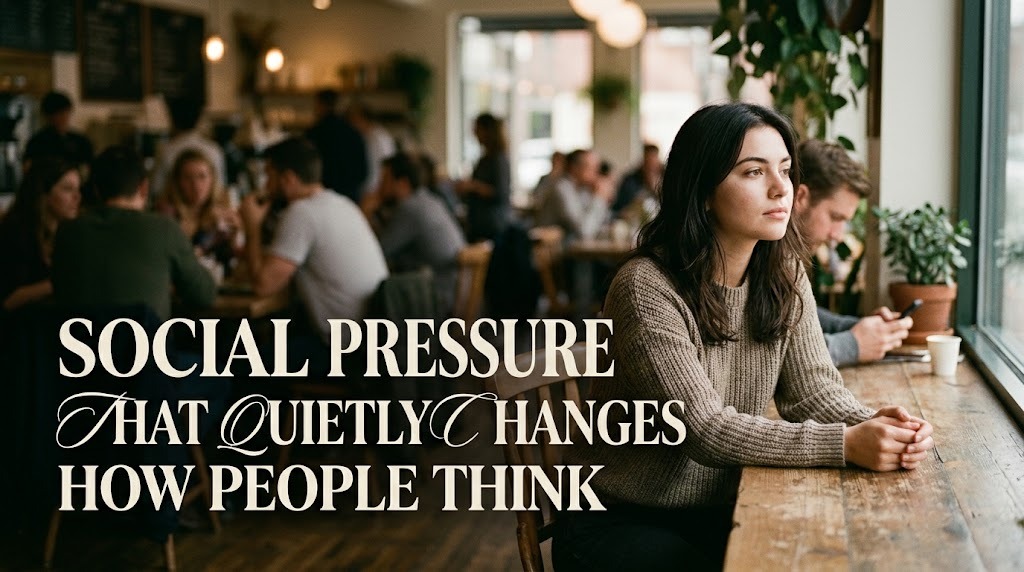
Social pressure is a common part of everyday life. People may change their opinions, choices, or behavior because they want to be accepted by family, friends, classmates, coworkers, or society. In many cases, this influence happens gradually and is difficult to notice. People may start adjusting the way they think without realizing that their decisions are being shaped by external expectations.
Social pressure is not always negative because social environments can encourage people to learn, cooperate, and improve. However, excessive pressure can make someone feel that they must follow certain standards to be accepted. When external expectations become stronger than personal values, people may slowly lose confidence in their own judgment. Understanding how this process works can help people make healthier and more independent decisions.
SOCIAL PRESSURE CAN CHANGE PERSONAL DECISIONS
People naturally consider the opinions of others when making decisions. Advice from family members, friends, teachers, or colleagues can provide useful perspectives. However, repeated expectations can gradually influence a person's choices. A person may choose something not because it is truly wanted, but because it is expected by the surrounding environment.
This can happen in education, careers, relationships, lifestyle, and personal goals. For example, someone may choose a particular field of study because it is considered successful by their family. Another person may accept a job simply because society views it as prestigious. When decisions are mainly driven by social approval, personal needs and interests may receive less attention.
THE NEED FOR ACCEPTANCE CAN INCREASE PRESSURE
The desire to belong is a natural human need. People generally want to feel accepted and connected to others. Because of this, they may change their behavior when they believe that disagreement could lead to rejection. The fear of being excluded can become a strong reason for following group expectations.
This pressure does not always involve direct commands. It can appear through jokes, comparisons, criticism, silence, or repeated questions about personal choices. Over time, these signals may make someone believe that being different is a problem. The person may eventually adjust their behavior simply to avoid negative reactions from others.
SOCIAL COMPARISON CAN LOWER SELF CONFIDENCE
Social comparison occurs when people evaluate themselves by looking at others. Comparing achievements can sometimes encourage improvement, but constant comparison can create unnecessary pressure. Someone may see a friend's higher grades, better job, attractive appearance, or financial success and assume that they are falling behind. The comparison becomes harmful when another person's achievement is treated as the standard for personal worth.
The problem becomes greater when people do not know the full story behind someone else's success. Social media often shows achievements without showing the struggles, failures, or resources involved. As a result, people may compare their everyday reality with another person's carefully selected highlights. This unrealistic comparison can gradually weaken self confidence.
SOCIAL MEDIA CAN STRENGTHEN HIDDEN PRESSURE
Social media allows people to see hundreds of lifestyles and opinions in a short period of time. Users can constantly encounter content about careers, relationships, appearance, travel, education, and financial success. Repeated exposure to idealized content can create unrealistic expectations about how life should look. People may then feel pressured to reach standards that were not originally important to them.
Social media can also create pressure through likes, comments, followers, and trends. Some users may begin to associate online attention with personal value. When a post receives little engagement, they may question whether they are interesting or successful enough. Healthy social media use requires remembering that online popularity is not a complete measure of personal value.
SOCIAL EXPECTATIONS CAN SHAPE HOW SUCCESS IS DEFINED
Society often has ideas about what a successful life should look like. High education, a prestigious career, financial stability, physical appearance, or certain lifestyle choices may be presented as signs of achievement. These goals can be useful for some people, but they should not automatically become universal standards.
Every person has different abilities, priorities, opportunities, and circumstances. Someone may value career growth, while another person may prioritize family, creativity, education, or a balanced lifestyle. Problems arise when people believe they must follow one definition of success to be respected. A healthier approach is to define success according to personal values and realistic goals.
PRESSURE CAN CHANGE THE WAY PEOPLE VIEW THEMSELVES
Continuous social pressure can influence self perception. If a person repeatedly hears that they are not successful enough, attractive enough, or capable enough, they may eventually accept these judgments as facts. Repeated external messages can become internal beliefs, even when those beliefs are inaccurate.
This can affect confidence and motivation. Someone who believes they are constantly behind may stop trying new things because failure feels inevitable. They may also become overly dependent on approval from others. A healthy self image requires recognizing personal strengths and weaknesses without allowing social judgment to completely define identity.
PEOPLE MAY FOLLOW GROUPS WITHOUT REALIZING IT
Group influence can affect everyday behavior in subtle ways. People may adopt certain opinions, habits, clothing styles, activities, or preferences because these behaviors are common within their social group. Following a group is not necessarily harmful, especially when the behavior is positive. However, problems arise when people feel unable to disagree or make independent choices.
Before following a group decision, it can be useful to pause and ask whether the choice matches personal values and goals. This simple reflection creates space for independent thinking. Being part of a group does not require giving up individuality. Healthy relationships allow people to share differences without demanding complete agreement.
HOW TO RESIST UNHEALTHY SOCIAL PRESSURE?
The first step is recognizing when social pressure is affecting personal decisions. Pay attention to situations that repeatedly create fear, guilt, insecurity, or a strong need for approval. Self awareness helps people identify whether a decision comes from personal choice or external pressure. Once the source is clear, it becomes easier to evaluate the situation objectively.
Setting personal boundaries is another important step. People can politely refuse requests that conflict with their abilities, values, or priorities. They can also limit exposure to environments that repeatedly create unhealthy pressure. Saying no does not mean rejecting other people; it means taking responsibility for personal choices.
BUILDING INDEPENDENT AND HEALTHY THINKING
Independent thinking does not mean ignoring every opinion from other people. Advice and criticism can be valuable when they are based on useful information and genuine concern. The important thing is to evaluate the information before accepting it. People should consider evidence, personal circumstances, possible consequences, and their own goals before making important decisions.
It is also helpful to measure progress against personal development rather than constantly comparing with others. Recognizing small improvements can create a stronger sense of achievement. Confidence grows when people trust their ability to learn, adapt, and make responsible choices. This mindset can reduce the influence of unnecessary social pressure.
CREATING A SUPPORTIVE SOCIAL ENVIRONMENT
The people around us can either increase or reduce social pressure. Supportive friends, family members, teachers, and colleagues usually allow individuals to express different opinions without humiliation or excessive judgment. A healthy environment gives people room to grow while respecting personal boundaries.
People should also evaluate relationships that repeatedly create fear, insecurity, or pressure to become someone else. Creating distance from unhealthy interactions may be necessary when boundaries are continuously ignored. At the same time, maintaining connections with supportive people can provide encouragement during difficult decisions. Positive social support can make independent thinking easier and more sustainable.
CONCLUSION
Social pressure can quietly change how people think by influencing decisions, self image, definitions of success, and everyday behavior. It can come from family expectations, peer groups, social comparison, workplace culture, or social media. When the desire for acceptance becomes stronger than personal values, people may gradually make choices based on external approval rather than genuine needs.
The solution is not to reject society or ignore every opinion. Instead, people can develop self awareness, personal boundaries, critical thinking, and healthy confidence. Social advice can be considered without automatically being followed. By understanding personal values and evaluating outside expectations carefully, people can remain connected to their communities while still maintaining an independent sense of identity.
About the Author
Gusti Ayu Tita P
Author — STEKOM University
An active author focused on academic issues, educational technology, and human resource development in the campus environment.















